

Looking ahead, the trend favors multigenerational bandwidth, while current homes suffer from storage latency, privacy issues, and energy discrepancies. This sentiment is echoed across the industry, with AIA billings indicating a strong interest in adaptable residential designs as families evolve. When I examine a 4-bedroom villa floor plan, I perceive it not merely as isolated rooms, but as the foundational code for a lifestyle that is soon to become the norm—an operating system that dictates how families share time and space. My spatial reasoning toolkit is constantly at work; the future is already here, and I’m interpreting its user interface.
Courtyard Spine + Split Sanctuary
Design Concept: A central courtyard acts as both a thermal and social hub, effectively separating primary and secondary suites for enhanced privacy while facilitating cross-ventilation and solar efficiency—customized for wellness and hybrid living.
Circulation: Entry → gallery spine → courtyard node → kitchen/living area → bedroom wings; akin to a sequence of instructions where each pause corresponds to breaks filled with light and air.
Sightlines: Framed diagonal views from the foyer to the garden, accompanied by layered thresholds; the UI tiers progress from public to semi-private, and finally to private spaces devoid of noise interference.
Storage Solutions: Perimeter millwork operates as a storage cache, with discreet linen bays at distribution points and a garage mud wall that functions as a high-capacity buffer; cluttering is minimized.
Furniture Arrangement: Circulation pathways of 42-48 inches, modular sofa groupings, and a spacious dining table measuring 9-10 ft create an optimal environment for entertaining; beds are strategically aligned to capture morning light.
Conclusion: Over a span of five years, the courtyard design stabilizes climate, routines, and privacy considerations—an elegant system that scales alongside a family's evolving needs.
save pin
Garden Loop with Work-Nest Pair
Design Concept: A looping floor plan encircles the garden, connecting two bedrooms with a shared flexible studio; future residences can effortlessly transition between work-from-home, guest accommodations, or youth spaces without requiring major adjustments.
Circulation: The kitchen serves as a router → looped corridor → nodes (laundry, study, bath) → outdoor terrace; this continuous path eliminates unnecessary backtracking delays.
Sightlines: Low sill windows create a band of horizon views; key openings align like indicator lights, guiding the sight from the kitchen to the pool, the study to the trees, and the primary suite to the sky.
Storage Solutions: Ample pantry space coupled with an under-stair vault, and multi-functional bench-drawer combinations along the loop create refresh points every 12–16 feet for maintaining order.
Furniture Arrangement: Built-in desks at a convenient 30 inch height equipped with cable channels, a 60 inch round table to facilitate conversations, and platform beds that maximize floor space.
Conclusion: This looped design promotes physical movement and work-life balance; within five years, the flexible studio evolves into the heart of the home’s adaptability.
save pin
Dual-Anchor Great Room + ADU Edge
Design Concept: The great room is anchored by the kitchen and covered patio, while one bedroom functions as an ADU-like suite, catering to income generation, elderly care, or support scenarios—creating a future-focused blend of cash flow and care solutions.
Circulation: From carport → drop zone → kitchen core → great room → patio; the guest suite has a parallel entrance to minimize traffic-related disruption during peak usage.
Sightlines: The long view stretches from the hearth to the landscape, with a short axis leading to a secluded garden; this visual hierarchy resembles a dashboard that displays warmth, greenery, and horizon lines.
Storage Solutions: Expansive wardrobes that reach the ceiling, garage wall grids, and seasonal storage in the attic; well-defined zones to prevent confusion in family logistics.
Furniture Arrangement: A sectional measuring 10-12 ft fully encircles the space, a minimum of 36 inch island perimeter, and wall beds in the ADU to accommodate different uses; all dimensions are optimized for multifunctional protocols.
Conclusion: This design ensures autonomy and income potential; five years down the line, the edge suite will have generated its financial return while maintaining household tranquility.
save pin
Final Thoughts
In a well-designed 4-bedroom villa layout, the plan transcends a mere blueprint, evolving into an interactive interface where elements such as airflow, light, and privacy continuously negotiate. Concepts like split sanctuaries, looped corridors, and ADU edges demonstrate that a 4-bedroom villa floor plan is capable of adapting to shifting work, care, and income demands without expanding its footprint. The most sophisticated villas function like advanced software—streamlined, modular, and perpetually refined by daily habits; in my experience, crafting intentional spaces always takes precedence over merely increasing square footage.


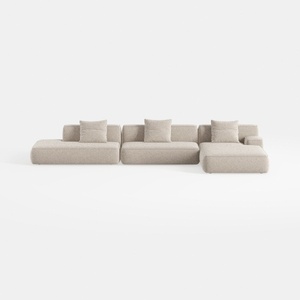
Minimalist Boucle Fabric L Shaped Sectional Sofa 3D Model

Shintenchi Triple 5 Tier Bookshelf, Industrial
Homestyler is your go-to online platform for home design! Its user-friendly design tool, stunning 3D renderings, diverse design projects, and insightful video tutorials make it easy to visualize and create your dream space—perfect for both beginners and seasoned decorators!
Progetta ora GRATIS
































