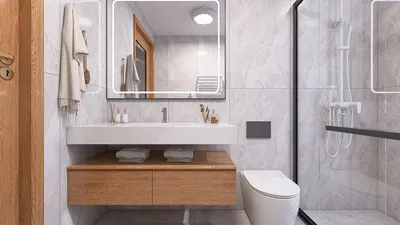


A client of mine once insisted on a chessboard design for their tiny bathroom, requesting black and white squares all over. Initially, I was taken aback, but I quickly sketched a more subtle two-tone version that made their eyes light up. Working in small spaces really teaches you the importance of balance: sometimes a bold concept can truly shine with the right approach.
One of my favorite ways to add intrigue and depth to small bathrooms is by using two-tone wall designs. In this article, I'll present five practical two-tone ideas that I've successfully implemented in actual projects. We'll discuss when these designs work best, things to consider, and tips for keeping costs manageable.
1. Half-and-half (horizontal split)
This classic design features a darker, durable color on the lower half of the wall while keeping the upper half light. This technique not only creates the illusion of higher ceilings but also protects the area around sinks from scuffs. I often choose a deep navy for the bottom paired with a warm off-white on top; it evokes a coastal yet refined feel. Aligning the split around fixtures and tiling can be tricky, but a simple chair rail or thin trim can mask minor irregularities perfectly.
save pin
2. Diagonal divide for visual motion
Utilizing a diagonal split can infuse energy into the space without adding visual clutter. I implemented this technique during a renovation to counteract a narrow layout; the diagonal pattern draws the eye up and out. It’s a fun approach that's ideal for contemporary bathrooms, but it does require careful taping and a steady hand from either yourself or a professional painter to ensure clean lines.
save pin
3. Two-tone tile-to-paint transition
In wet areas, consider using tiles, while employing paint above in a complementary color. In a recent small ensuite, I paired soft gray subway tiles with a sage green paint above—this combination is not only chic but also budget-friendly and low-maintenance. The challenge here is selecting a grout color that compliments both the tiles and the paint; testing samples in varying lighting can help make the best choice.
save pin
4. Accent wall with contrasting ceiling
Make one wall a focal point by choosing a bold color for the vanity wall and using a lighter or slightly tinted hue on the ceiling. I executed this in a compact powder room with a charcoal wall and a pale blush ceiling, resulting in a warm yet sophisticated atmosphere. However, be cautious: using dark colors excessively in very small spaces can lead to a cramped feeling, so it’s crucial to balance them with adequate lighting and mirrors.
save pin
5. Two-tone with wallpaper band
Combine paint with a patterned wallpaper band positioned mid-wall to bring in texture and character. I suggested this to a client looking for drama without fully wallpapering the room; it introduced pattern without overwhelming the space. Be cautious of moisture—select washable, moisture-resistant wallpaper, or ensure it's placed above splash zones.
For those looking to visualize ideas rapidly, try using the Homestyler 3D floor planner. It helps you see how different two-tone combinations influence the perception of space and light, saving hours of repainting during speedy renovations.
save pin
FAQ
Q1: Is two-tone paint appropriate for extremely small bathrooms? A1: Yes—horizontal splits or accent walls can create an illusion of height and add depth. Opt for a lighter main tone and apply the darker shades sparingly to avoid making the space feel cramped.
Q2: What paint finish is best suited for bathrooms? A2: Semi-gloss or satin finishes are ideal for lower areas exposed to moisture; eggshell or matte finishes are preferable for areas with minimal splashes.
Q3: How do I select harmonious two-tone colors? A3: Choose a dominant neutral and pair it with a contrasting or muted accent. Test out large samples on the wall at different times to see how they interact throughout the day.
Q4: Is it feasible to combine tile and paint for a two-tone aesthetic? A4: Absolutely—using tile in wet areas with paint above is both durable and stylish. Be careful when matching grout to ensure it ties the two materials together seamlessly.
Q5: Is wallpaper a viable choice for bathrooms? A5: You can use moisture-resistant, washable wallpaper but keep it away from direct splashes; a mid-wall band is typically a smart option.
Q6: What can I do to conceal imperfect lines where colors meet? A6: Utilizing a slim trim, chair rail, or a wallpaper band can effectively disguise inconsistencies and provide a finished look to your work.
Q7: How much does repainting a two-tone bathroom usually cost? A7: Pricing varies by region and materials; refreshing a small bathroom can range from economical DIY paint projects to more expensive professional labor if intricate designs or wallpaper are involved.
Q8: Where can I find professional tools to test layouts? A8: For realistic 3D mockups and layout evaluations, tools like the Homestyler 3D platform can provide accurate previews for your designs.
save pin
Homestyler is your go-to online home design platform. With its user-friendly design tool, stunning 3D renderings, and a wealth of inspiring DIY video tutorials, it empowers you to create your dream space effortlessly. Dive into your next design project with confidence!
今すぐ无料でデザイン
































