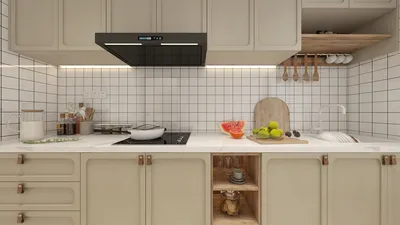


I once almost removed an entire wall for a client due to mismeasuring a 6-foot galley kitchen—small kitchens really punish assumptions. Here, I’ll share five practical solutions that saved the project and the budget, and can be applied to nearly any compact kitchen layout.
1. Slim Cabinets with Deep Drawers
Why it works: Narrow upper cabinets combined with deep drawers below maximize usable storage while keeping the space from feeling cramped. Benefit: This setup improves organization and easy access to cookware. Trade-off: You might sacrifice some conventional shelving space and require custom dimensions.
save pin
2. Open Shelves Paired with a Signature Cabinet
Why it works: Open shelving visually enlarges the kitchen, while a single glass-door cabinet acts as a focal point. Benefit: The room feels lighter and open shelves double as display surface. Trade-off: Maintaining styled shelves requires ongoing tidiness to avoid clutter.
room planner
save pin
3. Built-in Appliances and Compact Ventilation Hoods
Why it works: Installing slim dishwashers, drawer microwaves, and small hoods frees counter space and creates a sleek look. Benefit: More countertop area and cleaner lines. Trade-off: Integrated appliances can be pricier and limit model availability.
save pin
4. Foldable Kitchen Island or Mobile Butcher-Block Cart
Why it works: A fold-down leaf or movable cart provides extra workspace when needed without taking up permanent space. Benefit: Additional prep or dining area appears only as needed. Trade-off: Less stability than a fixed island and requires planning for storage when stored away.
free floor plan creator
save pin
5. Vertical Storage Solutions and Layered Lighting Techniques
Why it works: Tall pantry units, magnetic strips, and layered lighting pull the eye upward, making ceilings appear higher. Benefit: Increased storage capacity and a more spacious feeling. Trade-off: Accessing upper storage may need a step stool or ladder.
kitchen layout planner
Visualization: Imagine your small kitchen with a clutter-free prep counter, one standout cabinet, and soft light illuminating the backsplash—suddenly, the space feels twice its size. If you want, I can use Homestyler to create a simple design draft so you can test one or two ideas before investing.
Soft Tip: Sketch your current kitchen, note problem areas, and choose the two solutions that address your main challenges first.
save pin
FAQ
Q: What is the typical cost range for a small kitchen remodel? A: Costs vary widely, but smaller kitchens usually require less investment than large ones. Basic upgrades are affordable, while full renovations with appliances and materials add to expenses. Getting quotes from local contractors and consulting guidance from NKBA is advisable.
Q: Can I refresh a small kitchen on a budget without swapping cabinets? A: Absolutely—painting, updating hardware, and improved lighting can dramatically change a space affordably. Replacing cabinet fronts or adding shallow open shelves is also effective.
Q: Is installing an island worthwhile in a tiny kitchen? A: Only if you have at least 42–48 inches clearance around it. Otherwise, a fold-away island or mobile cart tends to be a smarter solution for tight spaces.
Q: Which flooring works best in compact kitchens? A: Continuous, light-colored flooring visually expands the room. Avoid busy patterns that can make the space feel boxed in.
Q: How should lighting be planned for a small kitchen? A: Layered lighting is key—combine task lighting under cabinets, soft ambient overhead lights, and small accent pendants to reduce shadows and create openness.
Q: What cost-saving tips are trending for small kitchen remodels in 2026? A: Many homeowners are leveraging AI-powered design tools like Homestyler to minimize expensive changes, opting for modular cabinets, and focusing budget on one impactful upgrade such as countertops or lighting.
Q: How can I maximize storage in a 7x8-foot kitchen? A: Utilize every vertical inch with ceiling-height cabinets, narrow pull-out units, magnetic strips, and multifunctional furniture. Zone planning helps small areas work harder.
Q: Can open shelving and closed storage coexist without clutter? A: Yes—by restricting open shelves to a single wall, curating displayed items, and balancing with closed cabinetry, you can achieve an organized, tidy look. Browsing portfolios on platforms like Houzz provides helpful inspiration.
Homestyler offers an easy-to-use online home design tool with stunning 3D renderings, inspiring design projects, and helpful DIY video tutorials—perfect for bringing your interior design ideas to life quickly and beautifully.
تصميم الآن مجانا
































