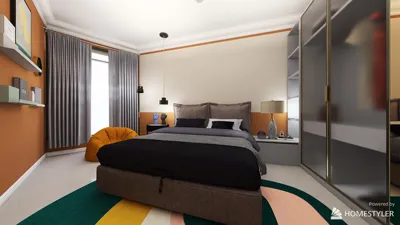


Once, I was tasked with designing a compact living room for a client who insisted on placing both a vintage upright piano and a 6-foot cactus in the same corner. This low-stakes chaos quickly taught me a valuable lesson: limitations can drive creativity, and a few strategic choices can transform even the smallest space into one that feels expansive. For those looking to visualize small layouts in 3D, tools like Homestyler can be extremely helpful in presenting layout options to clients who may be feeling uncertain.
Small spaces often serve as a breeding ground for innovative ideas. Here, I’ll share five practical inspirations that I consistently rely on, along with genuine insights into what is effective, what could prove challenging, and how to manage costs efficiently.
1. Float your furniture to create fake circulation
I enjoy pulling sofas and chairs a few inches away from walls; this creates an immediate sense of depth and flow. The advantage of this approach is that the living room appears larger and more thoughtfully arranged. However, it does require planning for cords and wall storage—consider options like slim, low-profile power solutions or a singular standout shelf.
save pin
2. Use vertical storage as the main act
Incorporating tall shelving or built-in cabinets draws the eye upward, giving the illusion of higher ceilings. In one project of mine, a streamlined bookcase with alternating open and closed compartments replaced a bulky TV stand, significantly enhancing storage while making the room feel twice as spacious. Just be cautious to avoid clutter on open shelves—curating or utilizing baskets can help maintain tidiness.
save pin
3. Create multifunctional zones with smart furniture
A single sofa equipped with a drop-leaf side table, a nesting coffee table, and a bench that doubles as storage can effectively replace several pieces of furniture. In studio apartments, I frequently prototype efficient kitchen workflows with small attached kitchenettes, ensuring that the living area accommodates both dining and lounging elegantly.
save pin
4. Prioritize light and reflective surfaces
Mirrors, glossy backsplashes, and light-toned rugs can all reflect light and visually enlarge the space. In a recent inner-city flat remodel, replacing a heavy rug with a light jute option and installing a slender mirror next to the window helped to alleviate the cramped feel of evenings. However, be aware that shiny surfaces tend to show fingerprints and require more upkeep.
save pin
5. Zone with rugs and low-back furniture
Identify seating, reading, and entry areas using rugs and low-back sofas, allowing sightlines to remain unobstructed. I once segmented a 220 sq ft living room into three distinct zones using a rug, a slim console, and a narrow float-mounted media shelf; it truly felt like three rooms in one. If you wish to plan such an arrangement, consider utilizing Homestyler to map out a zoned living area for better clarity.
save pin
FAQ
1. What are the best colors for a small living room?
I typically suggest a light, warm neutral for your walls, paired with one or two deeper accent shades. Light colors enhance the perception of space, while accent colors contribute personality without overwhelming the area.
2. How do I select the right rug size for a small lounge?
Choose a rug large enough for the front legs of major seating to rest on it; this unifies the space. If this isn't feasible, a mid-sized rug that complements the seating arrangement is a great alternative.
3. Are sectional sofas suitable for small spaces?
Sectionals can be beneficial if they are appropriately proportioned and have a low back; modular pieces that can be rearranged are particularly advantageous. Avoid overly deep seats that consume too much floor space.
4. Can mirrors truly create an illusion of more space?
Absolutely—mirrors reflect light and views, thereby adding depth. Position them opposite windows for optimal effect.
5. How crucial is lighting layering?
Extremely important: combining ambient, task, and accent lighting can enhance depth and functionality. A straightforward mix of overhead lighting, a floor lamp, and a compact table lamp usually meets most needs.
6. What storage options can avoid overcrowding the room?
Employ vertical storage, furniture with hidden compartments, and wall-mounted shelves to free up floor space, keeping surfaces minimal to prevent visual clutter.
7. How can I balance style and budget in a compact living room?
Focus on investing in a few essential pieces—such as a comfortable sofa and a quality rug—while sourcing the rest from thrift stores or opting for DIY projects. Simple updates like paint, hardware changes, and new cushions can yield significant impact without high costs.
8. Where can I seek professional guidance for small-space planning?
Organizations like the American Society of Interior Designers (ASID) provide valuable resources and articles about space optimization. Their standards and guidelines can serve as an excellent reference when seeking research-backed tips.
save pin
Discover the joy of home design with Homestyler! This user-friendly platform offers an intuitive online design tool, stunning 3D renderings, and a wealth of DIY video tutorials. Whether you're a novice or a seasoned designer, Homestyler empowers you to bring your creative visions to life effortlessly.
تصميم الآن مجانا
































