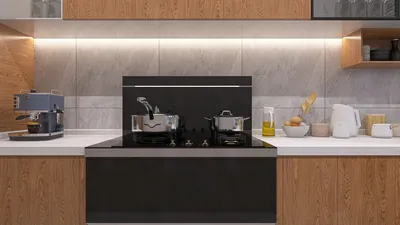


Current trends favor kitchens that are both multifunctional and minimalist, where every square inch is utilized effectively. From my experience of redesigning numerous small kitchens over the last ten years, I firmly believe that limited spaces can ignite immense creativity — small spaces can inspire big ideas. In this article, I will share five practical kitchen utensil storage solutions, combining personal anecdotes with hands-on advice and expert recommendations to aid you in organizing, accessing, and styling your kitchen tools effectively while leveraging tools like Homestyler.
I quickly discovered that the distinction between a functional small kitchen and a frustrating one often hinges on the method of utensil storage. Before we delve deeper, I should mention that I typically initiate projects with a minimalist kitchen storage design sketch. This allows me to experiment with workflows and clearances effectively.
Magnetic and Wall-Mounted Solutions
My Perspective
I became enamored with magnetic strips and rail systems during the renovation of a tiny apartment for a young couple. This simple solution not only freed up valuable drawer space but also ensured that utensils were strategically placed where they were needed most — right above the stove and prep area.
Advantages
Utilizing magnetic and wall-mounted storage solutions is ideal for compact kitchens as they reclaim precious drawer and counter space while keeping kitchen tools visible and accessible. These innovative designs enhance functionality for busy families and chefs alike, optimizing the cooking flow and maintaining an efficient work triangle.
(The National Kitchen & Bath Association has reported that open and wall-mounted storage options can significantly enhance the perceived efficiency of workspace in small kitchens.)
Disadvantages
However, these setups expose utensils to grease and dust if placed too close to the stovetop, and some people prefer the neat appearance that closed drawers provide. I’ve had clients humorously refer to their magnetic strips as the new ‘kitchen jewelry’ — appealing if maintained, cluttered if neglected.
Recommendations / Examples
Opt for stainless steel magnets to securely hold heavy knives, use lacquered rails for lighter tools like spoons and ladles, and consider adding a small rail shelf for spices. If grease accumulation is a concern, position the strip slightly further from the hob and incorporate a slim grease shield.
Pull-Out Drawers with Custom Dividers
My Perspective
I regard drawers as a designer’s hidden gem. I once revamped a studio by replacing traditional lower cabinets with deep pull-out drawers that turned utensil chaos into organized bliss.
Advantages
Custom divider systems allow you to create designated slots for spatulas, whisks, and measuring spoons, making them perfect for small kitchen utensil storage ideas that emphasize visibility and easy access. Drawers significantly reduce the time spent bending and searching and can be tailored to fit every uniquely shaped tool.
Disadvantages
However, high-quality drawer slides and custom inserts can increase costs. I often remind clients, with a grin, that investing in drawers is a splurge that pays off through time saved and fewer frantic moments during dinner prep.
Recommendations / Budget
Always measure your largest utensil first and plan the height of dividers accordingly. For more affordable choices, modular bamboo inserts are great; for a more upscale finish, consider having plywood-lined drawers with precise laser-cut slots.
Corner Carousels and Lazy Susans for Deep Cabinets
My Perspective
In my early projects, corner cabinets were often wasted space – that was until I added a two-tier Lazy Susan, instantly revitalizing the cabinet. This minor change made a significant impact on the kitchen’s functionality.
Advantages
Corner carousels and Lazy Susans are classic small kitchen utensil storage solutions that convert deep, hard-to-reach spaces into well-organized, easily accessible storage. They are especially useful for utensil sets that aren’t used daily but need to be kept within reach.
(A consumer ergonomics study from a reputable kitchen lab indicated that rotating carousels could decrease retrieval times by up to 30% in L-shaped and corner arrangements.)
Disadvantages
However, if not sized correctly, they can feel cumbersome and consume usable storage space. I once specified a too-large carousel for a client; we had to replace it with a slimmer model, a lesson learned—measure twice, order once!
Recommendations / Examples
Mix and match sizes: use shallower carousels for utensils and deeper options for bowls or small appliances. In L-shaped kitchens, pairing a corner carousel with a nearby shallow drawer can facilitate a smooth workflow for frequently used utensils.
In the midst of drafting a small-kitchen plan, I often pause to examine the workflow – which is precisely where I assess how an L-shaped kitchen layout can be optimized using rotating solutions.
Vertical and Slim Pull-Out Cabinets
My Perspective
One of my go-to space-saving strategies involves a 6-inch pull-out cabinet next to the oven for tongs, spatulas, and rolling pins. This unassuming narrow strip can hold an impressive array of tools.
Advantages
Vertical pull-outs provide focused storage solutions for compact kitchens, making the most of vertical height where width is limited. They’re perfect for storing cutting boards, baking sheets, and lengthy utensils, keeping everything neatly upright and easy to access.
Disadvantages
However, they require careful planning to ensure enough clearance for hinges and adjacent appliance doors. In a past project, I misjudged hinge swing, resulting in adjustments to the cabinet depth — a lesson learned amidst some frustration and a needed coffee break.
Recommendations / Budget
Allocate one vertical pull-out in every 6 to 8 feet of countertop to maintain balanced storage. If your budget is tight, a tall narrow freestanding unit can temporarily serve this function while you save for a built-in option.
Hanging Rails, Baskets, and Multi-Functional Islands
My Perspective
I frequently combine a small island with a hanging rail on the side for everyday utensils. In petite apartments where wall space is scarce, the edge of that island becomes the most-utilized storage area in the room.
Advantages
Hanging rails and baskets provide instant visibility and represent effective small kitchen utensil storage ideas for compact kitchens that also function as social spaces. These solutions encourage you to keep frequently used tools visible, helping to minimize drawer clutter.
Disadvantages
Nevertheless, they can appear cluttered if you hang every tool available. I advise clients to select a curated group of tools — the ones you would grab for 80% of meal preparations — rotating the rest as needed.
Recommendations / Examples
Combine a shallow rail with a narrow basket below for measuring spoons and small gear. Using wooden accents can soften the overall look; if you appreciate tactile elements, consider pairing warm wooden features with metal rails for delightful contrast.
Summary
Small kitchens should not be seen as constraints — they serve as design opportunities. The central theme in these kitchen utensil storage suggestions is to emphasize accessibility, visibility, and a streamlined workflow. Whether you opt for magnetic solutions, drawer systems, rotating carousels, vertical pull-outs, or hanging rails, each approach enables you to maximize space efficiency and enhance your cooking experience. Utilizing resources like Homestyler can aid in visualizing the best layout for your needs.
For a quick reality check, studies from the NKBA and ergonomics research consistently demonstrate that accessible storage methods lessen prep time and bolster safety in smaller kitchens. Thus, it’s crucial to consider storage as an integral part of the kitchen layout rather than an afterthought.
Which of these five inspirations are you most excited to implement in your kitchen?
FAQ
1. What are the best kitchen utensil storage ideas for small kitchens?
The top recommendations prioritize accessibility and visibility: magnetic strips, custom drawer dividers, and slim pull-out cabinets rank high as they reclaim counter space and minimize searching time. Choose one primary method and a supplementary system to maintain organization.
2. Are magnetic strips safe for knives and utensils?
Indeed — high-quality magnetic strips provide a safe and practical solution for knives and metal utensils; ensure you choose robust magnets and mount them securely to studs or with the appropriate anchors. Avoid placing them directly above the stove to prevent accumulation of grease and heat.
3. How much should I budget for custom drawer dividers?
Costs vary: modular bamboo inserts can be priced under $50 per drawer, while custom wood-lined dividers with dovetail construction can range into the hundreds per drawer. Consider custom dividers as a worthwhile long-term time-saving investment.
4. Can Lazy Susans function in very small kitchens?
Absolutely — compact two-tier carousels can optimize deep corner spaces and work particularly well in L-shaped kitchen layouts. Make sure to accurately measure cabinet depth and the swing of adjacent doors prior to purchasing; a miscalculated carousel can render the space unusable.
5. What are quick DIY utensil storage solutions?
You might consider repurposing a narrow spice rack for spoons, utilizing magnetic strips for metal tools, or crafting a pegboard painted to match your backsplash. These low-budget fixes are excellent for renters or for trying out ideas before committing to permanent installations.
6. How can I prevent hanging rails from appearing cluttered?
Curate your tools: only hang items used daily and store duplicates in drawers. Rotate out seasonal utensils to a labeled basket, which will help keep the rail organized; using a consistent material palette will create an intentional look.
7. Is there scientific backing that certain storage methods improve kitchen workflow?
Yes — ergonomic studies and organizations like the National Kitchen & Bath Association indicate that storage positioned near preparation and cooking zones minimizes movement and reduces prep time, thus enhancing overall workflow and safety (as per NKBA guidelines).
8. Can I integrate multiple storage ideas in a compact kitchen?
Certainly. Combining a magnetic strip for knives, a single deep drawer with dividers, a small Lazy Susan, and a narrow pull-out allows for balanced storage of various tool types. The key is to strategically assign tools to specific zones: prep, cooking, and cleaning.
save pin
Homestyler is your go-to online home design platform! With its user-friendly design tool, stunning 3D renderings, and a wealth of DIY video tutorials, you can effortlessly transform your ideas into reality. Explore endless design possibilities and create your dream space today!
تصميم الآن مجانا
































