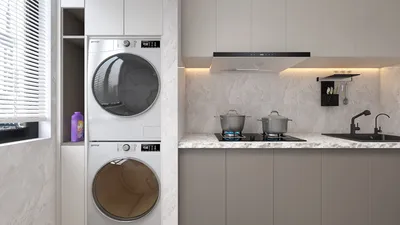


I once almost convinced a client to completely gut a compact 95-square-foot galley kitchen because they believed it was the only method to achieve a spacious feel—a decision that would have been costly and unnecessary. Instead, by implementing precise design strategies, we preserved the budget and made the space feel twice as large. In this article, I’ll share five practical small kitchen ideas I use on real projects, especially when dealing with limited budgets and tight layouts.
1. Enhance openness with sightline improvements rather than wall removal
Why this strategy works: Taking down upper cabinets on a single wall or installing a low pony wall helps open visual pathways and allows natural light to flow freely. Benefit: It makes the kitchen appear larger and creates an airy atmosphere without expensive structural alterations. Drawback: You sacrifice some enclosed storage, requiring neat countertop organization.
save pin
2. Combine open shelving with concealed storage options
Reasoning: Open shelves keep the kitchen feeling light and spacious, while deep drawers or tall pull-out cabinets hide bulkier items out of sight. Benefit: You gain quick access to everyday essentials alongside discreet storage for less-used belongings. Consideration: Open shelving requires careful styling and routine tidying to prevent cluttered looks. Notably, in 2026, many homeowners embrace curated open displays paired with hidden organizers.
Room planner
save pin
3. Opt for appliances designed to fit smaller spaces
Why it’s effective: Compact dishwashers, 24-inch ovens, or drawer microwaves maintain full functionality without overwhelming limited kitchen footprints. Benefit: Retain all key appliances while freeing up valuable counter and cabinet room. Trade-off: Some compact appliances may have reduced capacity or higher costs per volume, so choose based on real needs.
save pin
4. Implement multi-functional surfaces
How this helps: Features like sliding panels that double as prep areas, fold-down tables, or built-in chopping boards turn one surface into several uses. Benefit: You increase workspace on demand and can hide it away afterward—ideal for entertaining in small kitchens. Drawback: Such mechanisms can add complexity and require careful installation.
kitchen layout planner
save pin
5. Focus on vertical storage and corner solutions
Why use this approach: Tall pantry cabinets, ceiling-high shelving, and corner carousel units utilize otherwise wasted vertical and corner space. Benefit: Dramatically increase storage without needing more floor area. Trade-off: Higher shelving requires step stools or specialized pull-down hardware and smart planning to keep items accessible.
free floor plan creator
Imagine stepping into your small kitchen and seeing a streamlined countertop run with a dedicated prep zone, and all your essential tools within arm’s reach. Using a design tool like Homestyler to create a quick mockup can help identify the most impactful changes before any spending begins.
Action tip: Begin by measuring and sketching your kitchen today—even a rough drawing helps identify wasted space and prioritize needs.
save pin
Frequently Asked Questions
Q: What should be my first step when remodeling a small kitchen?
A: Start by measuring, taking photos, and listing items you use daily. I recommend dividing the space into zones (prep, cooking, cleaning) to optimize workflow. This simple task helps prevent costly design errors.
Q: How much storage is adequate for a small kitchen?
A: Consider activities rather than just items—organize based on usage frequency. Many clients find deep drawers and a tall pantry outperform numerous shallow cabinets. Industry guidelines, such as NKBA's, can also provide planning references.
Q: Will removing upper cabinets create a larger feeling kitchen?
A: Sometimes. Taking out some upper cabinets works if you compensate storage elsewhere. The downside is styling open shelves well or accepting less concealed storage space.
Q: Are custom cabinets a good investment for small kitchens?
A: Custom cabinets are excellent for irregular dimensions and maximizing corner space, but semi-custom or intelligent off-the-shelf systems often strike a better balance for budget-conscious remodels.
Q: How should I select appliances for a tiny kitchen?
A: Prioritize appliances based on your regular use—for instance, decide between a standard oven or a microwave convection drawer. Compact or multifunctional appliances can save space and reduce costs in the long term.
Q: What are some affordable ways to update a small kitchen in 2026?
A: Many homeowners combine cosmetic improvements like fresh paint and new hardware with targeted tech additions such as LED under-cabinet lighting or smart organizers, improving function without a full renovation.
Q: Can I renovate a small kitchen without hiring a contractor?
A: DIY tasks like painting, shelving, or minor cabinet updates are doable, but plumbing, electrical, or structural work usually needs professional expertise. Even experienced enthusiasts bring in electricians for safety.
Q: How can I visualize layout changes before committing?
A: Utilize straightforward floor planners or 3D visualization tools like Homestyler to test sightlines and appliance fit, helping you avoid surprises during remodeling.
save pin


Homestyler offers an easy-to-use online design tool with stunning 3D renderings, inspiring interior projects, and helpful DIY video tutorials. It’s perfect for bringing your home design ideas to life effortlessly and creatively.
تصميم الآن مجانا
































