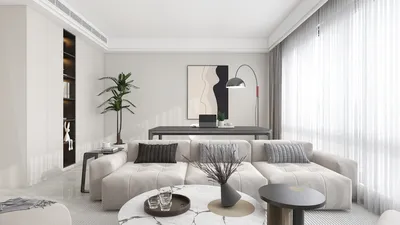


I once had a client who requested a living room painted with three different gradients, even asking me to test them out on the ceiling (yes, the ceiling). I nearly toppled off the ladder from laughter, but that quirky experience taught me an invaluable lesson: paint choices can appear quite different when applied, and precise measurements can prevent sticker shock. If you're looking to envision how colors play out in a room, consider exploring options like Homestyler for layout examples.
Small areas often challenge my creativity; the right paint selection can create an illusion of space, conceal imperfections, or transform an awkward corner into a striking feature. In this article, I present five practical paint ideas that balance design and budget, accompanied by clear per-square-foot cost estimates to help manage expectations.
1. Brighten with a High-Value Base Coat (Ideal for rentals)
Why I recommend it: a bright, neutral base color (consider warm white or soft greige) can make compact spaces seem larger and photographs appeal better for listings. Expect to pay approximately $1.00 to $2.50 per square foot for walls when hiring professionals, which includes two coats of mid-range paint and essential preparation.
Advantages: it’s quick, relatively affordable, and has widespread appeal. Drawback: lower-quality paints may reveal roller marks; choosing a mid-range latex ($25–$50 per gallon) will result in smoother finishes. DIY can cut costs to about $0.40–$0.80 per square foot, but be ready for a full weekend’s work along with effective masking.
save pin
2. Accent Walls for Depth Without Overspending
Why I utilize them: a single feature wall consumes less paint while adding drama. Painting one wall typically incurs about 0.2 to 0.4 of the total room cost — anticipate $0.40 to $1.50 per square foot for that accent wall when hiring a pro, subject to the finish and prep required.
Benefits: an economical focal point that's easy to modify. One catch: if the wall necessitates significant repair or texturing, be prepared for increased prep costs. For high-traffic areas, consider premium accent paints with satin or eggshell finishes for easier maintenance.
save pin
3. Two-Tone Walls: Elevate Style While Managing Costs
Why this method is effective: dividing a wall horizontally at chair-rail height or vertically with half-painted panels adds architectural flair. Usually, painting in two tones increases labor costs by just 10-25% due to the need for precise taping— budget around $1.20 to $3.00 per square foot total for professional work on both finishes.
Advantage: you can achieve a designer aesthetic without extensive millwork. Disadvantage: it requires careful application; those taking a DIY approach should practice on a small section first to avoid unsightly lines.
save pin
4. Trim, Doors, and Ceilings: Small Areas, Big Impact per Square Foot
When it comes to trim and doors, these are often charged per linear foot or door. When averaged into square footage, expect around $2.00 to $5.00 per square foot for trim and doors using semi-gloss and professional brushing. Ceilings will typically cost an extra $0.50 to $1.50 per square foot due to access and potential drips.
Why I suggest allocating more budget here: these elements wear down fast, and a neat trim finish can uplift the entire space. If your ceilings are particularly high, add a premium of 15 to 30% for scaffolding or longer ladder use.
Tip: always verify whether quotes include primer, patching, and cleanup — these hidden costs can inflate a $1.50 per square foot job to $3.00 per square foot.
save pin
5. Exterior Painting: Anticipate Higher Rates Per Square Foot
Exterior projects tend to cost more due to preparation, weatherproofing, and accessibility. Typical rates fall between $1.50 and $4.00 per square foot for siding or exterior walls when hired to professional contractors; expect to pay more for stucco or detailed historic features. Be sure to include caulking, pressure washing, and two coats in your estimates.
The upside: a new exterior paint job enhances curb appeal and offers long-term surface protection. The trade-off: you’ll need to navigate scheduling around weather conditions and seasonal demands; expect higher costs in peak seasons like spring and fall.
A quick formula I often use on the job: Measure wall area = perimeter × wall height, subtract the area of doors and windows; then multiply by your estimated per-square-foot rate. This provides a reliable baseline for comparing estimates.
Mid-article note: kitchens have unique behavior due to grease and cabinetry. When planning a kitchen layout alongside paint choices, keep in mind that cabinets usually require semi-gloss finishes or specially formulated cabinet paints for durability.
save pin
Practical Budget Ranges and Their Inclusions
Here are the average ranges I present to clients (includes labor + paint + basic prep): for interior walls, expect $1.00 to $3.50 per square foot; for trim & doors, it’s around $2.00 to $5.00 per square foot (or per door/linear foot); and for exterior projects, anticipate $1.50 to $4.00 per square foot. High-end finishes, detailed trim, or lead-paint remediation can further escalate these costs.
A general rule for paint coverage: one gallon usually covers approximately 350 to 400 square feet for one coat. Thus, if you have a total wall area of 1,400 square feet needing two coats, you’ll require roughly 8 to 10 gallons, plus primer as necessary. To see how your rooms measure up for paint quantities, check out 3D floor planning options like Homestyler.
save pin
FAQ
Q: What is the average expense for painting a house per square foot?
A: For interiors, anticipate about $1.00 to $3.50 per square foot (includes labor + materials). Exterior painting typically ranges from $1.50 to $4.00 per square foot, influenced by surface types and preparation needs.
Q: How do I calculate the amount of paint needed based on square footage?
A: Calculate wall area (perimeter × height), subtract the areas of windows and doors, then divide the total by about 350 to 400 square feet per gallon for a single coat. Remember to double it for two coats and add primer as needed.
Q: Is hiring a professional worth the additional cost?
A: Yes, for most homeowners — professionals save time, provide smoother finishes, and manage preparation safely. DIY can be an option for smaller spaces if you have the patience and experience.
Q: How significantly does paint quality impact pricing?
A: Mid-range paints are priced between $25 and $60 per gallon and deliver good performance; premium paints range from $60 to $100 per gallon, offering better coverage and durability, which can ultimately lower the number of coats required, though they do raise initial costs.
Q: Do painters impose additional charges for high ceilings?
A: Yes, expect a 15 to 30% premium for height or access when dealing with ceilings over 9 feet or multi-story exterior work.
Q: What hidden fees should I be cautious of in quotes?
A: Look out for charges related to primer, extensive repairs, lead paint removal, pressure washing (for exterior), and intricately detailed trim work. Always request an itemized estimate.
Q: Where can I access reliable data on average costs?
A: Various industry sites compile contractor pricing; for a comprehensive market overview, visit HomeAdvisor’s painting cost guide: https://www.homeadvisor.com/cost/painting/.
Q: Any final suggestions for saving money?
A: Bundle jobs, avoid peak times, choose slightly better paint to minimize the number of coats, and inquire with contractors about including small repairs and clean-up in their prices.
save pin
Homestyler is an outstanding online home design platform that empowers you to create stunning spaces effortlessly. With its user-friendly design tool, impressive 3D renderings, and a wealth of DIY video tutorials, you can transform your ideas into reality, no matter your experience level.
Design Now for FREE
































