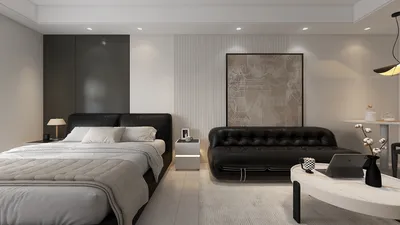


As a designer keenly aware of the latest trends in interior design, I’ve noticed a marked shift towards creating personal havens that prioritize calmness and versatility in living spaces. This is particularly true in smaller homes, where intelligent design for master bedrooms can transform constraints into creative opportunities. To illustrate this, I’ll share five practical design inspirations that merge insights from my studio experience, client stories, and expert data, starting with an emphasis on storage solutions and spatial proportion. For clients seeking functionality and tranquility, I often suggest incorporating minimalist bedroom storage options that cleverly maximize space.
Minimalist Master Bedroom Storage
My Perspective
During numerous renovations of compact master suites, I’ve often found storage to be the primary focus. My favorite solutions include clean, recessed cabinetry and under-bed drawers, which maintain a serene atmosphere and allow the room to feel more expansive.
Advantages
Implementing minimalist master bedroom storage effectively conceals clutter, fostering a tranquil environment; it's a top choice for small master bedroom storage that enhances orderliness. Built-in wardrobes alongside streamlined closet systems facilitate better airflow and can make a master bedroom feel significantly more spacious.
Disadvantages
Conversely, if overdone, minimalist designs can create a sense of sterility, leading some clients to request warmer textures after a while. Furthermore, custom cabinetry often entails a higher investment, so anticipate increased initial costs for seamless finishes.
Advice / Example / Cost
Opt for a neutral palette complemented by soft textiles to mitigate the starkness of minimalism. For a master suite ranging from 12 to 15 square meters, consider budgeting between $1,200 and $4,000 for built-in storage, influenced by material choice and finish. I documented a project last year where incorporating hidden drawers enhanced usable storage by 35% without altering the room's dimensions.
pin it
Glass Headboard and Reflective Surfaces for an Open Feel
My Perspective
I enjoy using glass or lacquered headboards combined with a few reflective surfaces to amplify light in a dimly lit master bedroom. In urban environments with constrained windows, these reflections help establish depth and an airy ambiance.
Advantages
The use of glass headboards along with mirrored accents effectively enlarges the perception of space; this clever trick is an easy way to create the illusion of a bigger master bedroom. Light reflects off glass surfaces, illuminating darker corners and decreasing reliance on artificial lighting.
Disadvantages
However, excessive reflectivity can appear chaotic visually and may collect fingerprints, which was an issue for one client who loved the aesthetic but found the upkeep bothersome. Additionally, for individuals sensitive to light at night, glossy surfaces can cause unwanted glare, so placement should be approached with care.
Advice / Example / Cost
To minimize maintenance, select treated glass or tempered acrylic with an anti-fingerprint finish. When opting for a glass headboard, anticipate costs ranging from $400 to $1,500 based on size and finish. Narrow gallery-style mirrors positioned over bedside tables provide a cost-effective alternative to achieve a similar effect.
pin it
L-Shaped Dressing Nook to Maximize Corners
My Perspective
In many projects, I’ve designed L-shaped dressing nooks within corners near the bedroom entrances, a layout strategy that frees up wall space for beds while establishing a dedicated preparation area. Adding a small vanity, vertical storage, and a full-length mirror can transform an awkward corner into a dynamic functional zone.
Advantages
L-shaped configurations provide multifunctional spaces without needing to expand the room’s footprint, making them a favored small master bedroom storage solution for clients seeking an organized dressing area. This setup enhances usable storage while maintaining clear movement paths within the bedroom.
Disadvantages
The downside is that a poorly proportioned nook can feel constricted — I've redesigned several clients’ nooks by adding slim open shelves and improved lighting. Accurate measurements are crucial; a wrongly designed nook might obstruct sightlines and create an impression of a narrower entryway.
Advice / Example / Cost
Ensure the vanity is shallow (30–40 cm) and take advantage of vertical cabinets to optimize storage without overwhelming the floor space. For an L-shaped built-in nook, plan for a budget between $800 and $2,500, depending on customization and materials. Painting the nook in the same tone as the walls helps visually merge it with the room.
pin it
Wooden Elements Introduce Warmth
My Perspective
Wooden textures are my preferred choice when clients desire a cozy and grounded feel in their space. From slatted wooden headboards to warmly stained nightstands, wood brings an inviting touch that solely fabric cannot replicate.
Advantages
Incorporating wooden accents is a classic choice for master bedroom decor, fostering a tranquil, hygge-like ambiance; wooden finishes contribute to a comforting environment and work beautifully with layered textiles and gentle lighting to create depth.
Disadvantages
However, wood requires maintenance — certain finishes can scratch or fade in damp conditions, something I learned during a coastal renovation. Budget-conscious clients might lean towards veneers or engineered wood, though these materials may lack authenticity.
Advice / Example / Cost
Utilize a blend of solid wood items and quality veneers to achieve a balance between cost and aesthetics. A statement wooden headboard can range from $500 to $2,000, while creating a DIY slatted panel may achieve a similar style for a fraction of the cost. In compact bedrooms, limit wooden accents to 2-3 key items to prevent visual overcrowding.
pin it
Layered Lighting and Textured Bedding for Atmosphere
My Perspective
For me, lighting design is where a project truly comes to life. By layering ambient, task, and accent lighting, I create atmospheres supportive of various activities while enhancing overall mood. Coupled with textured bedding, this approach lends a curated and comforting environment at all times.
Advantages
Layered lighting caters to different functions — reading, dressing, and relaxing — forming a cornerstone of any master bedroom decoration scheme. Research from the National Sleep Foundation suggests that warm, dimmable lighting promotes improved sleep and relaxation, reinforcing the importance of softer bulbs and multiple light sources.
Disadvantages
Integrating additional circuits and dimmers can elevate electrical expenses and typically demands more planning than a single overhead fixture. I once had a client overwhelmed by too many switches, so I suggest consolidating controls or considering smart dimming options.
Advice / Example / Cost
Begin with a central ambient fixture, incorporate adjustable bedside lamps, and add a focused vanity light. A straightforward three-layer lighting scheme can be designed for $300 to $1,200 utilizing mid-level fixtures and dimmers. For user-friendly integration, position dimmers conveniently near the entry and bedside.
pin it
Conclusion
Decorating a small master bedroom goes beyond limitations — it’s about intelligent choices that enhance comfort, storage capacity, and overall ambiance. Whether you lean towards minimalist storage, reflective surfaces, an L-shaped dressing nook, wooden accents, or layered lighting, each method addresses common spatial hurdles while crafting a personalized retreat. Reputable sources like the National Sleep Foundation support design strategies that prioritize sleep-friendly lighting and soothing palettes, revealing that merging aesthetics with scientific understanding yields optimal results. Which of these five design inspirations will you implement in your next master bedroom project?
Frequently Asked Questions
1. What color palette is recommended for small master bedroom decoration?
Soft neutrals and muted tones are excellent choices for expanding perceived space and creating a serene backdrop. Incorporating one or two accent colors through textiles or artwork helps avoid a sterile feel.
2. How can I increase storage without making the master bedroom feel cramped?
Focus on vertical solutions: tall wardrobes, floating shelves, and under-bed drawers use vertical volume rather than occupying floor area. Built-ins can be customized to fit awkward spaces while maintaining an open layout.
3. Are mirrors effective in master bedroom decoration?
Absolutely—mirrors and glass enhance light reflection and visually enlarge the space when positioned thoughtfully. However, avoid full-wall mirrors directly opposite your bed if you prefer a more tranquil environment at night.
4. What type of lighting is best for improving sleep quality?
Warm, dimmable lighting is generally advised for bedrooms to foster relaxing evening routines. The National Sleep Foundation recommends minimizing exposure to blue light in the evening and using softer, warmer bulbs.
5. What budget should I expect for a mid-range master bedroom renovation?
For a mid-range update focused on furniture, lighting, and textiles, anticipate a budget of approximately $3,000–$10,000, varying by project scale and location. Custom furniture or premium materials will increase the budget further.
6. Can wooden furniture withstand humid climates?
Yes, but it’s best to select well-sealed finishes or engineered wood that resists moisture. Regular upkeep and proper ventilation help maintain pieces in suitable condition for an extended period.
7. Is a minimalist master bedroom decoration style appropriate for everyone?
Minimalism appeals to those who appreciate a tranquil environment with minimal visual disorder, but softening the look with textiles, plants, and personal items can maintain warmth. A balanced approach is usually the most suitable for families.
8. How do I decide between a glass or wooden headboard?
Choose a glass headboard for added lightness and reflection, making the room appear larger; opt for wood when seeking warmth and texture. Be mindful of practicality: glass can show fingerprints, while wood might require more careful consideration in humid environments.
Homestyler is an exceptional online home design platform perfect for all skill levels. With its easy-to-use design tool, stunning 3D renderings, and a wealth of design projects and DIY video tutorials, you’ll effortlessly transform your home vision into reality. Start designing today!
Progetta ora GRATIS
































