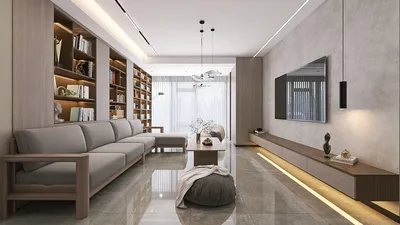


I once suggested a large chandelier to a client residing in a loft, captivated by a striking photo. The chandelier dominated their seating area, prompting the client to humorously remark that I had transformed their living room into a nightclub. This experience taught me an important lesson: when it comes to design, aspects such as scale, layering, and practicality always outweigh flashy fixtures. Especially in smaller living rooms, optimal lighting can inspire immense creativity. Here are five practical strategies I've successfully employed in real projects.
1. Layered ceiling lighting featuring dimmable recesses
For compact living spaces, I often recommend a layered ceiling lighting design. This involves combining recessed downlights for uniform ambient illumination with a central dimmable fixture that sets the mood. The key benefit is versatility — bright lighting for household chores and softer lighting for cozy movie nights. Although the initial wiring costs and circuit planning can be a hurdle, the long-term comfort and energy efficiency make it worthwhile in the end.
save pin
2. Wall sconces to maximize floor space
I've incorporated wall sconces above sofas in small apartments where floor lamps would impede movement. Sconces direct light precisely where it’s needed while conserving valuable floor space. They do require careful installation in terms of height and sometimes wall reinforcements, but they are a quick solution to introduce reading light and add a sculptural element to the space.
save pin
3. Track lighting for adaptable accentuating
Track lighting is my secret weapon when clients wish to showcase artwork, shelving, or unique architectural features. Tracks can be adjusted as the layout of the room changes, and modern LED track heads are both efficient and understated. The main consideration lies in aesthetics; for a cozier ambiance, opt for slim, low-profile tracks instead of larger industrial types.
save pin
4. Integrated LED coves for a soft glow
Integrated LED cove lighting is excellent for creating a gentle, indirect light that enhances the perception of space in a small living room by drawing the eye upward. This subtle and modern approach fits perfectly within layered lighting schemes. Although retrofitting can be tricky, selecting narrow-profile options and warm-colored LEDs will yield an inviting and sophisticated illumination.
save pin
5. Multi-functional floor lamps with adjustable arms
In scenarios where wiring changes aren't an option, a thoughtfully chosen floor lamp can serve multiple purposes: providing task lighting, creating ambiance, and acting as a design feature. I once staged a rental with an elegant arcing floor lamp that quickly became the tenant's preferred spot for reading and video calls. A consideration, though, is the space it occupies, so selecting lamps with narrow bases and swing arms helps minimize tripping risks.
For those looking to experiment with fixture placement and visualize different lighting layers before purchasing, I recommend using a 3D floor planner. It allows you to map out light positions and sightlines in your living room. This tool has saved me from numerous furniture rearrangements and aids clients in choosing the correct scale for their space.
save pin
Quick Tips:
Here are some practical quick tips: opt for warm white bulbs (2700–3000K) for a cozy atmosphere, use LEDs with a CRI of 90+ for accurate color representation, and always install dimmers on key switches. For rental properties, preference should be given to plug-in fixtures and wall-mounted sconces that utilize lightweight anchors.
save pin
FAQ
Q: What lighting fixtures are ideal for a compact living space? A: A combination of layered lighting, including ambient, task, and accent options, is essential. Merging recessed or ceiling fixtures with sconces or floor lamps strikes a balance between brightness and space efficiency.
Q: How many lumens are necessary for a living room? A: You should aim for 1,500–3,000 lumens in total, varying according to room size and natural light availability; using dimmers allows for mood adjustments.
Q: Should the lighting in a living room be warm or cool? A: Warm white (2700–3000K) light contributes to a cozy atmosphere, while cooler colors can be reserved for task-oriented areas.
Q: Are LED fixtures a worthwhile investment? A: Absolutely — LEDs are energy-efficient, operate at lower temperatures, and have a significantly longer lifespan compared to incandescent or halogen bulbs.
Q: Can I retrofit LED coves in an existing ceiling? A: Generally yes, but it largely depends on the ceiling’s depth and access; always consult an electrician for a safe installation process.
Q: What height should wall sconces be installed at? A: Typically, sconces should be placed 60–66 inches above the finished floor to illuminate at eye level while seated.
Q: How can I avoid glare from recessed lighting? A: Consider using baffles, opting for adjustable trims, and directing lights away from TV screens and seating areas.
Q: Where can I find guidance on layout planning for lighting? A: The Illuminating Engineering Society (IES) offers valuable lighting standards and insights; refer to their publications for best practices. For interactive planning, I highly suggest utilizing a free floor plan creator to visually assess fixture locations.
save pin
Discover the magic of home design with Homestyler! This user-friendly platform offers an intuitive online design tool, stunning 3D renderings, and a wealth of DIY video tutorials. Perfect for both beginners and seasoned designers, it empowers you to create your dream space effortlessly.
지금 무료로 디자인하세요
































