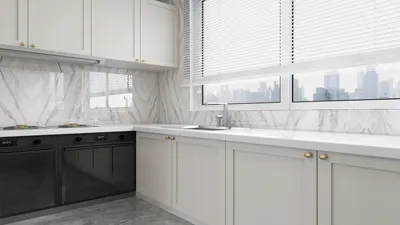


I once had a request from a client to design a statement wall in a kitchen so compact that the fridge seemed to reside in the hallway — I nearly suggested a mural depicting a tiny fridge to scale. Instead, I sketched a quick compromise on a napkin and later refined it into a comprehensive plan; that initial sketch became one of my favorite techniques for exploring contrast and proportion. To quickly capture that first idea, I usually create a layout sketch before selecting materials, which can later be brought to life in Homestyler.
Compact spaces often ignite grand ideas, and accent walls represent one of the quickest ways to infuse character into a small kitchen without undergoing a full renovation. Here, I share five practical kitchen accent wall concepts I have implemented in real projects, along with valuable tips regarding what works well (and what pitfalls to avoid).
1. Striking Paint — Choose Depth Over Noise
Selecting a rich, saturated color for one wall can immediately anchor the kitchen. For instance, I once painted a narrow galley kitchen in navy; the hue made the cabinetry appear intentional while highlighting the white countertops. This approach is cost-effective and easily reversible, but be mindful of lighting — a dark wall can feel heavy in poorly lit areas.
save pin
2. Subway Tile with a Unique Twist
While classic subway tile never goes out of style, altering its layout — whether vertical stack, herringbone, or offset with dark grout — introduces fresh texture without feeling cluttered. I recommended staggered charcoal grout to a client for their backsplash to conceal grease while establishing a rhythm; it is easy to maintain, although the chosen grout color is crucial for longevity.
save pin
3. Open Shelving with an Accent Backdrop
Open shelving set against an accent wall enhances both depth and functionality: they are perfect for storing everyday dishes while showcasing a curated color palette. I often pair floating wooden shelves with either a painted or tiled backdrop, ensuring the display appears as deliberate styling rather than haphazard storage. If you love to style but dread the dusting, restrict the open shelves to a single stretch above the sink; it remains visually appealing and manageable.
For tight layouts, I evaluate how the shelving aligns with the plans and workflow using kitchen layout templates, which helps prevent awkward shelf placements that obstruct cabinets or sightlines.
save pin
4. Wallpaper — Thoughtful Patterns
Wallpaper introduces instant charm: small repeating patterns can make a compact kitchen feel inviting, while larger botanical prints provide drama. Once, I used washable vinyl wallpaper in a breakfast nook to conceal splatters and echo a color from the cabinetry. Be cautious about moisture — opt for washable, scrubbable materials near cooking areas.
save pin
5. Diverse Materials — Wood, Metal, or Stone Accents
Mixing materials (like reclaimed wood paneling, metal sheeting, or thin stone veneer) creates tactile contrast that conveys luxury even on a budget. I once finished a tiny peninsula with tongue-and-groove wood to hide scuffs while adding warmth; my clients appreciated its durability. Keep in mind that installation might be more complex than paint application, so allocate sufficient time and consider hiring professionals for intricate substrate work to prevent future gaps or warping.
save pin
Tips 1:
Be mindful of scale: a striking pattern on a small wall can be overwhelming, while a deep, saturated color on the longest wall can anchor the space. Test samples in varying light throughout the day, and remember that practical considerations (cleanability, heat, and humidity) are just as important as aesthetics. When envisioning finishes, I frequently utilize realistic 3D renderings in Homestyler to expedite the revision process.
save pin
FAQ
1. What is the easiest kitchen accent wall idea for renters?
I suggest peel-and-stick wallpaper or removable adhesive tile sheets; they add texture and pattern while being easy to remove when it's time to relocate. Paint can also be an option if your lease permits and you settle on a neutral color for future repainting.
2. How do I choose the right color for an accent wall?
Select one or two shades from existing elements such as countertops or cabinet hardware, and test large samples on the wall during different times of the day. Both natural and artificial lighting can alter how the color appears, so it's advisable to live with samples for a few days.
3. Are accent walls outdated?
Not at all — they evolve. Accent walls that take into account materials, scale, and functionality (like shelves or backsplashes) are currently trending and can be more timeless than options purely for decoration.
4. Can I have an accent wall behind my stove?
Absolutely, but ensure you use heat- and grease-resistant materials such as ceramic tile, metal backsplashes, or sealed stone. Steer clear of porous wallpapers or untreated wood behind high-heat areas to ensure longevity.
5. How much should I budget for a modest accent wall?
Expect costs to vary widely: paint could range from $50 to $300 including labor if you hire help; tiles or specialty panels might be priced between $200 and $1,500 based on materials and complexity. I always advise obtaining multiple quotes for installation.
6. Will a dark accent wall make my kitchen appear smaller?
Dark walls can visually recede, often making certain areas feel cozier and deeper, but in dimly lit rooms, they may come across as cramped. Balance this effect with lighter cabinetry, reflective surfaces, or adequate task lighting.
7. How do I maintain a tiled accent wall?
Use the appropriate grout sealer and select grout colors that conceal stains; routine cleaning with a mild cleaner helps keep tiles looking pristine. For technical advice on kitchen layout and safety standards, refer to the National Kitchen & Bath Association (NKBA) guidelines at https://www.nkba.org.
8. Can an accent wall add resale value?
Well-executed, neutral-themed accent walls that emphasize quality materials and blend with the home’s overall style can help potential buyers emotionally connect with the space. It is advisable to avoid overly personal or trendy designs if resale is a near-term goal.
save pin
Homestyler is your go-to online home design platform, perfect for transforming your space effortlessly. With its user-friendly design tool, stunning 3D renderings, a wealth of design projects, and engaging video tutorials, you can unleash your creativity and bring your dream home to life!
Design Now for FREE
































