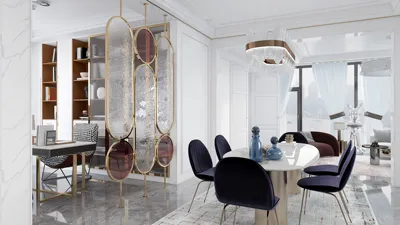


I once encountered a client who firmly believed their cat deserved an exclusive breakfast nook—complete with a cat-sized stool. This quirky request prompted me to reconsider how every inch of an eat-in kitchen can be both functional and inviting. It's often in our smaller kitchens that we discover the most innovative designs, as limitations spark our creativity.
In this article, I'll share five practical design ideas for your eat-in kitchen, drawn from real projects I've managed. These concepts will help you merge seating, storage, and workflow, creating a space that feels both cozy and efficient. Remember, a small area can lead to significant design innovations — so let’s dive in!
1. Built-in Banquette with Hidden Storage
I am a fan of banquettes because they can transform awkward corners into cozy dining areas while concealing storage below the seats. They are ideal for family breakfasts or for using your laptop while coffee brews. The benefits include great comfort and additional drawers, but this requires precise measurements and sometimes custom carpentry, which might increase expenses.
Quick tip: opt for durable fabrics for easy maintenance and ensure the seat depth is well-planned so that the table doesn’t obstruct pathways.
save pin
2. Fold-down Table for Enhanced Flexibility
Fold-down or wall-mounted tables are my top choice when space is limited. They offer a complete dining surface when necessary and can be tucked away when it's cooking time. They are budget-friendly and can be DIY projects, although they might feel less formal and need to be securely attached to the wall.
For optimal results, pair these tables with stackable or foldable stools that fit away neatly.
save pin
3. Peninsula with Counter-height Seating
A peninsula not only forms a multifunctional barrier between the kitchen and living spaces, but it also adds seating without compromising prep space. I designed one that also functioned as additional storage and a study station. While it promotes social cooking, be cautious as a cramped layout can disrupt movement.
Be mindful of appliance placements to ensure the peninsula improves workflow instead of hindering it.
save pin
4. Slim Bistro Sets and Corner Tables
Slim bistro tables or small corner tables provide a low-commitment method to give yourself an eat-in area. They add character and are easy to reposition when redecorating. They may not provide storage or as many seats as built-in options, but their affordability and versatility make them highly recommended.
If you enjoy changing your layout frequently, this method offers you flexibility at a minimal cost.
save pin
5. Integrated Seating with Kitchen Island
An island with integrated seating can feel luxurious, even in compact kitchens when designed with care. I’ve created islands with varied heights to distinguish between preparation areas and dining zones. The advantages are evident: extra surface area, added storage, and a social hub. However, it’s crucial to ensure there’s ample space around the island for comfortable movement.
Carefully measure distances — maintaining 100–110 cm (40–43 in) between the island and cabinets is a good guideline.
save pin
Design Resource
If you're looking to visualize layouts before making decisions, I often recommend room planning tools that allow clients to create mock-ups of seating and traffic flow. Using a 3D planner like Homestyler can prevent costly mistakes in real projects, offering an easy way to explore various arrangements for banquettes, islands, and fold-down tables in your layout.
save pin
Tips 1:
Budget tip: While built-in features and islands may come at a higher cost, they add long-term value. In contrast, bistro sets and fold-down tables are more affordable and flexible. Focus on circulation and storage — a well-thought-out small eat-in kitchen can often outperform a cluttered larger one.
FAQ
Q: What is the minimum size required for an eat-in kitchen?
A: Ideally, aim for a space of at least 8-9 square meters (approximately 86-97 sq ft) to comfortably fit a small table along with circulation space. However, inventive solutions like fold-down tables can make smaller spaces more functional.
Q: How much clearance is necessary around a dining area in the kitchen?
A: Aim for a gap of around 90-110 cm (35-43 in) between table edges and adjacent cabinets or walls to allow for comfortable movement.
Q: Are banquettes a worthwhile investment?
A: Absolutely, especially if you require both seating and storage; they are custom-made but offer added functionality and a warm aesthetic.
Q: What type of seating is easiest to clean?
A: Choose performance fabrics or leatherette for upholstered choices and go for materials like sealed wood or metal for chairs that are resilient against spills.
Q: Can a kitchen island fit in smaller kitchens?
A: Yes, provided you maintain a minimum clearance of 100-110 cm on working sides; consider a more compact island or a movable cart for constrained layouts.
Q: Which layout is best suited for multi-tasking families?
A: Peninsulas and islands that separate preparation and dining areas while allowing for visual supervision are generally the most effective for families with multiple tasks.
Q: Where can I locate reliable planning tools to experiment with layouts?
A: Professional resources like Homestyler’s planning features provide interactive examples and 3D visualization to minimize design risks. Check out their 3D floor planner for quick layouts.
Q: Are there established guidelines for kitchen workspace dimensions?
A: Yes, for instance, the American National Kitchen and Bath Association (NKBA) offers recommended dimensions for clearances and working triangles; refer to NKBA standards for detailed guidance (nkba.org).
Homestyler is a fantastic online home design platform that empowers you to create stunning spaces effortlessly. With its user-friendly design tool, impressive 3D renderings, and a wealth of DIY video tutorials, you can easily transform your ideas into reality. Perfect for both beginners and seasoned designers!
Дизайн сейчас бесплатно
































