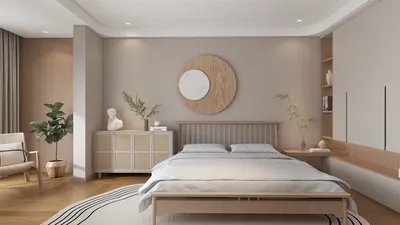


Once, I had a client who insisted on having their bedroom painted in a shade called "vintage teal" to complement cherry wood floors—resulting in a look reminiscent of a Victorian teacup explosion. After a hurried repaint and a deep dive into the nuances of color undertones, I discovered that the key to successful color selection is achieving a harmonious balance that enhances warmth rather than competes with it. It’s crucial to visualize the entire room before making a single brushstroke. I often recommend my clients utilize 3D modeling tools like Homestyler to envision their space during our color consultations, as lighting and reflections can dramatically alter how colors appear, saving us from costly repaints.
1. Warm neutrals: creamy beige and warm greige
For cherry wood floors, I often choose a gentle warm neutral—think of creamy beige or greige with just a hint of yellow or peach. These shades honor the red undertones in the flooring, fostering a cohesive and inviting atmosphere. However, they may appear flat if not paired with textures; therefore, incorporating elements like wood, brass, or woven textiles can add depth and warmth.
2. Muted sage green for a calming contrast
Muted sage or soft greens act as the tranquil companion that enhances the richness of cherry wood. These colors provide a cool contrast to the warmth of the floors, making them particularly well-suited for kitchens and living rooms. When choosing green tones, opt for dusty, gray-tinged sages to sidestep overly vivid results.
3. Greys with warm undertones for modern balance
A mid-tone gray with warm undertones can rejuvenate a space without clashing with wooden floors. This color works wonderfully in open-plan designs, but it’s vital to find the right gray; overly cool tones can create a disconnect from the warmth of the wood. Be sure to test color samples in both morning and evening light to make the best choice.
4. Deep navy or charcoal accent walls for drama
For those desiring a dramatic effect, consider an accent wall in navy or charcoal paired with cherry wood floors; this combination can ground a room and highlight the beauty of the wood grain. It’s important to think about scale when using these deep colors; instead of covering all walls, you might choose to apply it to an accent wall or ceiling, complemented by reflective surfaces to prevent the space from feeling cavernous.
5. Dusty rose or blush for soft harmony
Muted pinks—such as dusty rose or blush—can beautifully complement cherry wood by echoing its red undertone without appearing overly feminine. I once employed this color in a client's bedroom, and the outcome was unexpectedly serene. To prevent a heavy-handed look, combine these hues with neutrals and natural fibers for a balanced aesthetic.
As a quick budget-friendly tip, consider purchasing sample pots and painting full 2x3-foot panels on different walls to observe how colors change throughout the day. If you're inclined to test wall and floor combinations digitally first, tools like Homestyler can help you visualize your selections, saving you time, paint, and potential stress.
Don't underestimate the impact of lighting: warm incandescent or warm LED bulbs (2700–3000K) will accentuate the red tones of cherry wood, while cooler daylight bulbs can shift paint toward a bluish hue. I always emphasize the importance of live testing; nothing beats seeing your selected colors in your own home environment.
For those who prefer digital visualizations, I regularly incorporate tools that help illustrate the final color scheme. Using 3D visualizations, like those provided by Homestyler, allows clients to make decisions with certainty, often preventing late-night repainting surprises in my projects.
FAQ
Q1: What are the safest paint colors to use with cherry wood floors?
A1: Warm neutrals like creamy beige, warm greige, and muted sage are excellent choices as they harmonize with the red undertones of cherry wood, promoting an atmosphere of cohesion without clashing with the floors' natural warmth.
Q2: Can cool grays complement cherry wood?
A2: Yes, provided the gray has warm undertones. Pure cool grays might clash, leaving the room feeling misaligned; opt for grays identified as warm or greige to enhance harmony with the wooden flooring.
Q3: Is navy too dark to use alongside cherry floors?
A3: Not at all when applied as an accent. Navy or charcoal can create a sophisticated contrast, but in smaller spaces, it’s wise to limit it to one wall or apply it to a built-in fixture to avoid making the area feel cramped.
Q4: How can I determine the undertone of my cherry wood floor?
A4: Examine the wood in natural light next to a white sheet—if it has strong red or orange hues, look for paints with warm or neutral undertones. Performing sample tests in person is the quickest way to confirm this.
Q5: Any techniques for color testing without purchasing gallons?
A5: Paint sample panels on various walls and observe them at different times of day. For a rapid digital assessment, consider utilizing tools that allow virtual testing of wall and flooring combinations—that way, you can expedite early decisions effectively.
Q6: Are there colors that should be avoided with cherry wood?
A6: Yes, extremely cool blues or stark whites with blue undertones can create jarring contrasts. Additionally, avoid overly saturated primary colors that oppose the warmth of the wood.
Q7: Can the paint finish influence the pairing with cherry floors?
A7: Definitely. Eggshell or satin finishes are adaptable and conceal imperfections well, while high gloss reflects more light and can intensify brightness; matte finishes dampen color but highlight texture, depending on your desired outcome.
Q8: Where can I seek professional color advice?
A8: Many manufacturers offer resources; for instance, Sherwin-Williams provides color matching and guidance on undertones (check out Sherwin-Williams color tools at https://www.sherwin-williams.com). Merging their advice with practical testing yields the most dependable results.
Lastly, if you need assistance in coordinating a complete design scheme—inks, ceilings, and accents—I recommend leveraging AI-driven suggestions to speed up the process and ensure all elements work harmoniously. Tools that offer AI interior design suggestions can streamline iterations, avoiding the need to repaint later.
Discover your interior design potential with Homestyler! This user-friendly online platform offers a powerful design tool, stunning 3D renderings, and a wealth of design projects and DIY video tutorials. Transform your space with ease and creativity—perfect for both beginners and seasoned decorators!
Design Now for FREE
































