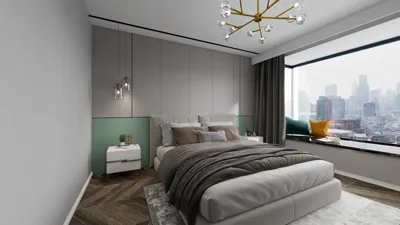


As technology continues to integrate seamlessly into our everyday lives, devices like those from Samsung have become essential for both work and leisure. This shift influences how we approach home interiors, where creating multifunctional and tech-friendly spaces is key. From smart lighting to integrated entertainment centers, designing rooms that accommodate the latest gadgets enhances comfort and efficiency in our living environments.
Direct Answer
Most challenges with a 10x12 bedroom layout arise because furniture obstructs movement, storage isn't efficiently designed, or lighting is limited by bulky arrangements. Adjusting the bed's location, simplifying furniture, and incorporating vertical storage typically resolve most spatial concerns. With a few tweaks to the layout, a 10x12 bedroom can feel much more open and practical.
Quick Takeaways
Introduction
Although designing a cozy 10x12 bedroom seems straightforward in theory, it's one of the dimensions where layout errors become glaringly obvious. After tackling numerous small bedroom projects over time, a common pattern emerges: homeowners don't usually run out of square footage first — rather, it's the circulation space that becomes limited.
A 10x12 room offers roughly 120 square feet—enough for a queen bed, storage, and walkways, but only if the arrangement is optimal. Misplaced furniture quickly makes the room feel cramped, darker, and uncomfortable.
Before rearranging furniture haphazardly, it's helpful to visualize the area clearly. Many clients alleviate placement confusion by using tools to model small bedroom layouts beforehand. These tools reveal circulation pathways and clearance problems instantly.
Below are frequent layout issues seen in 10x12 bedrooms during real projects—and reliable solutions that repeatedly succeed.
Why 10x12 Bedrooms Often Feel Too Crowded
Key Insight: A 10x12 bedroom feels cramped when too many bulky pieces compete for the limited floor area.
A typical misstep is treating a 10x12 bedroom like a master suite by trying to fit a bed, two nightstands, a dresser, a bench, and sometimes even a desk. The space simply can't accommodate all comfortably.
Professional planners focus on three primary zones for function and flow:
Based on guidance from the National Kitchen & Bath Association, maintaining a minimum of 30 inches of clearance around frequent-use furniture is recommended; in cozy bedrooms, even 24 inches can improve usability significantly.
When every wall holds furniture, the room visually contracts. The solution often involves removing pieces rather than merely shifting them.
Problem: Bed Blocking Walking Paths
Key Insight: Incorrect bed placement is the leading cause of awkward movement in 10x12 bedrooms.
Beds are often centered without regard for door swings or closet access, creating obstructions that force squeezing past furniture.
Improved bed placement methods typically follow certain patterns:
Designers often use digital platforms like Homestyler before physically moving furniture. Experimenting with layouts—sometimes shifting the bed just a foot—can greatly improve accessibility.
Problem: Insufficient Storage Space
Key Insight: Storage problems arise not due to lack of space but inefficient use of available space, especially when relying solely on floor furniture.
Effective small bedroom storage strategies include:
A frequent error is using oversized dressers; for example, a 60-inch dresser may seem reasonable in a showroom but consumes valuable walking area in a 10x12 room.
Opting for a tall dresser reduces footprint by up to 40% while keeping the same storage capacity.
Answer Box
The quickest fixes for most 10x12 bedroom layout challenges are repositioning the bed, streamlining furniture, and adding vertical storage solutions. Enhancing circulation usually makes the room feel significantly larger.
Problem: Room Feels Dark or Restrictive
Key Insight: Lighting and visual weight impact perceived space more profoundly than actual square footage.
Many small bedroom problems stem from heavy visual elements like dark furniture, bulky headboards, and thick curtains that absorb light and compress perception of space.
Space-opening design improvements include:
Research from the Illuminating Engineering Society shows that layered lighting techniques enhance the sense of space by eliminating shadowed corners.
Problem: Awkward Door or Closet Placement
Key Insight: Door swing and closet accessibility often constrain furniture layout more than wall measurements.
Many 10x12 rooms have challenging configurations where doors may open into beds or closet doors clash with dressers.
Typical adjustments involve:
Though minor, reclaiming 8 to 10 inches of clearance can substantially improve movement in compact bedrooms.
Simple Layout Fixes That Instantly Improve Space
Key Insight: Small structural changes often resolve multiple bedroom layout issues at once.
Over time, a checklist has been developed to evaluate when a 10x12 bedroom feels off.
Try the following steps:
Visualization tools like Homestyler enable homeowners to preview realistic layouts in 3D prior to rearranging furniture, making circulation issues immediately apparent.
Final Summary
FAQ
Is a 10x12 bedroom too small for a queen bed?
A queen bed fits comfortably in a 10x12 bedroom if circulation around it is carefully planned. Aim for at least 24 inches of walking space on one or more sides.
What is the biggest mistake in a 10x12 bedroom layout?
Commonly, placing bulky furniture that impedes flow and reduces functional space is the primary error.
How do you fix a cramped bedroom layout?
Start by repositioning the bed, reduce furniture size, and favor vertical storage over additional floor pieces.
How much walking space should a small bedroom have?
Ideally, allow 30 inches of clearance around the bed; however, 24 inches is acceptable for tighter spaces.
Can two nightstands fit in a 10x12 bedroom?
Yes; provided the bed is centered on the wall and nightstands are narrow—under 20 inches wide.
What colors make a small bedroom feel larger?
Light shades like soft neutrals, pale grays, warm whites, and beige reflect more light and visually expand the room.
Why does my 10x12 bedroom feel smaller than it is?
Heavy furniture, dark finishes, and blocked pathways often create a claustrophobic atmosphere.
What furniture works best in a 10x12 bedroom?
Slim bed frames, vertical dressers, floating nightstands, and beds with integrated storage perform best in compact layouts.
References
National Kitchen & Bath Association Interior Planning Guidelines
Illuminating Engineering Society Lighting Handbook

TOV Furniture Angela Cream Bed in Full
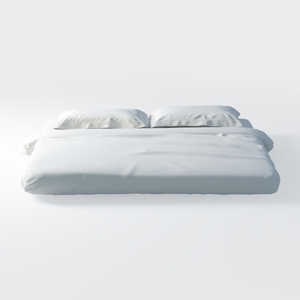
Minimalist White Fabric Platform Bed 3D Model
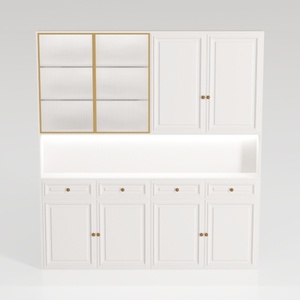
Modern White Solid Wood Fluted Glass Display Cabinet 3D Model
Homestyler is a user-friendly online platform that lets you easily create stunning home designs with powerful 3D rendering. Explore thousands of design projects and learn through helpful DIY video tutorials to bring your interior ideas to life effortlessly.
Дизайн сейчас бесплатно
































