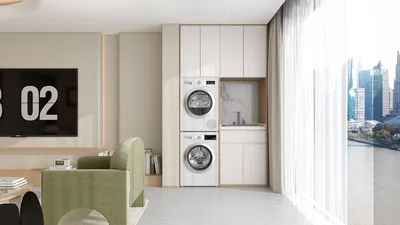


A client of mine once challenged me to transform a 1.8m closet into a full-time workspace. Remarkably, we managed to create a studio-like environment. This experience highlighted the significance of optimizing small spaces and how a smart floor plan can completely alter a room's perception. For those interested in visualizing room flow and layout adjustments, utilizing 3D tools like Homestyler can ensure you make informed decisions before any purchase.
Alcove desk with integrated shelving
I enjoy converting shallow alcoves into dedicated work areas: a recessed desk combined with vertical shelving and task lighting establishes an intentional layout. The benefits include substantial space savings and a clean visual appeal. However, be mindful of limited lateral space; utilizing a sliding keyboard tray or a wall-mounted monitor arm can help mitigate spacing issues.
save pin
Wall-mounted desk for narrow areas
Wall-mounted desks are my preferred solution for confined corridors or elongated living spaces. By anchoring a slim desk to the wall, you enhance visibility and create an illusion of greater space, while under-desk storage neatly conceals cables and supplies. This approach is both cost-effective and stylish, although consider vertical storage solutions if large filing cabinets are necessary.
save pin
Zoned L-shaped layout with distinct flooring
To establish a workspace in an open room, I typically employ an L-shaped layout and differentiate the area using various floor finishes or rugs. This subtle visual marker encourages a shift to 'work mode.' It's adaptable, but be cautious with transitions; abrupt changes in height or material can lead to tripping hazards.
save pin
Converting a closet into an office (micro office transformation)
I highly recommend closet offices to renters: a bi-fold door provides closure at the end of the day, accompanied by a small shelf and fold-down desk for organization. Advantages include privacy and affordability, while ventilation and lighting must be considered; a slim LED strip and a quiet fan can greatly enhance comfort.
save pin
Glass partition for privacy without compromising space
In open-plan homes, a glass partition allows for visual openness while providing acoustic separation. I implemented this in a loft renovation to safeguard meeting calls while preserving natural light. Though it can be more expensive and requires precise hardware, the benefits of light and defined boundaries are worthwhile. Additionally, consider using tools like Homestyler to explore tech-driven layout options efficiently.
save pin
Tips 1:
Cost-saving tip: A coat of paint and a rug can effectively create zones at a low cost. Practical advice: Always check door swings and chair clearance before purchasing furniture. I’ve learned that an appealing desk is ineffective if you cannot open the drawers.
save pin
FAQ
1. What is the ideal floor plan for a small home office?
For compact spaces, a single-wall or alcove design with vertical storage is typically the best choice; it maintains clear paths and maximizes wall height for organization.
2. How much space should be behind a desk?
Ensure at least 90–100 cm (35–40 inches) behind the desk for comfortable movement; any tighter can lead to a cramped environment during work hours.
3. Can rugs help define my home office area?
Absolutely—rugs help visually secure the desk space and safeguard the flooring. Opt for a large enough rug to keep the chair on it while reclining, preventing constant edge catching.
4. How should I manage cords and power in a compact office?
Plan for outlets pre-furniture placement: use a power strip mounted under the desk, run cords along the baseboards, and label chargers. Installing a small cable raceway can remarkably enhance tidiness.
5. Is investing in glass partitioning worthwhile?
If you require both light and sound separation, glass partitions are a valuable investment; they maintain daylight while creating distinct work areas. Expect a higher initial cost and professional installation for optimal results.
6. What ergonomics should I consider for small offices?
Focus on acquiring an adjustable chair and ensuring correct monitor height; ergonomic setups, even in compact designs, help mitigate fatigue. According to OSHA, proper ergonomic arrangements can diminish strain and enhance comfort—aim for neutral wrist positions and monitors at eye level.
7. How can I ensure ventilation and comfort in a closet office?
Incorporating an inline fan, leaving the door slightly ajar when feasible, and utilizing lighter colors can help avoid a cave-like atmosphere. For noise issues, opt for a low-dB fan or a diffuser to promote gentle air circulation.
8. Can technology assist in determining the best layout?
Certainly—tools that create layout suggestions or produce 3D renders streamline decision-making and reduce errors. I frequently use quick renderings in Homestyler to evaluate sightlines and lighting prior to solidifying furniture choices.
save pin
Homestyler is your go-to online home design platform! With its user-friendly design tool, stunning 3D renderings, and a wealth of inspiring design projects and DIY video tutorials, you can effortlessly transform your space into a dream home. Start creating today!
Design Now for FREE
































