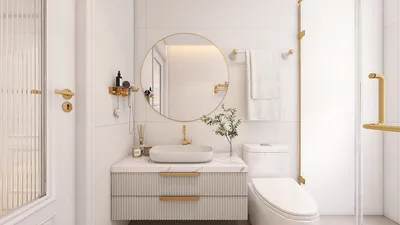


Optimizing a small bathroom with blue and yellow tones works best when blue serves as the main backdrop and yellow is introduced through subtle accents. Utilizing soft blue walls, reflective materials, vertically oriented tiles, and well-planned lighting helps prevent bold hues from making the space feel confined.
Achieving harmony is crucial: cool blue shades impart a sense of spaciousness while warm yellow highlights attract attention and enhance brightness without overpowering the area.
Key Points at a Glance
Introduction
Designing a compact blue and yellow bathroom might seem straightforward until the planning phase begins. Having renovated numerous small apartments in Los Angeles, I've noticed that bold color choices often complicate small bathroom designs. While many homeowners appreciate the lively vibe of blue and yellow, improper shade selection or placement can instantly create a cramped atmosphere.
Contrary to popular belief, avoiding strong colors altogether isn't necessary. When applied thoughtfully, blue can deepen spatial perception, and yellow can reflect light to brighten the room. The true challenge lies in balancing contrast, finishes, and visual weight.
Before deciding on paints or tile, I suggest clients use interactive bathroom planners, including tools like Homestyler, to simulate fixture layouts and color placement. Visualizing color interactions within the floor plan helps avoid expensive errors.
Here are proven methods I consistently use to successfully incorporate blue and yellow in small bathrooms without compromising openness.
Challenges of Employing Bold Colors in Tiny Bathrooms
Insight: Bold hues reduce perceived space only if contrast and surface areas are mismanaged.
A common error is covering dark navy walls and bright yellow tiles extensively. This heavy visual contrast fragments the space perception.
Small bathrooms benefit greatly from consistent visuals. Excessive color breaks disrupt flow, shrinking the feel of the room.
Hidden pitfalls include what designers call 'visual noise.' According to the National Kitchen and Bath Association, simplifying surfaces and limiting dominant shades enhance perceived room size.
Best Blue Hues for Compact Bathroom Walls
Insight: Soft, slightly grayish blues create dimension without enclosing the space.
Through extensive testing in small bathrooms, I've found that muted blues perform best. Overly saturated blues can feel dense when covering entire walls.
Dependable blue tones for small bathrooms include muted and cool shades that reflect light while providing character. Architectural Digest designers often recommend cooler blues since they visually recede and enhance depth perception.
A smart design move is to keep ceilings white and apply blue on a single focal wall, such as behind the vanity. This anchors the design without enclosing the space.
How Yellow Highlights Amplify Compact Areas
Insight: Yellow should appear as accents covering less than 20% of visible surfaces for optimal effect.
In practice, yellow rarely covers large surfaces. Instead, it adds pops of brightness that attract the eye and reflect light.
Ideal placements for yellow accents include towels, trims, small tile bands, or accessories.
This technique adds vibrancy without overwhelming the calmness established by blue walls. Testing color placement in visual planning tools like Homestyler can quickly show if yellow usage is balanced or excessive.
Mirror and Lighting Techniques to Visually Expand Small Bathrooms
Insight: Reflective surfaces play an equal role alongside color in enhancing small spaces.
Blue tones absorb slightly more light than neutrals, making thoughtful lighting essential. Combining ambient, task, and accent lighting layers maintains luminosity.
Recommended lighting consists of ambient ceiling lights, mirror-mounted fixtures, and accent LEDs.
Large mirrors dramatically enhance spatial perception. A mirror spanning the vanity’s width can visually double room size. Houzz reports oversized mirrors as one of the most effective small bathroom improvements.
Tile Layout Strategies for Blue and Yellow Bathroom Designs
Insight: Tile orientation influences perceived size more than color selection alone.
Many homeowners fixate solely on tile color, yet layout direction significantly affects spatial continuity.
Proven techniques include limiting bold blue tiles to shower walls while using lighter tiles elsewhere to maintain rhythm without overcrowding.
Storage and Decorative Placement for Visual Harmony
Insight: Minimizing visible clutter outperforms adding colorful decor in small bathrooms.
Even carefully curated colors can feel overwhelming if cluttered. Efficient storage keeps the blue and yellow palette clean and balanced.
Space-saving options like recessed shelves and under-sink cabinets preserve openness.
Before finalizing tiles or cabinets, designers often preview the room using realistic 3D bathroom renderings via platforms such as Homestyler, revealing potential clutter issues early.
Final Overview
FAQ
Is blue and yellow suitable for small bathrooms?
Absolutely. Blue expands spatial perception while yellow brightens. When balanced properly, a small blue and yellow bathroom feels lively yet roomy.
Which blue shade is best for small bathrooms?
Light, subdued blues like powder blue or blue-gray work best by reflecting light and receding visually.
What amount of yellow is ideal in small bathrooms?
Yellow should cover less than 20% of visible surfaces, ideally through accents such as towels, trims, or tiles.
Can dark blue be used in compact bathrooms?
Yes, preferably on a single accent wall or shower area. Excess dark blue can visually shrink the space.
Do mirrors make small bathrooms appear larger?
Large mirrors reflect light and double visual space, significantly enhancing the feeling of size.
What tile size suits small bathrooms best?
Large-format tiles reduce grout lines, creating smoother visuals that help rooms feel more spacious.
How should bright colors be incorporated in compact bathrooms?
Prioritize accents over large surfaces by using colorful accessories or tile details to add pops without cluttering.
What is the biggest pitfall in small blue and yellow bathroom design?
Using too many competing patterns or applying both colors extensively on large surfaces causes visual fragmentation.
References
National Kitchen and Bath Association Design Guidelines
Architectural Digest Color Trends in Interior Design
Houzz Reports on Bathroom Renovations



Homestyler offers an easy-to-use online design tool with stunning 3D renderings, a vast collection of interior design projects, and helpful DIY video tutorials—perfect for anyone looking to create and visualize their dream home effortlessly.
立即免费设计
































