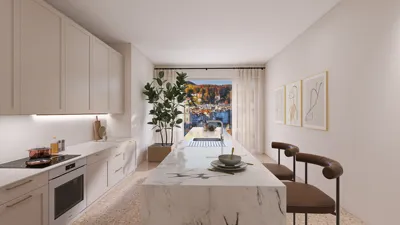


My approach to designing kitchen window heights considers how individuals cook, gather, and move around the space—never as an afterthought. By selecting the optimal sill and head height, I can maximize natural light for food preparation, provide comfortable views while at the sink, and allocate enough wall space for storage. During kitchen renovations, I find that setting the sill between 40–44 inches above finished floor (AFF) often aligns perfectly with standard 36-inch countertops equipped with a low-profile splash, while ensuring that the window frame remains protected from water. This design respects human factors; the average standing adult's eye level is typically around 60–63 inches, allowing for a comfortable view without needing to bend or stretch. Utilizing tools like Homestyler can aid in visualizing these elements effectively.
My designs prioritize task performance and comfort. WELL v2 highlights the significance of daylight access and glare management in enhancing visual comfort, promoting strategies that align with circadian health and minimize eye strain. Research by Steelcase indicates that effectively managed daylight coupled with reduced glare leads to better focus and fewer visual distractions in workspaces—concepts that transfer seamlessly into kitchen environments. By managing daylight at critical areas like the sink or food prep zones, I ensure that the work surface remains well lit at a standard height of 36 inches AFF and minimize contrast that could lead to fatigue. Additionally, I always refer to IES lighting recommendations, aiming for ambient and task lighting levels around 300–500 lux on counters, complemented with various lighting options, including pendants and under-cabinet LEDs to match any window height choice.
Crucial Ratios I Reference for Kitchen Window Heights
• For a typical 36-inch counter featuring a 4–6 inch backsplash, I set the sill at 40–44 inches AFF. This height allows for a clean caulk line, minimizes splash-back damage, and keeps the trim safe from faucets.
• In instances with deeper counters or apron-front sinks: I elevate the sill to 44–48 inches to accommodate taller faucet necks and swinging arcs.
• For no-backsplash, full-height solid surfaces: I may lower the sill to 38–40 inches, provided the window jamb is shielded with waterproof returns and the faucet's projection is confirmed.
• For expansive views in eat-in bays: I sometimes opt for lower sills (30–34 inches) which provide stunning seated sightlines, but strategically avoid positioning them directly behind the main sink where water exposure is significant.
Harmonizing Views, Storage Solutions, and Ventilation
I establish a hierarchy of essential functions. If the sink is located on an exterior wall, I prioritize a centered window with a sill designed to clear fittings and a head height that allows for sufficient space for ceiling-mounted cabinets or a range hood installed elsewhere. When upper storage options are limited, I may select a taller sill and elevate the head to accommodate flanking wall cabinets. If a cooktop is positioned along the exterior wall, I generally steer clear of low windows located behind it due to local codes and hood capture regulations that typically call for solid wall surfaces. Utilizing a tool such as Homestyler during layout planning can substantiate clearances, cabinet lines, and the correct placement of windows before starting rough-ins.
Sightlines and Ergonomics at the Sink
The average adult's eye level is approximately 60–63 inches AFF. I aim for the window head to be positioned between 80–84 inches AFF, ensuring that the casing stops just below the ceiling lines, allowing space for valances, shade boxes, or integrated lighting. For ceilings measuring 8 feet, I conclude the window at 80 inches while keeping the upper trim slightly above the crown. In rooms with taller ceilings, raising the head to 90–96 inches enhances the vertical proportion and allows more daylight to penetrate deeper into the space. I also ensure to keep mullions out of the central view from the sink position to maintain an unobstructed perspective.
Strategies for Glare, Heat, and Shading
One of the main concerns my clients have is glare at the counter. Windows facing south and west require advanced shading solutions. I recommend light-filtering roller shades with 3–5% openness or slats that adjust to block high-angle sunlight. WELL v2 underscores the need for adjustable shading options to enhance visual comfort. To complement this, I prefer matte or low-sheen finishes on countertops to reduce glare. For windows facing east, the bright morning light is welcome; hence, I ensure that sill protection is thoroughly implemented and choose warm LED lights in the 2700–3000K range to help maintain equilibrium as sunlight changes.
Selecting Materials Around the Sill
Considering that moisture is unavoidable around sink walls, I utilize non-porous materials for returns—solid surfaces, large-format porcelain, or epoxy-sealed wood for the apron. I bevel the window stools slightly backward to encourage water drainage toward the sink and avoid micro-lips where grime tends to accumulate. When setting the sill around 38–40 inches, I ensure the jambs are waterproof, specify rot-resistant materials for exterior trims, and meticulously detail flashing.
Visual Pleasing Proportions
I adhere to two essential rules: align the window head with adjacent door heads for a cohesive visual rhythm and maintain consistent sill heights along a run, unless functional changes necessitate otherwise (for example, a lowered banquette window). In narrower kitchens, a single large window centered over the sink serves as a focal point; in more expansive areas, paired windows with a 3:2 width-to-height ratio comfortably sit above counters while leaving enough room for shelves.
Coordinating Appliances and Faucets
Before framing, I model the height of the faucet spout and the swing of the handle against the proposed sill height. Many pull-down faucets reach between 16–22 inches above the counter; with a 44-inch sill, this typically avoids conflict with the swing. If opting for a bridge faucet or wall-mount, I confirm the rough-in and check the thickness of the window to avert issues with supply lines. For dishwashers positioned under the window, it’s critical to ensure that the trim does not interfere with the door’s operation; I typically maintain at least 1 inch of clearance from the casing to adjacent panel edges.
Illuminating the Work Surface
Natural light is often uneven when preparing dinner. I achieve illumination of 300–500 lux on the counters with consistent under-cabinet LEDs (avoiding visible dots), then supplement with overhead ambient lighting. This strategy allows me to adjust the sill height for optimal views and aesthetic proportion, without compromising task lighting as daylight fades. This approach adheres to IES illumination standards and the human-factors principle that emphasizes reducing contrast ratios on the task surface.
Practical Considerations for Code, Safety, and Cleaning
Tempered glass is required in proximity to certain hazards or when windows are close to the floor; it’s crucial to verify local amendments. I avoid operable sashes directly behind range tops for safety and to provide draft control. For easy cleaning above a sink, I favor side-cranked casement windows instead of double-hung windows that require two-handed lifts over the basin. Furthermore, screens should be removable from the inside.
When Lower Sills are Advantageous
Breakfast nooks or banquettes benefit from 30–34 inch sills to enhance seated views and minimize glare for diners. If the kitchen opens to a garden, a low sill in front of a fixed panel can beautifully frame the landscape, while keeping task zones at higher and more protected sills.
Addressing Remodeling Limitations and Innovative Solutions
When undertaking renovations, exterior elevations, headers, and siding lines often dictate the window head height. I prioritize maintaining alignment with the external head and adjust the interior sill using a thicker backsplash or an integrated shelf ledge if necessary. If structural constraints limit the height, consider enlarging the window for increased lateral daylight or introducing a transom to create the illusion of height without relocating the header.
Handy Planning Checklist
• Confirm counter and faucet heights prior to framing.
• Set sill height at 40–44 inches AFF for most sink installations; opt for higher sills for apron sinks or tall faucets.
• Position the head at 80–84 inches AFF beneath 8-foot ceilings; higher for taller ceilings.
• Plan glare control based on window orientation (utilizing shades, matte finishes).
• Ensure jambs are waterproofed and durable sill materials are selected.
• Maintain alignment of heads with doors for an aesthetically pleasing rhythm.
• Verify local code requirements for tempered glass and proximity to cooking appliances.
• Implement layered lighting to achieve 300–500 lux on counter surfaces.
Frequently Asked Questions
For a standard 36-inch counter equipped with a modest backsplash, I generally set the sill between 40–44 inches AFF. This height effectively clears most faucets and prevents wood trim from entering splash zones.
I typically position the head at 80–84 inches AFF to ensure ample space for crown molding, shades, or valances, while aligning it with nearby door heads.
Yes, but cautiously, especially away from areas prone to heavy splashes. For a banquette or a picturesque garden view, 30–34 inches work beautifully; however, thorough protection of the jambs is essential if you choose to go below 40 inches.
It can be beneficial. It's crucial to model the faucet's arc and handle swing. Many pull-down faucets have heights between 16–22 inches; with a 44-inch sill, this generally provides ample clearance. Side-hinged casements with off-center cranks are the safest alternative.
Combine light-filtering shades (3–5% openness), matte countertop finishes, and layered LEDs delivering 300–500 lux on surfaces to reduce contrast and eye strain, aligning perfectly with IES illumination guidance.
I aim for visual consistency in heads but allow for variations in sills where functionality changes—like opting for a lower dining nook window in contrast to higher sink windows.
Tempered glass is generally necessary near hazards or when close to the floor. Local codes differ; it’s vital to check with your inspector, particularly in proximity to doors and kitchen appliances.
Elevate the window head and consider a broader but not taller opening, or install open shelving around the window. During planning, utilizing a room layout tool like Homestyler can assist in balancing storage with the view.
Indeed. In spaces with 9–10 foot ceilings, increasing the head to 90–96 inches enhances daylight entry and proportion. Maintain the sill height according to function, focusing on stretching vertical height.
Select 2700–3000K for warmth in the evening and opt for 3000–3500K for a brighter daytime feel. Warmer tones help reduce glare while keeping culinary items looking natural.
I generally avoid installing windows in such locations to ensure optimal venting performance, manage grease, and maintain safety. A solid wall, properly fitted with a hood, remains the preferred solution.
I specify solid-surface or porcelain returns, slightly slope the stool toward the sink, seal all joints properly, and utilize rot-resistant outdoor trim with the correct flashing.
Homestyler is your go-to online home design platform, offering a user-friendly design tool that simplifies creating stunning spaces. With impressive 3D renderings, a variety of design projects, and helpful video tutorials, you can easily transform your home design dreams into reality!
Progetta ora GRATIS
































