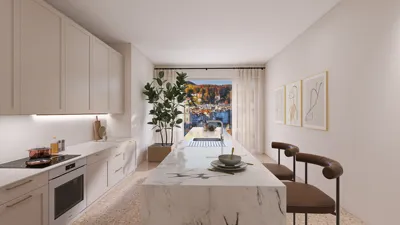


When I consider kitchen elevations, my primary focus is to ensure that every reach, sightline, and movement feels seamless. Achieving the perfect heights and clearances can transform an ordinary kitchen into one that you truly enjoy using every day. Research has shown that posture and reach play critical roles—WELL v2 advocates for task surfaces that are designed to minimize awkward postures, complemented by features that emphasize user adaptability and optimal reach zones (WELL v2). Findings from workplace studies relevant to home tasks reveal that aligning work heights with neutral elbow levels can enhance comfort, a standard I directly apply to my countertop layouts.
Just as crucial as precise measurements is the quality of lighting in kitchen elevations. The Illuminating Engineering Society (IES) emphasizes the importance of task-specific lighting; for food preparation, I aim for an illuminance level of 300–500 lux on the countertop, using low-glare under-cabinet lighting and LEDs in the range of 2700–3500K for optimal visual comfort. People naturally gravitate toward the brightest functional surfaces, hence, well-optimized lighting can significantly boost the use of your most effective prep areas. Furthermore, color influences mood: warm neutrals and gentle greens are known to evoke calmness and stimulate appetite, guiding me in selecting backsplash and cabinet colors that are both inviting and practical for task visibility.
In my design projects, the most effective approach to dimensioning combines anthropometric data, appliance specifications, and circulation considerations. Research from Steelcase connects posture and productivity to reachable zones; thus, for kitchens, I ensure that frequently used items are within a shoulder-to-hip reach and position heavier cookware at knee to counter height to enhance safety (Steelcase: ergonomics of your body). From this foundation, I meticulously design each elevation—beginning with the sink wall, followed by the range wall, and tall unit wall—by first establishing essential heights and then refining reveals and sightlines to maintain a harmonious flow.
Key Elevation Heights and Clearances
Here are the dimensions I regularly employ, which I then tailor to user height and appliance specifications:
Sink Elevation: Ergonomics and Drainage Considerations
For the sink elevation, I optimize the design to minimize bending and wet reaches:
Range and Cooking Heights
Safety, ventilation, and heat considerations guide this elevation:
Tall Units: Refrigerators, Ovens, and Pantries
To maintain both elegance and functionality in tall elevations:
Backsplash Heights and Visual Cohesion
Backsplashes serve as anchors for the entire elevation design. The standard height between upper cabinets should be around 18–20 inches; a slab backsplash appears intentional at heights of 18, 20, or full height. In the absence of upper cabinets, it’s wise to establish a proportion: a 10–12 inch short splash for a minimalist look or a full-height installation behind the range for a striking focal point. Ensure that outlet placements are consistently aligned (for instance, set at 42 inches AFF to the center) across the run to avoid visual clutter.
Achieving Comfort and Clarity Through Lighting
Layered lighting is essential for clarity in kitchen elevations:
Color Psychology and Material Feel
I choose colors that foster calmness and stimulate appetite: warm whites, muted greens, and stable mid-tone woods. Usability is influenced by contrast—light countertops against darker cabinets enhance edge visibility; in low-visibility scenarios, a contrast ratio of 30–40 LRV points between counter and floor assists with spatial orientation. It’s beneficial to select robust, low-maintenance materials—quartz, sintered stone, and enameled steel—near wet or hot zones, while oiled woods and natural textures can add warmth to vertical surfaces. Opting for matte or low-sheen finishes on large vertical areas can help mitigate glare.
Acoustic Considerations in Kitchen Elevations
Hard surfaces in kitchens can produce harsh sounds. I integrate soft, absorbent materials wherever feasible: lined drawers, felt in tall pantries, and cushioned seating alongside the island. For hoods, I prioritize low sone ratings with ample capture areas; remote inline fans effectively divert noise away from the elevation. Sealing any gaps around tall units is also crucial to avoid rattling and resonant sounds.
User-Centric Design: Reach Zones and Handedness
I position frequently used items at heights between 24–60 inches AFF; heavier pots are best stored at 24–36 inches. Considering handedness is essential: dish drying should occur on the dominant-hand side, utensil storage near the primary cooking area, and trash pull-outs positioned at the non-dominant side of the prep zone. Frequently accessed upper shelves are ideally mounted 54–60 inches for most users, with seasonal items stored higher at 66–72 inches.
Proportion, Rhythm, and Sightlines in Design
Effective kitchen elevations should present as cohesive facades: consistent widths, aligned rails, and harmonious horizontals. I prefer door proportions of 1:1.5 or 1:2 and ensure the top rails of base doors align with the bottoms of adjacent oven trims. Crown details should finish cleanly at returns, and I maintain uniform stiles around appliances to avoid creating disjointed 'islands' of stainless steel that disrupt the rhythm.
Layouts that Enhance Elevation Decisions
Elevation decisions become sharper once the overall layout is defined. I prototype different zones—prep, cook, clean, serve—and employ a layout simulation tool to test reach and sightlines before finalizing elevations. For those refining kitchen layouts and seeking quick visual feedback with precise dimensions, utilizing a room layout tool such as Homestyler allows for practical evaluation of working clearances, appliance swings, and lighting positions in context.
Design Trends for 2024–2025
Contemporary kitchens are trending toward integrated tall structures (panel-ready refrigerators, concealed pantries), abundant task lighting in warmer CCTs for evening use, and varied-height workstations to promote inclusivity. Sustainable selections—low-VOC finishes, FSC-certified woods, and long-lasting natural stones—minimize environmental impacts while maintaining a timeless aesthetic for kitchen elevations.
Checklist for Setting Elevation Dimensions
Frequently Asked Questions
For standing prep areas, a height of 34–36 inches is ideal for most users. I may adjust by 1–2 inches below the primary user’s elbow height to ensure a neutral wrist and shoulder position.
Maintain 18–20 inches of clearance. Opt for the higher end if you have tall countertop appliances or thicker materials for counters and backsplashes.
Generally, keep cooktop heights at 24–30 inches for electric/induction, and 28–36 inches for gas, adhering to the hood manufacturer's guidelines and local regulations.
Aim for 300–500 lux of task lighting on work counters with low glare. Continuous, diffused under-cabinet LEDs should be utilized at a color temperature of 2700–3500K.
Set the oven's centerline around 48–54 inches AFF for convenient loading, ensuring the lowest rack is positioned near elbow height to minimize bending.
A streamlined 10–12 inch short splash is perfect for a minimalist look, while a full-height slab extending to the ceiling can serve as an impressive focal point.
Reduce the counter height slightly (34–35 inches) or select an 8–9 inch deep sink. An apron-front option can also help alleviate the forward reach issue.
Mount the cavity so that the bottom is between 34–48 inches AFF, ensuring the top does not exceed 54–57 inches for safe reach and visibility.
Opt for low-sone hoods with larger capture areas, consider utilizing remote inline fans, and install soft-close hardware with damped liners.
Choosing materials like porcelain slabs, sintered stones, stainless steel, and glazed tiles provides heat resistance and simplifies cleaning in the first 24–30 inches above the range.
Indeed, moderate contrast enhances edge recognition and clarity for tasks, while warm neutrals and gentle greens can promote tranquility and stimulate appetite.
Incorporate mixed-height workstations—lower baking zones (30–33 inches), standard prep areas (34–36 inches), and options for seated engagement to encourage inclusivity.
Homestyler is your go-to online platform for home design! With its user-friendly design tool, stunning 3D renderings, and a wealth of inspiring design projects and video tutorials, you can effortlessly transform your living space into a dream home. Start creating today!
تصميم الآن مجانا
































