


In my extensive experience designing and commissioning HVAC systems for numerous open-plan homes, a recurring theme emerges: homeowners cherish the inviting layout of a living room combined with an open kitchen. However, they frequently underestimate the heat generated from culinary activities, the cross-room air flow challenges, and the accompanying noise. Consequently, this can lead to uncomfortably warm corners, cool seating areas, and distractions that hinder conversations. Achieving optimal air conditioning in these flexible spaces relies on effective zoning and air distribution, alongside adequate system capacity. The use of design tools like Homestyler can aid in visualizing these configurations to enhance comfort.
Two essential points worth mentioning from the outset. Firstly, a study by Steelcase emphasizes the significant influence of sound control on perceived comfort and social interactions. Homes, much like workplaces, thrive on a well-managed acoustic environment; kitchens often generate noise while living spaces require tranquility. Secondly, the WELL Building Standard underscores thermal comfort, advocating for occupant control over temperature and airflow as key components of wellbeing. I incorporate these principles when crafting open living-kitchen designs—providing quiet, focused cooling combined with user control minimizes conflicts among cooks, readers, and viewers. For deeper insights into comfort bridging home and workplace, explore extensive research on steelcase.com/research and wellcertified.com.
Furthermore, consider the physics involved: the heat produced by a cooktop and oven can contribute an additional 1 to 3 kW of sensible heat during peak usage, while a bustling dinner with friends can generate an extra 400 to 600 W of body heat. Without an intelligent zoning approach and effective extraction methods, the living area can absorb excessive heat from the kitchen. Here, the selection of equipment, the design of air paths, and a solid zoning strategy are crucial in maintaining comfort.
Evaluate the Space Ahead of System Selection
I begin by sketching a quick heat gain overview that considers orientation, window size, kitchen appliance loads, occupancy habits, and ceiling height. Spaces with 3 to 4 m ceilings require careful attention to air stratification. If the kitchen faces south or west, the solar gain in the late afternoon can easily equal the cooking loads. These factors will guide the decision between a ducted system, a multi-split system with separate heads, or a VRF/mini-split system with concealed ducted air handlers. For layouts featuring islands and long visibility lines, I prioritize low-profile diffusers or slim wall heads strategically placed to avoid directing air across the cooktop.
Choose the Right Capacity (Avoid Oversizing)
Oversizing HVAC systems is a frequent error. It leads to short cycling, increased humidity, and uncomfortable drafts. In many open living-kitchen configurations of 35 to 55 m² with contemporary insulation, I aim for cooling capacities between 3.5 to 6.0 kW (12,000 to 20,000 BTU/h) and then distribute that power across different zones. Use load calculators provided by manufacturers and selectively include kitchen process loads to better gauge needs; this ensures that ventilation and range hood efficiencies accurately reflect the residual load on the air conditioning during cooking. Aim for variable-speed systems with wide turndown ratios to achieve stable comfort.
Zoning: Different Mindsets, Different Controls
The cooking area requires slightly cooler air and quicker air movement, whereas lounging favors a softer airflow with warmer temperatures. I typically create two zones: one catering to the kitchen and dining area and the other dedicated to the living space. Utilizing ducted minis or compact air handlers, separate thermostats along with motorized dampers help to prevent the living area from becoming excessively cool when the cook is actively using the range. For smaller apartments, two wall-mounted units with independent remotes can yield similar benefits.
Effective Placement of Supply and Return Air
Supply air should flow across heat sources but without directly overwhelming the cook. I prefer not to position a supply head directly opposite the range; instead, I direct airflow from the living area towards the kitchen to harness air momentum in cooling down the cooking line. Return air should be located near the interior of the kitchen or at a high level centrally. In ducted systems, linear slot diffusers installed along the living area’s leading edge can create a gentle Coanda effect, drawing cool air throughout the space. Should your open plan be undergoing redesign, utilizing an interior layout planning tool, like Homestyler, can effectively position seating, diffusers, and returns for optimized air flow and visual sightlines.
Ventilation and Extraction: Don’t Rely Solely on AC
Even the most advanced AC units cannot entirely eliminate cooking byproducts. A high-performance, ducted range hood with appropriate capture capabilities (ideally between 450 to 600 m³/h for standard cooktops; higher for wok or grill applications) is essential to mitigate both heat and odors. Ensure that the incoming air balances the space, as a powerful hood necessitates providing fresh air to prevent backdraft issues or starving the area of needed airflow. Consider implementing demand-controlled ventilation linked to humidity or VOC levels during cooking sessions to maintain quality air throughout the space.
Noise and Vibration: Ensure Acoustic Comfort
Low background noise is fundamental for conversation and media enjoyment in living rooms. I target a sound pressure level for indoor units of less than 40 dB(A) in these areas; ducts should be lined close to the air handler to manage sound, while flexible connectors help to isolate vibration. Additionally, when selecting outdoor units, look for models with quiet night modes, especially important when the condenser is placed adjacent to bedrooms or neighboring homes.
Airflow Comfort: Control Drafts and Achieve Effective Distribution
Focus on diffusers or heads designed to distribute air gently around seating areas. Utilize wide vanes and indirect throw techniques to prevent cold drafts on the shoulders and necks of occupants. Ceiling fans set to low can assist in mixing air in high ceilings without significantly lowering the effective temperature in the living area. Maintaining moderate supply air temperatures allows the inverter system to operate steadily without excessive cold blasts.
Managing Humidity and Odors
Aim for an indoor relative humidity level of 40 to 50% in summer to enhance comfort and reduce lingering odors. Using variable-speed systems that allow for longer contact time with the coil will lead to more effective dehumidification. In humid climates, consider a dedicated dehumidifier or a system designed with latent capacity control; whereas in arid areas, prioritize balanced ventilation and efficient filtration.
Filtration and Indoor Air Quality Options
Install MERV 11 to 13 filters in ducted systems to effectively capture fine particles and cooking aerosols. Complement this with a high-efficiency range hood filter (baffle type preferred over mesh for grease capture) and consider having a portable HEPA unit nearby during heavy cooking sessions. Ensure that return grilles are positioned for easy access, facilitating regular filter changes.
User-Friendly Controls and Scheduling
Program distinct temperature settings: set the kitchen zone to 0.5–1.0°C cooler during meal preparation and adjust the living zone for comfort when relaxing. Implement motion-activated or CO₂-based triggers to increase ventilation during gatherings, and include post-cook “flush” cycles lasting 10 to 20 minutes to enhance air quality. App-based control provides convenience, allowing for specific modes such as movie time (quieter fan operation and slightly warmer) or dinner prep (increased airflow to stabilize temperature).
Recommended Equipment for Open Plans
- A ducted mini-split or compact air handler that allows for multi-position installation, ensuring both clean ceilings and quiet functionality.
- Dual-head multi-split units are ideal for retrofit projects in apartments with limited ductwork options.
- Ceiling cassettes offering 360-degree discharge are suitable for large, symmetrical rooms (just avoid direct air throw at the cooktop).
- In moderate climates, opt for high-SEER heat pumps to maintain low noise and drafts effectively.
Creating a Comfortable and Flow-Friendly Layout
Arrange seating away from direct airflow paths and position the cooking area within the effective capture zone of the range hood. Avoid placing thermostats in locations subject to direct sunlight or heat from the oven that could distort readings. If the layout is still adaptable, use design tools like Homestyler to simulate diffuser outputs and furniture positioning, thus reducing rework during the installation phase.
Material and Finish Impacts on Acoustics and Temperature Perception
Open kitchens often feature hard surfaces like stone and tile that can enhance sound reflection and heat sensation. Incorporate acoustically absorptive elements—rugs, upholstered chairs, or wood slat panels with felt backing—and consider selecting matte finishes to minimize glare from lighting while effectively stabilizing perceived temperature.
Lighting and Its Influence on Thermal Perception
Bright, cool lighting can create a perception of chill in a room. In living spaces, aim for a color temperature around 2700 to 3000K, while task lighting should be set to 3000 to 3500K over work areas. Employ layered lighting to adapt perceived comfort levels without altering thermostat settings. It's important to control glare near reflective kitchen surfaces to mitigate visual fatigue.
Seasonal Strategy: Winter Heat Without Over-Drying
Heat pumps are beneficial throughout the year. In winter months, adjust supply air to prevent heating the living area excessively while allowing the kitchen to contribute necessary warmth. A humidifier can help maintain relative humidity within the range of 35 to 45% to protect finishes and enhance comfort. Schedule gentle morning energy ramp-ups to avoid disrupting quiet hours with fan noise.
Project Commissioning Checklist
- Verify range hood performance and balance fresh air supply.
- Confirm operation of zone controls and dampers.
- Balance both supply and return systems, measuring air velocities at seating locations.
- Set fan velocity curves for quiet operation in living areas.
- Calibrate thermostats positioned away from heat sources and sunlight.
- Log relative humidity and temperature throughout a full cooking cycle and adjust as needed.
Frequently Asked Questions
Q1: Can one AC unit adequately serve a living room connected to an open kitchen?
A1: Generally not sufficient, especially during cooking times. Implementing two distinct zones—one dedicated to the kitchen and one for the living area—ensures comfort without causing overheating of seating areas or inadequate cooling in cooking spaces. A multi-split system with two indoor heads or a ducted unit with dampers can effectively address this need.
Q2: How should I size the AC unit for an open-plan area?
A2: Begin with a comprehensive load calculation that takes into account aspects such as window configurations, orientation, occupancy patterns, and potential kitchen loads. Most spaces measuring between 35 to 55 m² typically require cooling capacities of about 3.5 to 6.0 kW, but verification with manufacturer guidelines is vital. Avoid oversizing; focus on selecting inverter units that can modulate output.
Q3: Will a powerful range hood negate the need for air conditioning?
A3: An effective range hood aids significantly by removing heat and pollutants at their source, thereby lessening the cooling demands during cooking. Ensure fresh air input to maintain balanced pressure, preventing draughts of hot air intruding from outside environments or disrupting AC airflows.
Q4: How can I prevent cooking odors from permeating the living area?
A4: Employ an effective range hood, integrate MERV 11 to 13 filtration in the HVAC return system, and conduct brief post-cooking ventilation cycles. For kitchens with heavy cooking tasks, utilizing a portable HEPA purifier can assist in capturing fine aerosols during meal preparation.
Q5: What noise level is acceptable for the living area?
A5: Aim for maintaining indoor units at or below 40 dB(A) to support conversation-friendly environments. Utilize lined ducts near air handlers, soft mounts, and select outdoor models with quiet modes to manage nighttime sound levels.
Q6: Are ceiling cassettes effective above kitchen islands?
A6: Yes, but care must be taken as direct air throw at the cooktop can cause drafts and compromise the range hood's effectiveness. Opt for cassettes equipped with adjustable vanes, ensuring air is directed away from the cooking area, and verify effectiveness during the commissioning phase using smoke tests.
Q7: Is it necessary to have separate thermostats for the kitchen and living area?
A7: Individual controls greatly enhance comfort levels. The WELL approach highlights the importance of user control; being able to adjust the living area without negatively affecting the cooking space results in higher occupant satisfaction. Wireless sensors are a great option for simplifying retrofitting.
Q8: How does lighting color temperature influence comfort?
A8: Warmer lighting (2700 to 3000K) in living spaces creates a cozier ambiance, while cooler kitchen task lighting improves visibility without making the area feel too chilly. Balanced lighting layers contribute to reduced cooling demands.
Q9: What is the optimal type of diffuser for open-plan layouts?
A9: Opt for linear slots positioned at the living room’s leading edge or wide-vaned grilles that promote air mixing rather than direct jets. The goal is a uniform temperature distribution with low local velocities around seating areas. Avoid concentrated air blasts directed at people.
Q10: How can I control humidity levels during cooking in the summer?
A10: Aim to utilize inverter systems equipped for latent performance, operating the range hood during and following cooking periods. In regions with high humidity, consider adding a stand-alone dehumidifier to maintain relative humidity levels near 45 to 50%.
Q11: Is it feasible to retrofit zoning without significant ceiling alterations?
A11: Multi-split systems featuring two wall-mounted units present a clean retrofit solution. For current ducted systems, intelligent dampers combined with wireless thermostats can create effective zones with minimal disruption, though careful airflow balancing is essential.
Q12: How should I position the thermostat in an open living-kitchen space?
A12: Place thermostats away from direct sunlight, ovens, and air supply streams. A centrally located interior wall sensor positioned at head height is ideal, and using remote sensors in the living area allows for better accuracy and comfort-focused control.
Q13: What finishes assist with acoustic comfort in open kitchens?
A13: Incorporate area rugs, furnished soft seating, acoustic panels, and wood slats with absorptive backs. Such softer materials help minimize sound reverberation, making it feasible to operate fans at lower speeds without impacting conversational clarity.
Q14: Are heat pumps an effective solution for year-round comfort?
A14: Absolutely. Modern heat pumps deliver effective heating and cooling capabilities alongside precise control. They align well with zoning strategies in open plans, providing quiet operation when appropriately sized.
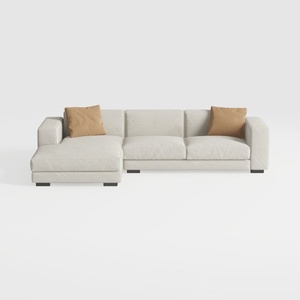
Minimalist Fabric L Shape Sectional Sofa with Throw Pillows 3D Model
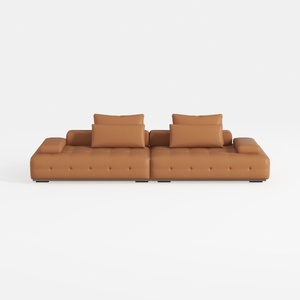

Modern Tufted Leather Oversized Sectional Sofa 3D Model
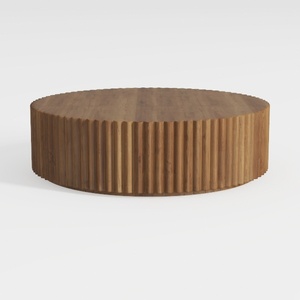
Minimalist Solid Wood Fluted Round Coffee Table 3D Model
Homestyler is your go-to online home design platform! With its user-friendly design tool, you can create stunning interiors. Explore countless 3D renderings, inspiring design projects, and helpful DIY video tutorials to transform your space effortlessly. Start designing your dream home today!
Projete agora para LIVRE
































