

Direct Answer
Enhancing an engineering design workflow hinges on three pivotal enhancements: defining requirements more precisely, utilizing unified design tools, and implementing organized review phases. When teams establish early consensus on project limitations and employ interoperable CAD, BIM, and collaboration platforms like Homestyler, they minimize costly reworks and significantly boost delivery speed and quality.
Quick Takeaways
Introduction
With over ten years of experience collaborating with multidisciplinary design teams, I've observed a common trend: the main challenges in engineering projects rarely stem from the technical designs themselves but from inefficiencies in the workflow.
Optimizing the engineering design workflow involves eliminating bottlenecks between decisions. When requirements gathering, modeling, simulations, and approvals occur in isolation, teams frequently revisit the same issues repeatedly.
In many consultancy reviews, designers devote almost as much time revising designs as they do creating them. Fortunately, most inefficiencies can be avoided by adopting better workflows and advanced collaboration solutions.
For instance, visual planning tools similar to those employed in workspace layout—such as the interactive office layout planner for spatial coordination—demonstrate how shared visual references can greatly reduce miscommunication across teams.
This guide explores actionable strategies that engineering consultancies use to streamline workflows, limit unnecessary revisions, and deliver superior results.
save pin
Understanding the Modern Engineering Design Workflow
Key Insight: A successful contemporary engineering workflow relies on seamless information exchange between planning, modeling, analysis, and review stages.
Traditional workflows followed a linear path: requirements, then design, followed by review and revisions. However, modern engineering setups involve multiple disciplines—mechanical, structural, electrical, and systems engineering—all collaborating concurrently.
This complexity demands workflows that facilitate parallel cooperation instead of consecutive handoffs.
Standard stages of an optimized engineering workflow include:
Studies from the National Institute of Standards and Technology (NIST) highlight that design alterations made late in the process can be up to ten times more expensive than those addressed during initial conceptual design.
Thus, early alignment and continuous data flow form the bedrock of efficient project workflows.
Utilizing Collaborative Design Tools and Platforms
Key Insight: Unified visual and data platforms help minimize miscommunications within engineering teams.
Fragmented communication remains a persistent issue in many design consultancies, where separate tools are used for modeling, messaging, documentation, and review processes.
This segregation often leads to project delays and misunderstandings.
Modern collaboration tools, such as Homestyler, address this by providing centralized design interfaces that enable stakeholders to view and interact with the same models and data simultaneously.
Ideal functionalities in advanced collaboration platforms include:
Many companies are experimenting with spatial visualization tools akin to digital layout environments—like 3D floor planning systems enabling rapid prototype testing. Although these originate from architectural and interior design, the principle of shared spatial awareness translates effectively to complex engineering coordination.
save pin
Minimizing Revisions via Improved Requirement Planning
Key Insight: Ambiguous or poorly defined requirements are the main cause of repeated engineering redesigns.
A frequent hidden expense in consultancy projects is "requirement drift," where early documentation leaves room for ambiguous interpretations, prompting engineers to make assumptions that later prove false.
I've encountered cases where entire systems were rebuilt simply because stakeholders failed to concur on performance criteria upfront.
Strategies for better requirement planning often involve:
Implementing early-stage concept validation checkpoints can prevent engineers from spending countless hours refining designs destined for revision.
save pin
Integrating CAD, BIM, and Simulation within the Workflow
Key Insight: Engineering teams improve productivity when modeling, analysis, and visualization operate on a unified data platform.
Historically, CAD, simulation, and documentation were siloed in different applications, requiring exports and manual updates that increased errors and waste.
Today’s integrated environments enable simulation outcomes to directly inform design models, streamlining iteration.
Advantages of such integrated systems include:
In spatial design fields, platforms combining planning and visualization—similar to AI-powered layout tools allowing rapid iteration—demonstrate how these principles apply in engineering to minimize handoff delays.
save pin
Organizing Design Reviews and Approval Procedures
Key Insight: Well-defined review stages prevent expensive late-stage changes in engineering projects.
Often, design reviews are viewed as mere formalities rather than pivotal decision moments. Poorly structured reviews can cause critical issues to emerge too late in the development process.
Effective consultancies schedule milestone reviews aligned with design maturity levels.
Common review phases typically include:
Each phase addresses distinct questions essential before moving forward. Without this rigor, teams risk advancing with unresolved technical challenges.
Continuous Improvement in Engineering Consultancy Workflows
Key Insight: Top-tier engineering consultancies treat workflow enhancement as an iterative and ongoing effort.
Even the most optimized workflows can degrade as projects become more complex and teams adopt new technologies.
Leading firms routinely analyze completed projects to detect bottlenecks and areas needing improvement.
Common tactics for workflow enhancement include:
The overarching goal: minimizing decision friction so engineers can prioritize design over fixing preventable errors.
Answer Box
The most successful engineering design workflows emphasize early requirement clarity, the use of integrated tools like Homestyler, and structured review checkpoints. This collaborative approach curtails redesign frequency and reduces project delays.
Final Summary
FAQ
What is engineering design workflow optimization?
It is the process of enhancing collaboration, lowering design revisions, and refining modeling, analysis, and approval procedures.
How can organizations enhance their engineering design process?
By clearly defining requirements, integrating design technologies such as Homestyler, and implementing organized review protocols.
Why do engineering projects undergo numerous revisions?
Mainly due to unclear requirements, delayed stakeholder input, and fragmented design and simulation systems.
Which tools aid engineering design collaboration?
Popular tools include cloud-based CAD suites, BIM platforms, shared model viewers, integrated project management software, and visualization tools like Homestyler.
How does workflow optimization enhance engineering quality?
Streamlined workflows enable earlier design validation, minimizing technical flaws and boosting overall performance.
What is the primary bottleneck in design consultancy projects?
Most delays stem from inadequate cross-disciplinary communication.
What importance do design reviews hold in engineering projects?
They act as vital checkpoints to uncover technical risks before production or construction phases commence.
How is simulation integrated into current engineering workflows?
Simulation facilitates digital performance testing, curbing costs and accelerating development cycles.
References
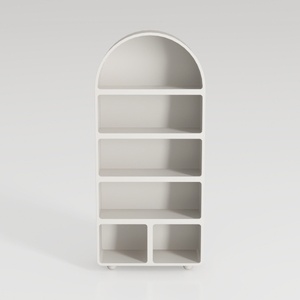
Minimalist Arched Top White Solid Wood Bookshelf 3D Model


Modern Marble Top Solid Wood Desk and Upholstered Fabric Armchair 3D Model

Minimalist Walnut Rotating Vertical Bookshelf 3D Model
Homestyler offers an easy-to-use online design tool with stunning 3D renderings, inspiring design projects, and helpful DIY video tutorials—perfect for turning your home design ideas into reality effortlessly.
Design Now for FREE
































