

I have organized and redesigned countless banquets accommodating 100 guests, ranging from cozy brand dinners to significant celebrations. Achieving the right balance in proportions, circulation, lighting, and acoustics can transform a simple venue into one that enhances guest experience. For reference, a seated banquet featuring 60-inch round tables generally needs about 10–12 square feet per guest, which means that a dining area for 100 individuals would require a space of approximately 1,000–1,200 square feet just for the meal. This does not even include the additional areas for catering, stage, dance floor, and service zones. The International WELL Building Institute (WELL v2) asserts that proper glare control and consistent lighting are vital for visual comfort, which in turn influences wayfinding and overall guest happiness in hospitality environments.
Comfort extends beyond mere seating arrangements. According to Steelcase research, there is a strong correlation between comfort and an individual's control over their surroundings and their overall experience in shared spaces. I implement these principles in event designs, allowing guests to choose among conversational clusters, dining, and mingling areas. To enhance safety and visual quality, the Illuminating Engineering Society advises maintaining light levels of 100–200 lux in dining spaces, with warmer color temperatures ranging from 2700–3000K to make food appear appetizing and to flatter facial expressions. For intuitive social zones and flow, I often utilize interaction-design patterns focusing on wayfinding and peripheral signals from the Interaction Design Foundation. These consistent measures serve as the foundation for spatial strategies in my layouts.
Essential Space Guidelines for 100 Guests
• For seated banquets (round tables): allocate 10–12 square feet per guest, not counting the dance floor or stage. Considering a modest stage and dance area, expect a total space requirement of around 1,400–1,800 square feet.
• For seated banquets (long tables/feasting style): expect 8–10 square feet per guest which improves circulation, although service aisles must remain clear.
• For cocktail receptions: roughly allocate 6–8 square feet per guest in addition to 100–200 square feet for the bar and about 80–120 square feet for each food station.
• For dance floors: consider 3–5 square feet per dancing guest. If anticipating 100 attendees, assume around 35–50 active dancers at peak times which results in needing about 150–250 square feet.
• For the stage/presentation area: a small band or speaker setup requires between 100–200 square feet; include additional space for equipment cases if necessary.
Three Proven Layout Strategies
• Tables: Set up 10 round 60-inch tables, accommodating 10 guests per table, with 60 inches of space between tables for service and ADA compliance.
• Flow: Position the dance floor centrally (approximately 18'×14') with a compact stage along one long side and place the bar near the entryway without obstructing door access.
• Advantages: This layout is familiar and easy to manage with seating charts while offering good sightlines for toasts and memorable dances.
• Cautions: Avoid creating dead corners and ensure that server paths are distributed evenly to minimize congestion.
• Tables: Arrange four to six tables of 30 inches in width joined in pairs to create 60-inch communal runs, seating 18–22 guests per run.
• Flow: Position the dance floor and DJ/band to one side with the bar opposite to maintain balanced foot traffic.
• Advantages: This setup fosters social engagement, features photogenic symmetry, and promotes efficient service along the table edges.
• Cautions: Ensure a separation of 72 inches between the edges of tables to allow for chairs and passing trays, and incorporate breaks every 18–24 seats for accessibility.
• Zones: Designate two bars, three to four highboy clusters (providing 4–6 seats each), and two lounge areas furnished with sofas and accent chairs.
• Flow: Position food stations strategically across the diagonal of the room to promote circulation and ensure the stage or speaking area is located opposite the main entry point.
• Advantages: This arrangement encourages high interaction rates among guests, allows flexibility with headcount, and is ideal for brand activations.
• Cautions: Provide perch seating for at least 30% of attendees to alleviate fatigue; maintain clear paths of 4–5 feet.
Circulation and Service System
A well-designed banquet space feels intuitive. I strive for main aisles to be 45–60 inches wide and secondary aisles to be at least 36 inches, expanding near bars and doorways. Ensure that bars are 6–8 feet away from door swings. Service routes should follow the perimeter of the room and navigate between table clusters, avoiding passage through the dance area. When experimenting with layouts, a quick use of an interior layout tool like Homestyler can help visualize seating arrangements, spacing, and sightlines before moving any furniture.
Lighting: Levels, Color, and Glare Management
• Ambient lighting: Aim for 150–200 lux in dining settings; dimmable warm white lighting (between 2700–3000K) helps set the mood.
• Accent lighting: Target 200–300 lux on centerpieces, dessert tables, and signage, while keeping beam spreads tight to minimize glare for guests.
• Stage lighting: Ensure 500–750 lux vertical at face level for speakers and performers, using cross-lighting techniques to limit harsh shadows.
• Glare management: Shield direct-view sources; aim to bounce light off ceilings or walls when possible. The WELL v2 guidelines highlight the importance of mitigating discomfort glare and ensuring occupant comfort.
Acoustic Comfort for Toasts and Live Music
Hard surfaces can amplify reverberation, leading to increased perceived loudness. To counteract this, place area rugs under lounge zones, use soft drapery along at least one wall, and incorporate fabric-wrapped panels where feasible. When positioning a DJ or band, angle them across the room rather than having them face directly down the longer axis. Aim for a reverberation time (RT60) close to 0.8–1.0 seconds to ensure speech clarity in banquet environments; portable sound-absorbing panels can also help mitigate echo in rooms with hard surfaces.
Color Psychology and Creating Atmosphere
Warm neutral tones and muted greens are known to promote relaxation and social connections, while more intense reds can stimulate excitement and are best used as small accents near bars or stages. Research on color psychology illustrates how warm color palettes can enhance appetite—which can be subtly infused into linens, floral arrangements, and lighting gels to maintain an elegant atmosphere.
Stage and Audio-Visual Sightlines
Elevate the stage by 8–12 inches in smaller venues; however, raising it too high may obstruct views for guests seated in the front rows unless the stage is pulled back. Center the lectern and flank it with two 65–86 inch displays angled inward by 10–15 degrees. Keep centerpieces underneath 12 inches in height or use slender floral stems with clear lines to maximize visibility across the table.
Seating Considerations to Avoid Fatigue
Chairs should feature a minimum seat height of 17–18 inches and depth of 16–18 inches; include 10–15% of the chairs with armrests to enhance accessibility. For lengthy events, consider switching to padded seating and provide footrests in lounge settings. Maintain a minimum distance of 60 inches from tables to walls to accommodate chairs being pulled out and service paths.
Backstage and Vendor Setup
Establish a 6–8 foot wide service corridor behind drapery or portable partitions. Position 2–3 bussing stations close to the kitchen entrance and at opposite ends of the venue. Ensure the power sources for the DJ or band are safely taped down and routed outside main pathways; if possible, set up a dedicated 20A circuit for audio-visual equipment.
Sample Floor Plan Templates for 100 Guests
• 10 round tables of 60 inches each, providing seating for 100 guests.
• An 18'×14' dance floor centrally located; a 12'×8' stage positioned on one long wall.
• Two bars: one near the entryway and the other situated in the opposite corner.
• Aisles measuring 5'–6' wide; a lounge vignette adjacent to the dance floor for those not dancing.
• Eight 72-inch round tables seating 96 guests along with a sweetheart or head table for 4.
• A center stage on the short wall, flanked by two 86-inch displays on a truss setup.
• Food served plated rather than setting up food stations to ensure open aisles.
• Six lounge clusters, 12–16 highboys, 2 bars, and 3 food stations to encourage mingling.
• A remarks zone of 200 square feet equipped with a micro-stage; a compact 12'×12' dance area reserved for late-night activities.
• A perimeter service loop with bussing stations located at opposite corners for efficiency.
Material Selections and Sustainability Practices
Opt for washable linens made from recycled materials and low-VOC finishes for pop-up installations. When constructing scenic elements, specify FSC-certified plywood and reusable hardware. Utilizing LED lights with color temperatures between 2700–3000K not only lowers energy consumption but also improves guest comfort by reducing heat load and strain on HVAC systems.
Planning Timeline and Key Milestones
• Six weeks prior: Confirm the range for guest count, menu type, and audio-visual needs; draft two layout options using an interior layout planner like Homestyler to ensure adequate capacity.
• Four weeks prior: Conduct a site walk during the event time; measure light levels and sound using a simple meter.
• Two weeks prior: Finalize seating arrangements, power layout, and vendor pathways; mark service aisles clearly on the floor plan.
• 48 hours prior: Tape out areas for the stage, dance floor, and bars; verify dimming levels and conduct microphone checks.
Frequently Asked Questions
Plan for approximately 1,000–1,200 square feet for dining space and an additional 300–600 square feet for the dance floor, stage, bars, and service corridors. In total, you should aim for around 1,400–1,800 square feet based on the event's setup.
Ten 60-inch round tables, seating 10 guests each, provide a flexible seating option. If you prefer more space for guests, consider using 12 tables accommodating 8–9 guests each.
For main aisles, maintain a width of 45–60 inches and a minimum of 36 inches for secondary aisles. Ensure that there is at least a 60-inch gap from the edge of tables to the nearest wall to accommodate chairs being pulled out alongside servicing needs.
Aim for ambient lighting levels of 150–200 lux for dining, 200–300 lux on décor accents, and 500–750 lux on stage areas to ensure faces are well-lit in photos and videos, in line with IES recommendations.
Using warm white light in the range of 2700–3000K enhances the visual appeal of both skin tones and food. Only keep the stage lighting cooler if necessary for camera settings.
Plan for 150–250 square feet for a dance area, with the assumption of 35–50 dancers at peak times. If your audience is particularly dance-focused, consider enlarging this space.
Position the bar near—but not blocking—the entryway, with a second bar ideally positioned diagonally opposite to manage queues effectively. Ensure that the bar is kept a safe distance of 6–8 feet from door swings, while also widening the aisles close to it.
Introduce soft drapery on one long wall, utilize rugs in lounge areas, and align speakers across the room's space instead of pointing them down its length. Utilizing portable sound-absorbing panels will aid in achieving an RT60 of around 0.8–1.0 seconds for clear speech.
Leverage tools such as a room layout planner to visualize table counts, aisle dimensions, and sightlines prior to setup; this mitigates on-site adjustments and clarifies service routes.
Yes, it is achievable. Four to six long runs can comfortably accommodate 100 guests if you maintain a separation of 72 inches between the edges of adjacent tables and create access breaks every 18–24 seats.
Set up split stations (mirroring left and right) positioned 3 feet away from the walls so guests can line up around either side, and align stations diagonally to enhance circulation.
Elevate the stage by 8–12 inches, keep centerpieces under 12 inches tall, and angle side monitors inward by 10–15 degrees to the audience for optimal visibility.
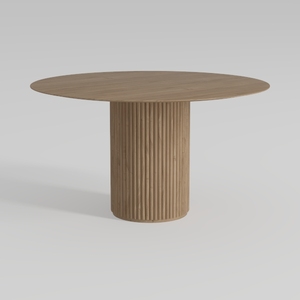
Minimalist Solid Oak Fluted Round Dining Table 3D Model
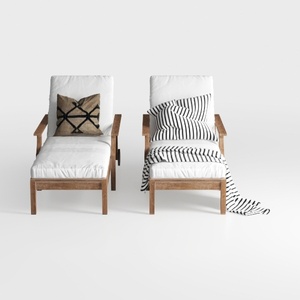
Minimalist Solid Wood Outdoor Chaise Lounge Set with Fabric Cushions 3D Model


Modern Rattan Cane Leather Upholstered Metal Dining Chair 3D Model
If you're looking to transform your home effortlessly, Homestyler is your go-to online design platform. Its user-friendly design tool, stunning 3D renderings, diverse design projects, and helpful video tutorials make it easy for anyone to create beautiful spaces. Unlock your creativity today!
Progetta ora GRATIS
































