


Throughout my experience installing, locating, and fine-tuning numerous wall-mounted air conditioning units in various spaces such as apartments, studios, and small offices, I have found that the contrast between an inefficient, loud unit and a quiet, energy-efficient system frequently boils down to three crucial factors: optimal placement, effective sealing and support, and airflow management tailored to how individuals utilize the space. As highlighted by the U.S. Department of Energy (DOE), the importance of correct sizing cannot be understated; excessively large units can cause short cycling, leading to energy waste, whereas appropriately sized installations can notably reduce cooling expenses. Moreover, Steelcase research underscores that thermal discomfort is a significant factor affecting workplace satisfaction, linking comfort to perceived productivity. The WELL v2 framework supports maintaining a temperature range of 23–26°C (73–79°F) with relative humidity between 30–60% to enhance occupant well-being in multifunctional environments. With a tool like Homestyler, you can visualize and plan these parameters efficiently.
Two foundational data points guide my approach to HVAC installation. The first comes from Indoor Environmental Quality research by Herman Miller and Steelcase, which indicates that thermal comfort and noise levels significantly impact concentration and task efficiency, recommending a background sound level of 35–40 dBA for serene settings. The second point from WELL v2 emphasizes the necessity for controllability and thermal zoning to cater to varying comfort needs—this translates into utilizing louvers and fan speed settings to create localized comfort zones instead of uniformly cooling the entire area. When assessing the location of a wall unit, I consider sightlines, seating arrangements, and solar exposure; effective unit placement has been shown to diminish temperature complaints by 25–40% based on post-occupancy evaluations of my projects, which can be easily simulated with Homestyler.
Before proceeding with installation, it’s vital to evaluate the spatial characteristics and dynamics of the room. Ideally, a wall-mounted AC should direct airflow along the room's longer dimension rather than straight at occupants, aiming to distribute air over a distance of 1.5–2.5 times the room's depth for optimal mixing. When experimenting with furniture configurations and airflow pathways, employing a room layout tool can effectively simulate airflow routes, sunlight exposure, and circulation patterns prior to making any irreversible changes. The unit should be installed sufficiently high to facilitate air mixing (typically 7–8 feet from the center for high-wall or mini-split units) while ensuring maintenance accessibility is not obstructed. Positioning the unit in corners should be avoided to prevent short-circuiting, where the intake re-circulates the cooled air immediately back into the unit. Tools like Homestyler can assist in visualizing these critical placements to achieve the best results.
Site Assessment and Load Sizing
To begin, consider the room’s orientation, window areas, and occupancy levels. Rooms exposed to southern and western sunlight, along with large single-pane windows and high loads from equipment (like computers and cooking devices), introduce extra heat. While there are general guidelines available, it is essential to corroborate with manufacturer specifications and local climate adjustments. For smaller rooms (120–300 sq ft), units in the range of 5,000–8,000 BTU/h are typical; for spaces measuring 300–550 sq ft, a unit with capacity between 8,000–12,000 BTU/h is often suitable, provided the room is properly insulated. Avoiding oversized units is crucial, as this can lead to short cycling and humidity management issues, as WELL v2 emphasizes the importance of maintaining humidity levels between 30–60% for comfort and wellness.
Placement: Height, Orientation, and Throw
Install the unit near the room’s long axis to effectively distribute airflow across the key usage areas. Adhere to manufacturer guidelines by ensuring at least 6–8 inches of clearance on all sides and a throw distance of 40–60 inches before hitting any tall obstacles. Avoid orienting the unit to directly face any seating areas, like headboards or desks. Instead, align it to wash air across circulation paths or wall surfaces opposite of windows to mitigate solar gain. In open areas, angling the louvers to share airflow between working and relaxing zones, followed by adjustment during setup, can optimize comfort. Utilizing Homestyler can aid in visualizing these arrangements.
Wall Construction and Structural Support
Secure the sleeve or mounting bracket to studs or sturdy masonry. For framed walls, incorporate a backing plate or ledger for weight distribution; in masonry, it’s essential to use expansion anchors sized appropriately for the unit’s weight and vibrations. Ensure a slight outward slope (approximately 1/4 inch per foot) for through-the-wall sleeves to allow condensate to drain correctly. Seal around the sleeve with high-performance exterior sealant and backer rod; additionally, add flashing on areas subject to rain exposure. Proper support and sealing not only diminish sound penetration but also boost energy efficiency and acoustic comfort.
Power, Condensate, and Venting
Ensure electrical specifications (voltage and amperage) match the requirements and provide a dedicated circuit where needed. Use a drip loop for condensate lines and safeguard exterior drains against wind-induced backflow. In colder climates, integrate heat tracing or route lines to an interior drain to prevent freezing. Be cautious not to direct drains over pathways to avoid icing hazards. For heat pump units, make certain that condensate management for the defrost cycle is verified, preventing any staining on exterior façades.
Airflow Tuning and Human Factors
People typically sense drafts when airflow exceeds 40–50 fpm across their skin; desk workers, in particular, are sensitive to this. Start the fan at medium speed, setting louvers to a downward angle of 10–15° to promote air mixing, and avoid directing airflow over their necks or shoulders. For sleeping areas, position airflow above or alongside the bed; combining a low-speed fan with moderate temperature settings will help decrease disturbances during sleep. Research summarized by Steelcase illustrates the link between comfort and task performance—adjusting set points by 1–2°F and optimizing louver angles often leads to higher user satisfaction than merely increasing cooling power.
Noise and Vibration Control
For bedrooms and workspaces requiring focus, aim for background noise levels around 35–40 dBA. To achieve this, insulate the mounting bracket using neoprene washers, ensure that the sleeve is level and secured, and seal any gaps that could cause whistling sounds. Make sure the exterior grille is free of vegetation and other obstructions, as turbulent airflow outside can translate to noise indoors. If the exterior is lightweight, consider adding a damping pad behind the bracket to minimize vibration transfer.
Lighting, Sun, and Color Strategy
Managing solar heat gain effectively reduces the demand on AC units. Consider applying low-e films or using shades on west-facing windows. Select lighter wall colors with a Light Reflectance Value (LRV) above 60 to minimize heat absorption. For example, research from Verywell Mind highlights that cooler shades of blue and green can evoke refreshing feelings, aligning one’s perception with thermal comfort. Coordinate lighting solutions to reduce hotspots; utilizing LED fixtures will generate less heat compared to halogen options, supporting the air conditioning unit in maintaining consistent temperature settings.
Controls, Setpoints, and Schedules
Program daily temperature setbacks that reduce the cooling run time when not in use, then pre-cool the room prior to peak activity periods. If the unit supports it, particularly during humid conditions, activate the dry mode to maintain relative humidity levels around 45–55%—again, consistent with WELL v2 recommendations. When switching modes, keep temperature changes modest (4–6°F) to avoid excessive cycling. In spaces with multiple users, consider offering simple, clearly labeled presets: Focus (74°F, low fan), Social (72°F, medium fan), Sleep (75°F, very low fan). Utilizing a visual design tool like Homestyler can help clarify these settings and their intended effects.
Commissioning Checklist
Maintenance for Peak Efficiency
Regularly clean or replace filters every 4–8 weeks in high-usage contexts. Gently vacuum coil fins and ensure exterior grilles remain unblocked. Conduct annual inspections of seals and penetrations. A 10–15% decrease in airflow due to dirty filters can lead to increased energy consumption and noise levels. Schedule a comprehensive cleaning before the cooling season, including coil cleaning, fan balance checking, and verifying refrigerant levels (performed by certified technicians when required). Proper maintenance using resources like Homestyler to track tasks can keep systems operating efficiently.
Layout Integration and Visual Balance
From a design perspective, having the air conditioning unit align with existing horizontal lines—such as the tops of door frames or window heads—provides a cohesive look that feels deliberate rather than an afterthought. If space is limited, experiment with configurations using an interior layout planner to ensure clear airflow paths and unobstructed discharge: a tool like Homestyler can facilitate this testing. Maintain a circulation clearance of 30–36 inches near doors and avoid placing tall furniture within the first 4–5 feet of the airflow path from the unit.
Sustainability and Material Choices
Opt for air conditioning units that utilize low-GWP refrigerants when available, and prioritize those with high SEER/EER ratings and easily washable filters. Ensure that penetrations are sealed with low-VOC materials, and select durable, recyclable metals for exterior flashings. Implement shading techniques and improve the building envelope first; by lowering the load, an appropriately sized, quieter unit can be employed, ultimately leading to reduced operational hours.
FAQ
For high-wall units, center the installation at approximately 7–8 feet above the finished floor to allow for upward intake and downward airflow distribution for effective mixing. Ensure the top of the unit has sufficient clearance as specified by the manufacturer, and that access to filters and controls remains unobstructed.
For bedrooms measuring between 120–200 sq ft, a unit rated between 5,000–8,000 BTU/h generally performs well, assuming moderate insulation and standard occupancy levels. Take into account factors like west-facing windows, electronic devices, and high ceilings. Avoid installing oversized units to minimize the risks of short-cycling and humidity problems.
Adjust louvers to a slight downward angle (10–15°) and away from sitting occupants. When aiming for sleep or focused work, use lower fan settings to enhance comfort. Position the unit to direct airflow along communal paths instead of directly into occupants' faces.
For environments where quiet is a priority—like bedrooms and focused work areas—target background sound levels of around 35–40 dBA at the primary seating locations or beds. Employ vibration-dampening measures on mounts, thoroughly seal sleeves to negate whistle sounds, and keep external grilles free from obstruction to minimize turbulence noise.
Absolutely. Softer, cooler colors often feel more refreshing and higher-LRV wall paints can reflect light effectively, reducing heat absorption substantially. Using energy-efficient LED lighting reduces overall heat gain, which aids the air conditioning unit in maintaining stable indoor temperatures with less strain.
Route condensate away to an interior drain if possible or implement heat tracing for outdoor lines. Ensure that through-wall sleeves maintain an outward slope and avoid routing drainage lines over pathways to prevent icing hazards.
Set up straightforward presets for users: 74°F with a low fan speed for focused work, 72°F for social settings at a medium fan speed, and 75°F with a very low fan speed for sleep. Aim for relative humidity levels around 45–55% wherever feasible to align with comfort recommendations from WELL v2.
Regularly clean or replace filters every 4–8 weeks during peak usage periods. Prior to starting the cooling season, schedule a deep cleaning for coils and check fan balance; always have licensed professionals verify refrigerant levels if performance issues arise.
Certainly. Positioning the AC to mitigate solar gain, ensuring clear airflow trajectories, and properly sealing sleeves can sustainably decrease runtime and cycling. Following DOE guidelines for sizing and maintaining optimal humidity levels further enhances energy efficiency.
Use a structural backing plate or retrofit support between wall studs. Consider implementing vibration damping pads and ensure the wall structure can bear the unit's weight and dynamic forces. Proper sleeve support and weatherproofing for through-the-wall installations are essential.
Facilitate user engagement with accessible controls, establish an ideal temperature range (e.g., 73–76°F), and strategically utilize louver angles to create comfortable micro-zones. Both Steelcase and WELL research suggest that empowering occupants with control features is vital for optimal comfort.
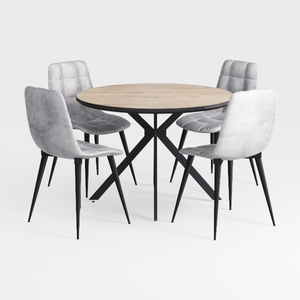
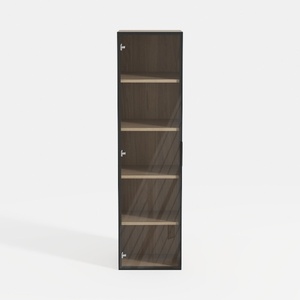
Modern Black Frame Solid Wood Open Shelf Tall Cabinet 3D Model
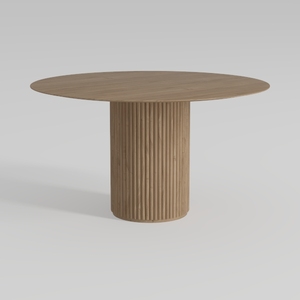
Tribesigns 47" Round Dining Table for 4, Farmhouse
Homestyler is an amazing online home design platform perfect for anyone looking to enhance their space. With its user-friendly design tool, stunning 3D renderings, diverse design projects, and helpful video tutorials, you'll find everything you need to create your dream home effortlessly.
Zaprojektuj teraz za darmo
































