


Having experience in furnishing compact city apartments and starter homes, I've learned that every square foot must be fully utilized. When working with a budget of $100, the key lies in selecting compact furniture pieces with durable finishes and sturdy frames, all while incorporating lighting, colors, and seating that enhance the overall aesthetics. Below are my favorite criteria and models that consistently provide excellent value without compromising sturdiness, showcasing how tools like Homestyler can assist in visualizing your space.
Essential Considerations for Selecting a Small Dining Table Under $100
When it comes to prioritizing features, durability should take precedence over aesthetics. Opt for tables with a powder-coated steel base or solid rubberwood legs, as they tend to outlast those with hollow metal tubes. Additionally, melamine or high-pressure laminate tabletops offer better resistance to heat, spills, and stains than traditional veneer. Ideal proportions suggest a round 30-32 inch table providing comfortable seating for two while leaving 30-36 inches of space around it. A square table measuring 24-30 inches fits snugly into corners while accommodating two. According to research from Steelcase, maintaining work surfaces with a depth of 30-32 inches not only promotes visual clarity but also minimizes clutter—principles that are easily applied to dining surfaces. For optimal dining ambiance, WELL v2 recommends 300 lux of ambient lighting; a dimmable fixture placed above the dining area can create a soothing atmosphere (steelcase.com/research, wellcertified.com).
Top Affordable Choices Under $100
While prices can vary, certain table designs and material combinations frequently fall near or below the $100 threshold at popular retailers. Always verify the weight capacity and overall quality of the hardware before making a purchase.
Ideal for compact kitchens and studio spaces, a pedestal or four-legged steel base with a melamine or HPL top is not only easy to clean but also resilient against edge damage. Aim for a top thickness of at least 0.75 inches, and ensure it has cross-bracing underneath for added stability. This table comfortably seats two, with a clearance of 24-26 inches from the chairs to the wall for ease of movement.
Perfect for corners and window alcoves, tables featuring solid rubberwood legs are ideal, as they offer greater stability than their hollow steel counterparts. Look for internal corner blocks and metal L-brackets for added strength. This option comfortably seats two but can accommodate three with the addition of stools.
A table with a fixed side and a swing-down leaf adapts easily to different settings. Ensure the leaf hardware is robust; cheaper hinges may sag over time. When opened, it resembles a 30-inch round table; when closed, it can sit neatly against a wall, seating two when opened and one when folded down.
This type is perfect for lightweight balconies and kitchens, offering furniture that won't overwhelm the space. Select a rust-resistant powder coating and avoid thin surfaces prone to flexing. This model seats two and can be conveniently stored flat behind a door.
By pairing a slim tabletop with two side chairs or a bench, you maintain clear passage while enhancing seating capacity. The inclusion of a stretcher between the legs adds to the structure’s sturdiness. Typically seats two, but can fit three with a bench on one side.
Guidelines for Matching Table Size to Room Dimensions
Utilize these straightforward guidelines to ensure your layout remains functional. For a cozy dining nook, allow for 30-36 inches from the table edge to the nearest obstruction for convenient movements. Calculate approximately 20-24 inches per person when determining seat space. In extremely cramped settings, consider a wall-mounted drop-leaf table to conserve floor space while still providing functionality. A room layout tool can efficiently model circulation and furniture arrangement before any purchases are made, and platforms like Homestyler can enhance this visualization process.
Value-Enhancing Materials
- Laminate / Melamine: Offers superior resistance to spills, heat, and scratches in this price range; be sure to choose items with smooth edges to prevent snags on clothing.
- Rubberwood: A reliable and renewable hardwood that provides decent weight. Ensure an even finish and check for anti-slip glides.
- Powder-Coated Steel: Delivers durability with low maintenance needs. Inspect for quality welds and bracing; fewer parts imply a sturdier construction.
- Veneer over MDF: Lighter and visually appealing, yet edges should be protected; placemats can help avoid swelling from spills.
Focusing on Stability, Weight, and Everyday Usability
Wobbling often stems from weak joints rather than just slender legs. Opt for tables equipped with these features:
- Corner blocks or metal brackets integrated into the apron.
- A central stretcher or cross-bracing positioned beneath the tabletop.
- Adjustable levelers for uneven flooring situations.
For households with children or pets, consider the table’s weight; a range of 15-25 lbs is ideal—light for mobility yet substantial enough to resist tipping. Maintaining a lower center of gravity with a heavier base contributes to stability.
Influence of Light and Color on Spatial Perception
Color plays a significant role in how spacious an area appears. According to Verywell Mind, lighter shades foster a sense of openness and tranquility; soft whites and pale woods can reduce visual weight and effectively reflect ambient light (verywellmind.com/color-psychology). Pair these colors with warm lighting around 2700–3000K for a pleasant dining experience, and mitigate glare by using diffusing bulbs with fabric or opal glass shades. The IES recommends avoiding glare and utilizing appropriate luminance levels; installing dimmable fixtures can improve mood control (ies.org/standards).
Seating Suggestions to Complement Small Tables
- Armless Chairs: These take up less space and facilitate easier access when sliding in and out.
- Stackable or Folding Chairs: Excellent for saving storage space; aim for chairs weighing around 6-8 lbs for effortless handling.
- Benches: Effective for seating multiple individuals along a wall; choose models with slim designs and rounded edges to avoid collisions with knees.
Finishes and Maintenance Considerations
When shopping within this price range, performance finishes become more critical than trendy woods. Select matte or eggshell sheens to conceal minor scratches. Employ felt pads beneath legs to protect floors from damage. For cleaning laminate tops, a gentle dish soap solution can effectively tackle most spills; avoid abrasive materials. After cleaning powder-coated frames, dry them to prevent moisture accumulation at joints.
My Approach to Styling a $100 Table to Achieve a Luxurious Look
- Layer a small runner or textured placemats for added depth.
- Introduce a low-profile centerpiece, such as a bowl filled with citrus or a small bud vase.
- Keep the surrounding walls light and uncluttered; hang vertical art at a height of 57 inches to draw the eye upwards.
When to Invest Just a Bit More
Consider increasing your budget to $120–$150 to secure greater durability for high-traffic areas, especially in homes with families or shared living spaces. This price range generally offers thicker tabletops, superior hardware, and solid-wood aprons that prevent racking.
A Quick Checklist Before Hitting the “Buy” Button
- Measurements: Verify dimensions of the table and the necessary space for circulation.
- Hardware Quality: Look for images showcasing brackets and underside bracing.
- Weight Capacity: Ensure the table can handle a static load of 75–150 lbs.
- Preferred Finish: Opt for laminate or melamine for durability.
- Customer Feedback: Search for terms like “sturdy,” “assembly,” and “wobble” in reviews.
- Return Policy: Look for a minimum of 30 days with low restocking fees.
Frequently Asked Questions
This table comfortably accommodates two; however, three can fit with slim, armless chairs, though it may feel tighter overall.
Certainly! Laminate and melamine surfaces outperform thin veneer over MDF in resisting heat and scratches, making them more suitable for frequent use under $100.
Slim-framed armless chairs or stackable cafe-style chairs are ideal because they take up less space and can be fully tucked under the table.
Target around 300 lux of ambient light in the dining area, with a warm 2700–3000K pendant light centered above the table. Incorporating dimming features can help adjust ambience and reduce glare.
Maintain a distance of 30-36 inches from the edge of the table to walls or furniture for comfortable access.
Folding tables can indeed be functional, provided their locking mechanisms are reliable and the tabletop remains rigid. Choose models with robust powder-coated steel frames and check for stability after assembly.
To avoid visible scratches, choose matte laminate or melamine surfaces in lighter wood tones or soft neutrals. Glossy finishes tend to highlight scratches, while dark colors quickly reveal dust and smudges.
Absolutely! A slim bench positioned against a wall maximizes seating while enhancing circulation by eliminating chair backs that intrude into pathways.
Certainly. Rounded edges promote smoother flow and reduce visual clutter, making them ideal for tight spaces by removing sharp corners that can obstruct movement.
While it can be worthwhile, ensure you thoroughly vet the quality of the hardware and tabletop materials. For daily cooking and dining, considering a slightly higher budget of $120–$150 may yield more durable frames.


Bohemian Rattan Cane Solid Wood Drum Shape Side Table 3D Model
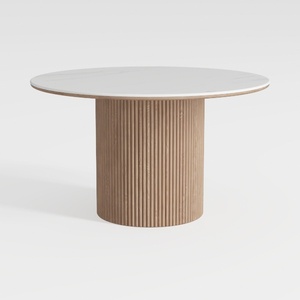
Minimalist Fluted Solid Wood Marble Top Round Dining Table 3D Model

Solid Wood Fabric Director Chairs Set 3D Model
Discover Homestyler, the ultimate online home design platform! With an easy-to-use design tool, stunning 3D renderings, diverse design projects, and helpful DIY video tutorials, you can effortlessly create your dream space. Perfect for both beginners and seasoned designers alike!
Progetta ora GRATIS
































