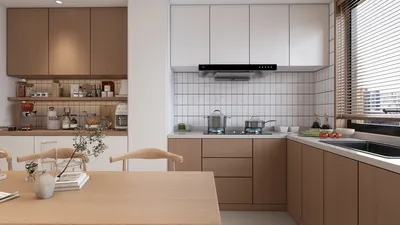


As future lifestyles evolve, we are facing a compression of our schedules alongside an expansion of our expectations. A 1600 sq ft space can often feel oddly fragmented. The National Association of Home Builders (NAHB) indicates that many new home buyers still prefer open-plan layouts, while there is also a growing trend for privacy pods—seemingly contradictory demands. Within this tension, finding the optimal floor plan for 1600 sq ft requires thoughtful calibration of boundaries and openings. The future is quickly approaching, and it is clear that adaptations must be made. Utilizing Homestyler can be instrumental in this spatial reasoning process.
Looped Core with Split Quiet Zones
Design Concept: The kitchen-dining-living area is designed as a central looped hub, with bedrooms placed at opposite ends to minimize noise—a thoughtful layout that combines collaboration with personal retreat.
Flow: The layout follows a pathway starting from the entry, leading to a drop zone, then to a central kitchen, followed by a dining area and a living space; it branches off into the primary suite and secondary room with a flexible nook.
Sightlines: A diagonal view from the entry to the terrace creates a strong orientation; partial glimpses into the bedrooms help keep cognitive load low while maintaining privacy.
Storage: Featuring a perimeter pantry, a recessed media niche seamlessly integrated into the wall, and corridor closets for additional storage, the design utilizes 18–24" modules to ensure efficient use of space and minimize clutter.
Furniture Fit: The furniture is designed with optimal dimensions—sofas measuring 84–96 inches, a dining table of 72" x 36", and an island of 8' x 3', while allowing 30" clearance on each side of queen or king beds to maintain smooth flow between spaces.
Conclusion: This layout effectively stabilizes the shift between work and living areas; within five years, these split quiet zones will likely become the standard setup for hybrid workdays.
save pin
Front Flex + Rear Sanctuary
Design Concept: Incorporating a street-facing flexible room for work or guests, along with a primary suite located at the rear for optimal thermal and acoustic comfort—this design is built to accommodate multi-faceted days into the future.
Flow: From the porch, the pathway moves through a foyer transition to a flex room,node, a gallery hall, then to an expansive great room that leads out to the rear deck, continuing to the primary suite and looping back to the laundry area.
Sightlines: The long axis from the foyer to the garden adds depth; cross views at an angle of 15–20° are strategically crafted to avoid screen glare, enhancing overall visual hierarchy.
Storage: Includes a built-in bench in the foyer, a 10' pantry, laundry wall cabinets, plus under-stair storage if applicable—reliable buffers to handle seasonal load fluctuations.
Furniture Fit: Measures include a 60" work desk with acoustic paneling, dining seating for six, and an L-shaped sectional measuring 9' x 9', all arranged to maintain 36" circulation zones in bedrooms for efficiency.
Conclusion: The gradient from public to private spaces works like a permissions control; in five years, this flex room is expected to become a vital, adaptable core for the family.
save pin
Courtyard Spine with Micro Nodes
Design Concept: An elongated internal courtyard splits the space, allowing ample light and creating micro nodes for activities like phone calls or meditation—essential for maintaining attention in the future.
Flow: Starting from the side entry, it leads to a mudroom, through a kitchen bridge, to the courtyard edge, and onwards to a living gallery; micro nodes are strategically located before the suites that flank the spine area.
Sightlines: This design emphasizes layered transparency where the initial view encounters greenery, followed by built environments; entry points are modeled like UI tabs, alleviating decision fatigue.
Storage: Incorporates features like toe-kick drawers, a 24" deep pantry, and window-seat compartments—the distributed caches efficiently manage storage without congestion.
Furniture Fit: An island with 42" clear aisles, a narrow console along the spine at 12–14" wide, and lounge chairs with a 30" footprint—key parameters for a streamlined setup.
Conclusion: This courtyard serves as an attention re-router; in five years, these micro nodes will likely emerge as necessary retreats from our always-on lifestyle.
save pin
Final Takeaway
The ideal floor plan for a 1600 sq ft home transcends the mere arrangement of rooms, focusing instead on a dynamic interface that harmonizes flow with well-controlled quiet areas. Variations such as split-bedroom designs, flexible front studios, and courtyard-spine layouts demonstrate that medium-sized homes can function expansively without unnecessary space. In the context of hybrid work schedules and increasingly rapid life cycles, a 1600 square-foot design should operate like innovative software—modular, user-friendly, and efficient. In my experience, the most intelligent homes of the future will not be larger, but rather more intentional, and utilizing platforms like Homestyler can assist greatly in achieving these designs.
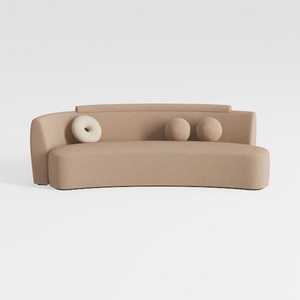

Yozma Curved Chenille Sectional Sofa Beige, Dual D

Mid Century Solid Wood Fabric Dining Chair 3D Model
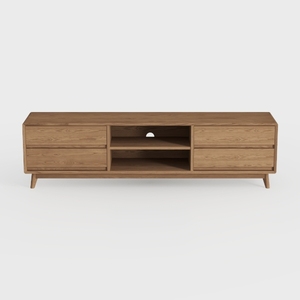
OKD TV Stand for 75+ Inch TV, Mid Century Modern
Looking to transform your home? Homestyler is your go-to online design platform, featuring a user-friendly design tool and stunning 3D renderings. Explore inspiring design projects and enjoy helpful DIY video tutorials to make your vision a reality, all while having fun!
立即免费设计
































