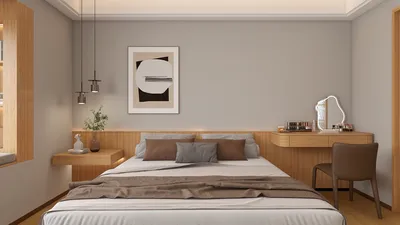


As urban living becomes more constrained due to rising land costs and the need for efficient designs, today's inhabitants struggle with issues such as noise and clutter. Data from the NAHB indicates that since 2018, there has been an increase in the popularity of smaller homes as buyers prioritize functionality over square footage. Within this context, floor plans for one-bedroom shipping container homes emerge as effective solutions for modern living—an early framework for future lifestyles that I can already analyze. A well-developed spatial reasoning toolkit is essential, especially when a single module must support an entire life seamlessly, without interruption.
Linear Rail: Single-Container Spine
Design Concept: A 40’x8’ module serves as a linear framework, encompassing the entry, kitchen, living area, bathroom, and bedroom in a sequential order, akin to a structured script for daily activities.
Flow of Space: The entry is positioned at one end, leading into a galley kitchen that encourages movement forward; the living area sits centrally, while the bathroom acts as a buffer, with the bedroom located at the quietest endpoint.
Sightlines: A lengthy perspective from the door to the window establishes a clean user interface; a glazed pocket adjacent to the living area provides visual feedback—light indicates readiness for use.
Storage Solutions: Features include a tall pantry, toe-kick drawers, and a bed platform that all serve as storage; overhead spaces provide quick-access storage, while wall niches function as deeper archives for items.
Fit for Furniture: The design accommodates a 72” sofa, a 30” dining drop-leaf table, and a queen bed with 24” egress spaces, ensuring compatibility with the container's exterior dimensions.
Conclusion: This minimalist yet comprehensible layout is future-ready; the design allows for modular enhancements—such as solar panels, battery backups, and greywater systems—without needing a complete redesign.
save pin
Offset L: Two-Module with Quiet Wing
Design Concept: The primary container serves public functions, while a second, half-offset module ensures privacy for the bedroom—functioning similarly to a sandboxed process.
Flow of Space: Entrance leads into a communal living area, allowing access to the bedroom wing through a pocket door; the bathroom is strategically positioned at the junction, providing a secure entry point.
Sightlines: A diagonal view from the living space to an offset window creates a layered user interface with foreground tasks and a calming background.
Storage Solutions: A shared utility wall consolidates mechanical elements; linen towers and wardrobes lie in parallel, reducing the time spent searching for items.
Fit for Furniture: An 84” sectional anchors the living area; a 36” console acts as a command center, while the bedroom accommodates a queen bed with 18” integrated nightstands.
Conclusion: The L-shaped design minimizes cognitive load and noise, creating a home with distinct zones rather than just an empty box.
save pin
Courtyard Stitch: Split Modules with Light Well
Design Concept: Two containers flank a micro-courtyard, making light and air the central elements—enhancing the overall living experience.
Flow of Space: Enter through the courtyard and follow the left route to the living/kitchen area or the right to the bedroom and bathroom; this arrangement feels like interconnected threads with shared storage.
Sightlines: The courtyard frames a visual center; cross-views within guarantee stable orientation and a balanced mood.
Storage Solutions: Features include external bench boxes, internal wall rails, and a bed headboard system, which together provide tiered memory for items categorically—hot, warm, cold.
Fit for Furniture: A 30” deep kitchen run, a 60” round table for flexible hosting, and low-profile lounge furniture help maintain clear sightlines.
Conclusion: Compact yet resilient; the design allows for climate-responsive features (shading, breezes, winter sun) to enhance daily life.
save pin
Final Thoughts
Floor plans for one-bedroom shipping container homes exemplify precision, where every square inch operates like code that can either foster a serene day or lead to complications. Their modular designs are conducive to future modifications—incorporating battery systems, water recycling, and flexible partitions—without compromising functionality. Based on my experiences, the most effective compact homes don't necessarily need to be larger; they need to be clearer. I continuously approach their design as if I am developing living software with user-friendly defaults, akin to what you can create using Homestyler.
Homestyler is an outstanding online home design platform perfect for all skill levels. It features an easy-to-use design tool, stunning 3D renderings, and an array of inspiring design projects. Plus, their DIY video tutorials make designing your dream home simple and enjoyable!
立即免费设计
































