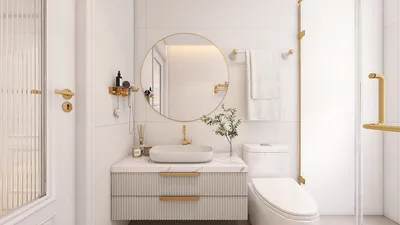


Envisioning future living incorporates efficiency in time, technology, and daily rituals; however, modern residences still face challenges regarding privacy, storage, and adaptability. Both the AIA and NAHB have highlighted a growing demand for smaller living spaces and multifunctional rooms, signaling a shift in buyer preferences. In this context, a micro apartment layout serves as a precursor to a new lifestyle paradigm. The future is drawing near, and I can visualize it clearly even before the drywall is installed—this transformation of spaces brings about clarity, enhanced by innovative tools such as Homestyler for spatial planning.
Rail-Organized Studio Spine
Design Logic: A linear service core—comprising the kitchen, bathroom, and utility areas—effectively turns the apartment into a customizable framework. Emerging trends such as hybrid work, well-being, and delivery services can easily integrate with this design.
Flow: The movement path is Entry → drop zone → galley → lounge/desk area → sleeping alcove; this configuration eliminates backtracking, resembling a streamlined command sequence.
Sightlines: A single datum line runs from the entrance to the window; vertically tall elements align with the core, creating an open living area where user-interface components are layered from foreground to background.
Storage: Features like a full-height pantry, cabinets above the fridge, and drawers beneath the toe-kick provide a hidden repository that manages daily life while minimizing clutter.
Furniture Fit: Dimensions are meticulously considered, with a 24" deep desk opposite a 24" galley, complemented by a 72" sofa and a 54" Murphy bed or sofa-bed—these specifications respect the flow of movement throughout the space.
Verdict: For the upcoming five years, this design effectively manages chaos; modular components can be added or swapped without necessitating a complete redesign.
save pin
Diagonal Zone with Corner Bed Nook
Design Logic: A 45° angle creates a division between public workspace and private rest, fostering a mental break between tasks—softer lines are increasingly necessary to combat future fatigue.
Flow: The sequence is Entry → angled work desk → lounge area → pivot into corner sleeping area; the diagonal encourages movement, similar to gesture-based control.
Sightlines: The angled desk is oriented toward the window, while the bed is discreetly placed behind a partial partition, prioritizing natural light and focus within the design.
Storage: Tricky spaces are utilized with under-nook drawers, a corner wardrobe, and floating shelves along the angle—this triangular design effectively uses previously wasted volume.
Furniture Fit: The setup includes a 30" deep angled desk, a 60–72" sofa on the longer wall, and a full-size platform bed measuring 54" x 75" within a compact 66" space.
Verdict: This diagonal design is prepared for future needs; as work-life boundaries blur, the layout maintains separation without erecting physical barriers.
save pin
Bay Window Work-Lounge with Fold Wall
Design Logic: A foldable wall system merges two distinct modes—daytime studio and nighttime suite—into a single versatile design; the bay functions as an energetic hub for light and concentration.
Flow: The pathway is Entry → storage wall → fold-out kitchen table → bay lounge/desk; in the evening, the foldable wall unveils the bed with ease.
Sightlines: The key sightline highlights the bay area; when the bed is folded away, it minimizes visual clutter, maintaining an organized user interface.
Storage: The foldable wall provides 12–15" of depth for wardrobes, linens, and media storage; toe-kick and overhead spaces serve as effective storage solutions.
Furniture Fit: This model includes a queen Murphy bed measuring 60" x 80", shallow fold modules at 18" deep, a 28" desk within the bay, and nesting tables at varying heights for adaptive use.
Verdict: Over time, this design adapts to the time of day; the space operates similarly to software updates, evolving rather than requiring major renovations.
save pin
Final Takeaway
A micro apartment design should not be viewed as a compromise but as a sophisticated interface for how we utilize our most valuable hours. With compact studio layouts and adaptable furniture solutions, the home becomes an efficient system—streamlining attention, light, and storage akin to managing bandwidth. The most successful small apartment designs I envision resemble not just rooms but protocols for living; through my experience, the most sustainable homes emerge from thoughtful compilation, often enhanced with tools like Homestyler for seamless design transformation.


Minimalist Solid Wood Console Table Single Drawer Storage 3D Model

Minimalist Solid Wood Open Bookshelf Storage Display 3D Model

Discover the power of Homestyler, your go-to online home design platform. With its user-friendly design tool, stunning 3D renderings, and extensive DIY video tutorials, you can effortlessly create and visualize beautiful spaces. Transform your home design dreams into reality today!
지금 무료로 디자인하세요
































