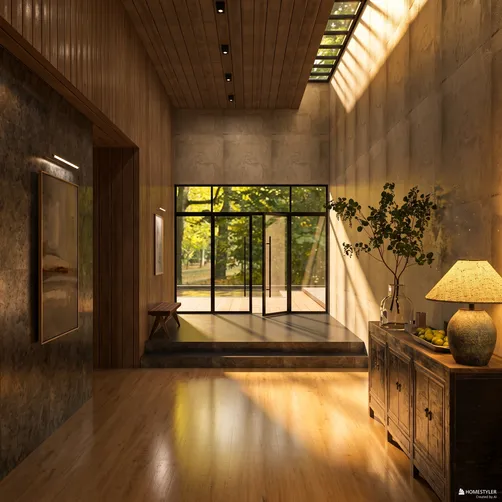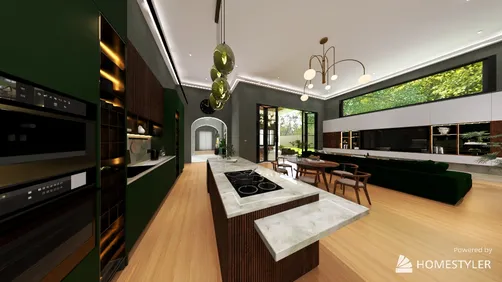



When it comes to space planning, I emphasize a balance of proportion, functionality, and subtle behavioral cues. Clients often request a Vastu room size calculator, indicating they want to bridge traditional guidelines with practical, livable measurements. This involves considering circulation widths, ergonomic space needs, daylight access, and acoustic comfort, all while maintaining the directional and proportional aspects of Vastu. Utilizing tools like Homestyler can greatly aid in visualizing these elements during the design process.
Effective layout decisions can be quantified. According to Gensler’s U.S. Workplace Survey, the ability to choose and control one’s environment significantly enhances effectiveness; thus, the variety and proportion in planning are crucial. The WELL v2 standard, for instance, recommends a minimum of 150 equivalent melanopic lux at eye level for some part of the day to promote circadian health, underlining that the size and orientation of rooms directly impact functionality and well-being. For in-depth insights regarding performance and the environment, you might explore Gensler Research's findings.
The proportional focus of Vastu—precise north/east circulation, stable southwest orientations for bedrooms, and balanced rectangular shapes—aligns well with modern dimensions: recommended desk reach zones, a minimum of 900 mm for clear walkways, comfortable ceiling heights between 2.4 to 2.7 m, and suggested lighting levels based on specific activities. Furthermore, WELL v2 provides enlightening guidance on illumination, aiding the transition from intention to actual dimensions. By integrating these guidelines, you can create environments that not only feel serene but also function efficiently within the Vastu framework, which Homestyler can help visualize.
Exploring Vastu Proportions with Practical Ratios
Vastu advocates for regular rectangular designs over irregular shapes, focusing on width-to-length ratios ranging from 1:1 to 1:2 to promote effective circulation and sightlines. From a functionality perspective, these ratios minimize dead zones and enhance furniture placement. For living areas, ratios between 1:1.2 and 1:1.6 provide optimal seating sightlines and acoustics; bedrooms ideally adhere to a 1:1.2 ratio to ensure clarity in bed orientation while maximizing storage access. Efficient kitchen layouts maintain tighter spans (1:1 to 1:1.3) to facilitate safe work triangles, ideally maintaining distances of 1.8–2.7 m among the sink, cooktop, and refrigerator configurations.
Practical Minimums to Align Vastu Intentions
To transform ideals into actionable plans, I rely on established baselines: primary circulation paths should measure between 900–1,100 mm; secondary routes at 800–900 mm. The depth of seating plus the space needed to pass should approximate 1,500–1,700 mm, allowing unobstructed movement behind a sofa. For bedrooms, aim for at least 750–900 mm of clearance around the bed on two sides, while wardrobes need a minimum depth of 600 mm plus at least 800–900 mm for door clearance. Bathrooms should ideally allow for a turning radius of 760 mm in compact designs and 900 mm where possible. These metrics help in avoiding layouts that may be aesthetically pleasing yet cramped, all while respecting Vastu's design allocations.
Light, Orientation, and Vastu Directions
The preference of Vastu for natural light from the north and east harmonizes with circadian light targets. Aligning work and dining areas to capitalize on morning daylight can enhance vertical illumination efficacy. Task-specific areas typically require 300–500 lux for activities such as reading or food preparation (based on commonly referenced IES task ranges), while bedrooms usually benefit from lighting levels around 150–300 lux with warmer hues to facilitate relaxation. To reduce glare, employ diffuse shades and matte finishes near windows, alongside layered lighting options—ambient, task, and accent—to support both routine and ritual. Utilizing design software like Homestyler can assist in planning these lighting dynamics effectively.
Vastu-Sized Room Guidance with Ergonomic Considerations
An ideal living space proportion would range from 1:1.3 to 1:1.6. For a layout accommodating a three-seat sofa plus an additional chair, the minimum comfortable dimensions would be 3.4–3.8 m in width and 4.2–5.0 m in length. Ensure the main door has a clear swing radius of 1,100 mm upon entry. Heavier storage should ideally be placed on the southwest wall for stability, whilst the northeast area can remain more open and light. If you're considering arrangements, using a room layout tool like Homestyler can provide valuable simulations to assess seating sightlines and traffic flow.
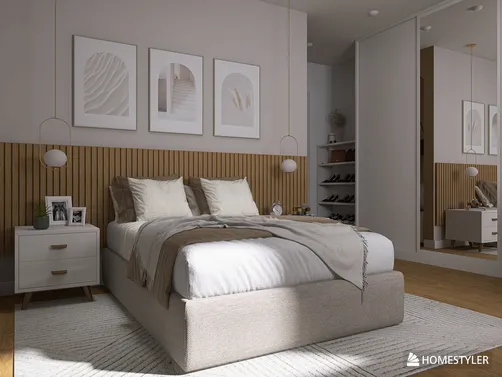
For a queen bed with circulation space, target dimensions should be around 3.2–3.6 m by 3.6–4.2 m, placing the headboard against the south or west wall for added stability and preserving lighter aesthetics to the north/east. Maintain a clearance of 750–900 mm on the pull side of wardrobes; should hinged doors occupy too much space, sliders can be utilized to keep the flow in accordance with Vastu’s emphasis on unhindered movement.
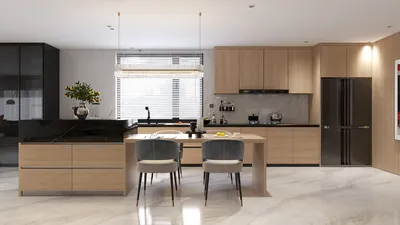
A galley kitchen should allow for an aisle of 1.0–1.2 m for a single cook; for two people, 1.2–1.4 m is recommended. In an L-shaped kitchen, strive to maintain a work triangle perimeter between 4.0–7.5 m for efficiency. Place heavier appliances against southern or southwestern walls where possible, while keeping the east side more open for food preparation and natural morning light. Adequate ventilation is crucial—effective extraction helps reduce heat and enhances comfort, aligning with the Vastu philosophy of balancing elements.
Ensure at least 900 mm of clearance around dining tables for smooth circulation. For a six-seat table measuring 900 x 1,800 mm, a space of approximately 3.2 x 3.8 m minimizes chair collisions effectively. Positioning breakfast nooks east or north harnesses morning light, facilitating a calm start to each day.
Desk dimensions should range from 600–750 mm; add an additional 1,000–1,100 mm behind for chair movement. Face the desk towards the east or north to achieve balanced light without the harsh glare of direct afternoon sun. Incorporate acoustic solutions (such as rugs or fabric panels) to maintain speech clarity, ensuring RT60 remains below approximately 0.5–0.6 seconds in smaller rooms. This acoustic stability represents Vastu’s grounding concept, especially if storage or bookcases are positioned in the southwest corner.
Compact yet stylish bathrooms can function efficiently within dimensions of 1.5 x 2.1 m if fixtures are strategically placed; increasing dimensions to 1.8 x 2.4 m often offers a more relaxed environment. Position lighter storage toward the east/north and consider utilizing warm lighting (2700–3000K) to enhance relaxation during evening hours.
A Practical Approach to Room Size Calculation
Begin with a comprehensive list of your furniture and its intended use. Determine essential clearances (900–1,100 mm for primary aisles, 750–900 mm near beds and dining). Assess your desired proportion, targeting a ratio between 1:1 and 1:1.6 for most living spaces. Should a room exceed a 1:2 ratio, incorporate built-ins or screen elements to visually rebalance the space, thus maintaining the consistency promoted by Vastu. Confirm that daylight access exists in essential areas—such as study and kitchen preparation—to achieve at least 300–500 lux during the day; then supplement with artificial lighting for evening tasks.
Exploring Color Psychology, Materials, and Vastu Cohesion
In Vastu, lighter hues are often favored for the north and east; color psychology supports the notion that cooler palettes enhance perceived brightness and concentration, while earthy, warmer tones promote a grounded atmosphere. Opt for matte finishes near windows that may face glare, and select sustainable materials with low VOC levels for improved air quality. Incorporating natural woods in southwest millwork, soft woven fabrics in the living space, and high-reflectance ceiling paint (LRV 80+) helps foster balance without compromising Vastu traditions—a principle that can be further modeled by tools such as Homestyler.
Acoustic Design and Behavioral Patterns
Sound can disrupt tranquility more than many realize. Utilize soft finishes within living and sleeping areas; maintain a distance between noisy zones and bedrooms, and incorporate door gaskets where necessary. Patterns of use, such as morning routines in the east and more restful activities in the southwest, can inform the areas where you invest in acoustic separation, storage, and substantial features.
Adjusting Vastu for Everyday Life Considerations
In urban apartments, irregular walls or limited light can pose challenges. It's important to prioritize the regularization of usable space through built-in solutions, employ mirrors for elongating short axes (while avoiding excessive mirrors in sleeping zones), and anchor rooms with storage or art in the southwest. Keep circulation areas free of bulky furniture to preserve an inviting openness, maximizing the functionality of each space while respecting Vastu.
A Handy Vastu Room Size Calculation Checklist
- Determine your target proportions (1:1 to 1:1.6 for most spaces).
- Layout furniture and minimum clearances (900–1,100 mm for primary paths; 750–900 mm secondary).
- Position heavier storage towards south/southwest when operationally feasible; keep north/east areas less congested.
- Assess daylight requirements for key tasks; augment lighting to meet the 300–500 lux standard where needed.
- Manage glare and noise using appropriate finishes; utilize lighter shades to enhance ceiling height perception.
- Rapidly iterate layouts with the help of interior layout planners or simulation tools, such as Homestyler.
FAQ Section
Q1. What is a practical minimum bedroom size compliant with Vastu principles?
A1. For a queen-sized bed, the ideal dimensions are around 3.2–3.6 m by 3.6–4.2 m, ensuring a clearance of 750–900 mm on accessible sides and placing the headboard against the south or west wall for optimal stability.
Q2. How do I select an appropriate proportion for a living room?
A2. Consider adopting a 1:1.3 to 1:1.6 ratio, which promotes balanced sightlines and comfortable circulation; plan for heavier storage to reside on the southwest side and a more open configuration toward the north/east.
Q3. Does the application of Vastu align with contemporary lighting regulations?
A3. Indeed. The daylight preferences of Vastu complement standards aimed at achieving comfortable task illumination. Using layered lighting can help reach the typical 300–500 lux range for various activities while retaining a serene atmosphere in the evening.
Q4. What is the recommended corridor width for smooth movement?
A4. Standard guidelines suggest 900–1,100 mm for primary pathways and 800–900 mm for secondary routes, ensuring unobstructed flow in keeping with Vastu philosophy.
Q5. How should I address an unusually shaped room?
A5. Regularize the central functional areas with built-ins, use rugs and coordinated furniture arrangements to visually square the layout, and position heavier elements (like storage and books) in the southwest to restore balance.
Q6. What is a suitable aisle width for kitchens?
A6. Ideally, maintain a width of 1.0–1.2 m for single-cook scenarios; for two people, 1.2–1.4 m is ideal, with a work triangle perimeter of approximately 4.0–7.5 m for optimal efficiency.
Q7. Which color palettes harmonize well with Vastu?
A7. Light, cooler shades are recommended for the north/east areas to enhance perceived brightness, while warmer, earthy colors are ideal for the south/southwest to provide grounding—all while considering reflectance and glare management.
Q8. How can I incorporate acoustics into Vastu-conscious spaces?
A8. Employ soft finishes in living and sleeping areas, separate noisier functions from quieter ones, and integrate sound-absorbing materials to achieve clear speech and maintain tranquility.
Q9. Are ceiling heights significant in Vastu-designed rooms?
A9. Comfortable ceiling heights typically range around 2.4–2.7 m. Though higher ceilings can feel more spacious, they necessitate specific acoustic and lighting strategies; lower ceilings can benefit from high-reflectance paint and careful lighting placement.
Q10. Is it acceptable to use sliding doors within a Vastu framework?
A10. Absolutely. In cases of limited space, sliding doors can facilitate smooth movement and reduce obstacles, aligning well with Vastu's principles of unimpeded circulation.
Q11. How can I efficiently test multiple layouts?
A11. Use an interior layout planner, such as Homestyler, to experiment with furniture placements, circulation paths, and spatial massing, allowing for rapid validation of proportions and daylight access before finalizing designs.
Q12. How should I adapt to strong west sun in my home?
A12. Implement shading solutions, low-gloss finishes, and cooler color tones for the afternoon light. Arrange seating away from direct glare and prioritize west-facing walls for storage rather than primary activity areas.
Built on technology originally developed at Autodesk, Homestyler empowers anyone to design beautiful, realistic spaces in minutes. Join over 20+ million registered users (platform data, 2026) who have already discovered a smarter way to plan, visualize, and bring their dream homes to life — all from the comfort of a browser.
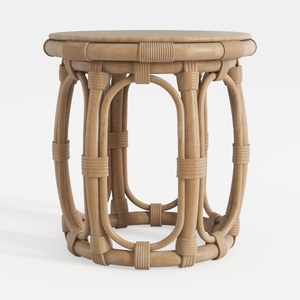

Bohemian Rattan Round Side Table Handwoven Accent 3D Model

Modern Leather Three Seater Sofa Solid Wood Legs 3D Model
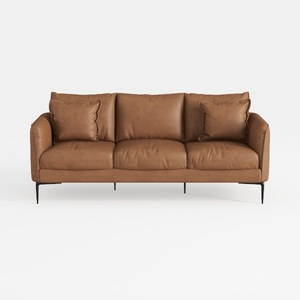
Modern Minimalist Brown Leather 3 Seater Sofa With Black Metal Legs 3D Model
Homestyler is your go-to online home design platform! It features an easy-to-use design tool, stunning 3D renderings, and a vast array of design projects. Plus, with DIY video tutorials, you’ll have all the inspiration and guidance you need to transform your space effortlessly.
Design Now for FREE