


In compact dining spaces, choosing chairs that optimize circulation paths, evoke a sense of lightness, and provide real ergonomic benefits is crucial. I prioritize designs that feature slender footprints, minimal visual weight, and tough finishes that endure daily wear, particularly in bustling urban settings where every square foot is valuable. Incorporating tools like Homestyler can help visualize these layouts effectively.
Even in small spaces, comfort must be prioritized. According to the WELL Building Standard, adjustable seating and diverse postures are key to minimizing musculoskeletal stress; thus, dining chairs, while not intended for office use, should still encourage a neutral posture. A seat height of approximately 18–19 inches is ideal for most adults. Research from Herman Miller indicates that appropriate seat pan depths and lumbar support are essential in reducing discomfort during meals, offering a solid guideline when assessing chair ergonomics. To ensure a peaceful atmosphere and healthier materials, applying WELL v2 recommendations concerning noise absorption and low-VOC finishes is equally useful for home settings. More insights on creating healthier environments can be found at wellcertified.com.
The perception of space is greatly influenced by color and lighting. Verywell Mind suggests that lighter shades tend to create a more expansive and tranquil environment, whereas warmer tones can invigorate social areas. For confined dining corners, I prefer soft neutral tones on chairs, avoiding glare with matte finishes; the IES advocates for glare control and harmonious ambient illumination to minimize visual fatigue, especially with bright pendants positioned close to eye level.
Scale, Proportion, and Seat Geometry
Comfort and circulation are driven by scale. A standard small dining table typically stands about 30 inches high and varies between 32 to 42 inches wide; chairs are most effective at 16 to 19 inches in width and 18 to 19 inches in height, allowing for two to four settings without overcrowding. Aim for at least 24 inches per diner and 36 inches of clearance behind chairs for safe movement. A seat depth of 16 to 18 inches supports the thighs appropriately without compressing the knees, and the backs should accommodate the lumbar curve without forcing an upright position.
Frames, Materials, and Durability
Visually light frames are ideal for compact spaces. Choices like slender steel, powder-coated aluminum, or beech and ash wood maintain a sleek profile while preventing wobbliness. Upholstery should be performance-oriented, featuring tight weaves, stain-resistant surfaces, and colorfast dyes for low maintenance. For those interested in sustainability, seeking FSC-certified woods and recyclable metals is wise, steering clear of coatings with high VOC materials; using low-emitting materials aligned with WELL guidance promotes better indoor air quality. Soft seating materials or felt glides can help reduce noise from chairs scraping on hard floors.
Chair Types That Work in Tight Spaces
- Armless dining chairs: they eliminate side bulk, enabling closer arrangements while ensuring hip clearance on narrower tables.
- Sled-base chairs: they offer smooth movement on rugs and appear visually lighter; make sure to include non-slip glides.
- Stackable or nesting chairs: these options provide seating for guests without taking up permanent space.
- Low-back chairs: they maintain open sightlines beneath window sills and light fixtures.
- Banquette + slim side chairs: fixed seating along a wall coupled with two narrow chairs enhance flexibility.
Seat Comfort Without the Bulk
Being thin doesn’t equate to being hard. Using high-density foam around 1.8–2.2 lb/ft³ ensures durable support without adding excess weight. Curved plywood shells help distribute pressure along the back, with slight waterfall seat fronts easing knee compression. Fabrics or leather with a breathable texture contribute to regulating the microclimate during extended dining experiences.
Leg Room and Table Apron Clearances
Assess the apron depth of your dining table; if it exceeds 3 inches, select chairs with low arm heights or opt for armless designs to prevent knee collisions. Maintain a seat height around 10 to 12 inches below the tabletop for comfortable legroom. Pairing round or oval tables with compact chairs reduces corner conflicts in limited dining spaces.
Visual Lightness and Color Strategy
To enhance the perceived area, consider using low-contrast color schemes where the chair color is similar to the wall hue. The color psychology overview by Verywell Mind indicates that cooler shades can soothe overstimulating settings; I often select light gray or sandy tones for chairs, then introduce warmth through wood finishes and textiles. Opting for matte or satin finishes minimizes specular highlights, which the IES warns can contribute to glare.
Floor Plan Tactics for Small Dining Zones
Slightly shifting the table off-center protects a main walkway and allows for the most compact chairs to be utilized on the smallest side. If your area serves multiple purposes, keep stackable chairs close at hand for added flexibility, storing extra seats vertically. Testing layouts can be streamlined with a room layout tool, such as Homestyler, that simulates chair pull-back widths and seat spacing accurately for ease of use.
Lighting, Glare, and Pendants
Achieving a balance between ambient and task lighting is essential to avoid harsh table contrasts. Pendants should hang approximately 28 to 34 inches above the table, utilizing dimmable warm-white LEDs in the 2700–3000K range for a calm dining atmosphere. Diffusers or shades made of translucent materials decrease direct glare on polished chair surfaces and dining utensils.
Acoustic Comfort in Compact Rooms
Compact areas can amplify noise. Chairs featuring soft seats, joints that don't creak, and felt glides greatly reduce mechanical sounds. Incorporating a rug beneath the table, upholstered banquette backs, and wall art made of soft materials can all contribute to sound absorption. Align your choices with WELL v2’s standards for background noise and echo to maintain an intelligible conversation without raising voices.
Ergonomic Touchpoints I Never Skip
- Seat height: 18–19 inches for most adults.
- Seat depth: 16–18 inches to properly support thighs.
- Back angle: a slight recline or curved lumbar support.
- Edge detail: waterfall fronts to help circulation.
- Stability: reliable four-point contact or well-crafted sled bases fitted with quality glides.
Styling Small Chairs Without Visual Clutter
To maintain visual cohesion, repeat the metals and woods already present in the room. For darker tables, consider lighter chairs with open frames to prevent a sense of heaviness. Two-tone chairs—neutral bodies with warmer seat cushions—balance comfort and aesthetics.
Maintenance and Longevity
Opt for removable, washable seat covers or wipeable leather textures if dining frequently. For wooden frames, applying a hardwax oil finish helps resist staining while preserving the natural feel of the grain. Metal frames benefit from a powder coat to enhance scratch resistance and color retention.
When to Use Arms
Arms enhance comfort for lengthy meals but can increase the overall footprint. In constrained dining areas, reserve armless designs for end chairs with lower arm heights that can slide comfortably under the tabletop; always ensure there’s enough clearance to avoid trapping diners.
FAQ
Q1: What chair width works best for a small dining room?
A1: Aim for an overall width of 16–19 inches. This range allows for 24 inches per diner while maintaining ease of movement around a compact table.
Q2: How much clearance should I keep behind each chair?
A2: Aim for at least 36 inches to enable comfortable movement and pulling back chairs. In extremely tight spaces, 30 inches is the bare minimum.
Q3: Are armless chairs always better in compact spaces?
A3: Not always, but armless models do lessen horizontal bulk and accommodate more seating at smaller tables. If you prefer armrests, opt for lower profile arms that can slide beneath the table.
Q4: What seat height is most comfortable?
A4: Generally, a seat height of 18–19 inches is best for most adults, while maintaining a 10–12 inches gap between the seat and tabletop for ease of leg room.
Q5: Do lighter-colored chairs actually make a room feel bigger?
A5: Yes, light, low-contrast tones can diminish visual boundaries; research outlined by Verywell Mind shows that lighter shades can enhance the feeling of openness and tranquility.
Q6: Which materials are best for durability without heaviness?
A6: Powder-coated aluminum, slender steel, and hardwoods like beech or ash provide strength while maintaining a light profile. Performance fabrics or wipeable leather offer additional resilience.
Q7: How do I manage glare from pendant lights?
A7: Utilize dimmable LED lighting at 2700–3000K, suspend pendants 28–34 inches above the table, and select diffusers or matte finishes for chairs to mitigate specular highlights in line with IES glare recommendations.
Q8: Can stackable chairs be comfortable enough for daily use?
A8: Absolutely, provided they feature supportive shells, waterfall fronts, and quality foam or molded seats. Maintain one or two daily-use stackables and store extras for guests.
Q9: What’s the best table shape for small rooms?
A9: Round or oval tables offer fewer corner conflicts and foster better circulation, making them an excellent match for narrow chairs in confined layouts.
Q10: How can I reduce noise from chairs on hard floors?
A10: Adding felt glides to chair legs, utilizing upholstered seating, and placing a rug under the table are effective solutions. These strategies align with WELL’s advocacy for acoustic comfort.
Q11: How do I test spacing before buying?
A11: Use tape to map out the footprint and simulate the clearances. A layout simulation tool, such as Homestyler, provides an easy way to visualize spacing and chair counts based on real dimensions.
Q12: Are low-back chairs better than high-back in small spaces?
A12: Low-back chairs help maintain open sightlines, reducing visual weight. If support is preferred, opt for slender high-backs with open slats to maintain an airy feel.


Clihome Mid-Century Modern Accent Chair with Wood
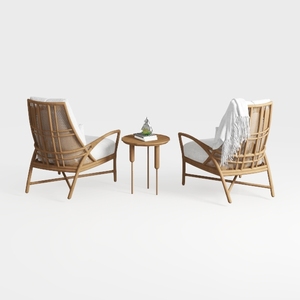
Bohemian Rattan Fabric Armchair and Side Table Set 3D Model

Modern Tan Leather Swivel Lounge Chair 3D Model
Looking to transform your space? Homestyler is your go-to online home design platform! With an easy-to-use design tool, stunning 3D renderings, diverse design projects, and helpful DIY video tutorials, you can create your dream home effortlessly—no experience needed!
立即免费设计
































