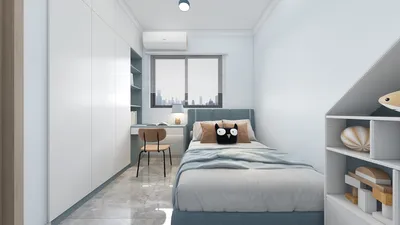


Loft apartments are characterized by clear intent: a singular space designed for multiple functions. In compact living areas, the emphasis is on balancing privacy, movement, and storage while maintaining a sense of openness. To achieve this in lofts, I utilize distinct zones, carefully chosen materials, and thoughtful manipulation of light to create the illusion of spaciousness without increasing square footage.
Decisions about scale should be guided by data. According to Gensler’s Workplace Survey, access to natural light significantly enhances both performance and well-being. WELL v2 standards encourage achieving 300–500 lux of illumination on work surfaces for optimal visual comfort in home offices. For living spaces, I aim for ambient lighting around 200–300 lux, layering task lighting to reach 500 lux at kitchens and workstations to minimize glare and fatigue. The choice of color impacts well-being as well; research by Verywell Mind shows that cool, desaturated tones can lower stress, which I strategically apply to create focused areas.
Controlling acoustics is essential in open loft designs. Research from Steelcase reveals that low-noise environments are linked to increased focus. Therefore, I target an NRC rating of 0.70 or higher for acoustic panels on key reflection surfaces and recommend high-pile rugs to diminish echo from hard concrete or wooden floors. With these foundational elements—lighting, acoustics, and color—I begin arranging the space with furniture that serves a dual purpose as architectural features.
Establishing Micro-Zones Without Walls
I create defined micro-zones through variations in height and rhythm, using items like a 90–110 cm tall credenza to indicate separation between living and dining areas. A slatted screen allowing 30–40% visibility maintains sightlines while facilitating movement. In tight spaces, utilizing a room layout planner, such as Homestyler, allows for quick testing of clearances (ideally 90 cm for primary paths and 60 cm for secondary ones). This tool simulates sightlines and pathways prior to purchasing large furniture.
Mezzanine Sleeping: Safe, Calm, and Ventilated
Lofts frequently feature elevated beds to maximize floor space. I maintain mezzanine guardrail heights of 90–100 cm, integrate recessed LED strip lighting (2700–3000K) for a calming effect, and ensure a minimum headroom of 210 cm to mitigate feelings of confinement. Additionally, ensuring cross-ventilation is vital: positioning operable windows adjacent to open balustrades helps avoid heat build-up. Motion-sensor lighting on steps enhances safety without excessive brightness.
Hybrid Living–Work Wall
In smaller lofts, a single wall can serve three purposes: display, storage, and workspace. I recommend a built-in unit that is 30–40 cm deep with combinations of enclosed and open spaces. A fold-down desk measuring 100 cm wide and 60 cm deep can cleverly conceal a laptop and task lighting. For effective glare management on screens, I follow WELL guidelines that suggest shielding light sources; using matte finishes and positioning task lights at a 30°–45° angle towards surfaces helps avoid direct glare.
Kitchen Efficiency and Visual Quiet
Efficient kitchens maximize a run of 180–240 cm with 60 cm of counter space on both sides of the cooktop. To reduce visual distractions, I favor continuous cabinetry with integrated handles and maintain a coherent color palette. A soft, neutral countertop coupled with 3000–3500K task lighting accurately depicts food without appearing sterile. Proper ventilation should direct air outside; if this isn't feasible, upgrading filters and incorporating a quiet 20–40 dB(A) range hood can enhance acoustic comfort.
Disappearing Storage Solutions
I prioritize vertical storage. A wardrobe wall measuring 240–270 cm with handle-free doors also contributes to acoustic absorption. Under-stair drawers (18–22 cm for shoes, 30–35 cm for clothing) keep the floor neat. In living spaces, using ottomans with storage compartments and platform beds with drawers promotes an uncluttered atmosphere that supports the loft's airy feel.
Layering Light: From Day to Night
Natural light is paramount. I employ sheer curtains at triple fullness to temper brightness, followed by blackout drapes for nighttime. The lighting strategy includes ambient lighting (200–300 lux), task highlights (up to 500 lux in work and kitchen areas), and soft path lighting. Careful alignment of fixtures avoids direct lines of sight from seating and sleeping areas; adherence to the Illuminating Engineering Society’s standards for glare control emphasizes the need for shielding and uniformity in illumination.
Understanding Color Psychology and Material Balance
Color serves as a functional tool rather than mere decoration. Cool, muted tones within work areas promote tranquility, while warmer neutrals in social spaces enhance a welcoming atmosphere. I emphasize texture to create scale: a matte plaster or limewash promotes calmness on expansive surfaces, while a single textural feature—such as ribbed wood or honed stone—adds depth without clutter. Sustainable choices are vital in smaller spaces, opting for low-VOC paints and FSC-certified wood to maintain a healthy indoor environment.
Achieving Acoustic Comfort in Open Spaces
The hard surfaces typical of lofts can intensify sound. Placing a rug that covers at least 60% of the seating area, using upholstered furniture with dense foam, and considering ceiling baffles if noise reverberation exceeds 0.6–0.8 seconds can be effective strategies. For sound insulation against neighbors, installing a floating floor underlayment in bedrooms and heavy curtains near windows can significantly reduce noise transfer.
Vertical Drama and Horizontal Calm
Compact lofts can be visually enhanced to feel more expansive. I mitigate horizontal compression by utilizing clean lines—continuous shelves, long fixtures—and introduce vertical highlights such as a plant column or tall bookcases at strategic points. This careful proportioning maintains an orderly setting while celebrating vertical space.
Flexible Furniture Options and Concealed Mobility
Opt for nesting tables, modular sofas with adjustable parts, and stackable stools. Track-mounted curtains help partition the living space for guests as needed. A movable kitchen island on lockable casters provides additional prep space and transforms into a bar for gatherings, storing neatly under the stairs afterward.
Smart Layout Strategies for Small Spaces
Ensure that the main traffic flow remains uninterrupted from entry to the window. Position the sofa to demarcate the seating area while allowing airflow behind it. Align desk settings to prevent backlighting from windows, minimizing glare on screens. Experimenting with furniture placements can be facilitated by using a layout simulation tool like Homestyler to visualize spacing and path widths before finalizing decisions.
Personalized Touches with Balance
Opt for a few large display pieces—such as one grand artwork instead of multiple smaller items—allowing for clear focus; let the interplay of texture and light provide the nuance.
Checklist for Loft Success
- 90 cm pathways as the primary route, 60 cm for secondary traffic
- Ambient lighting of 200–300 lux; task lighting between 300–500 lux
- Aim for NRC 0.70 or higher for sound absorption
- Dual-layered window treatments for effective day/night management
- Integrated storage solutions in stairs, beds, and media walls
- Maintain a limited color palette with one standout material
- Incorporate flexible furniture options that allow for easy rearranging
Valuable Resources
For insights on lighting quality and health, refer to the WELL v2 guidelines. Research on workplace dynamics and focus, particularly regarding acoustics and lighting, can be found through Gensler Research.
Common Questions
Utilize semi-open screens, ceiling-hung curtains, and variations in furniture height. A slatted divider with 30–40% openness can maintain light flow while providing a gentle boundary. Curtain tracks can adapt to set up a temporary sleeping area as necessary.
Use warm-white lighting (2700–3000K) for living and sleep zones, while kitchen tasks can benefit from neutral lighting (3500–4000K). Ensure ambient light stays within 200–300 lux and task zones reach up to 500 lux to align with WELL v2 standards.
Layer a significant area rug with a solid underlayer, incorporate upholstered seating, and install acoustic panels with an NRC of 0.70 or higher at pivotal reflection points, usually opposite to speakers or adjacent to tall hard surfaces.
Design a streamlined kitchen featuring a single run of 180–240 cm equipped with integrated appliances and a moveable island, ensuring there’s 60 cm of workspace on either side of the cooktop and adequate task lighting at 3000–3500K.
Yes, with the appropriate guard height (90–100 cm), non-slip treads, and motion-activated step lighting to ensure safety. Also, ensure that ventilation is well-planned by aligning openings to avoid excessive heat accumulation.
It’s essential to maintain an open primary path leading from the entrance to the window. Position crucial furniture to create micro-zones while keeping at least 90 cm clearances. Utilize an interior layout planner to visualize pathways prior to making any purchases.
Incorporate subtle, desaturated hues like blue or green in focus areas, combined with warm neutrals such as sand or oatmeal in living spaces. This approach utilizes the principles of color psychology to create a harmonious blend of calmness and warmth conducive to social interaction.
Yes—consider a fold-down desk incorporated into a built-in storage wall, utilize matte surfaces to minimize glare, and implement discreet cable management solutions. Position task lights at a 30°–45° angle to effectively reduce reflections on screens.
Emphasize vertical storage solutions, such as wardrobe walls ranging from 240–270 cm, under-stair drawers, beds with full-depth storage, and ottomans with lift-tops to maintain a tidy and spacious aesthetic.
Select low-VOC paints, utilize FSC-certified timber, and choose natural textiles. Ensuring proper ventilation and acoustic dampening further enhances the perception of comfort and reduces stress within the space.



Discover the ease of home design with Homestyler! This online platform offers an intuitive design tool, stunning 3D renderings, and a wealth of DIY video tutorials. Whether you're planning a renovation or starting fresh, Homestyler empowers you to create your dream space effortlessly.
Desain sekarang Gratis
































