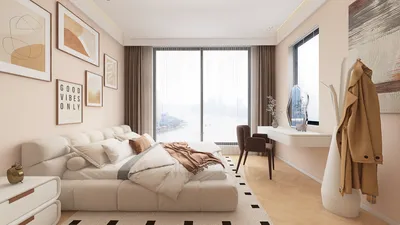


I once faced the challenge of squeezing a king-sized bed, a bathtub, and a cozy yoga nook into a 30-foot trailer due to a client’s insistence on having all three elements. To my surprise, the bathtub ultimately ended up as a plant stand, leading us to discover the importance of restraint. Navigating small spaces requires ingenuity, and transforming a 4-bedroom trailer can reveal the beauty of clever compromises that bring comfort without sacrificing style.
Compact spaces ignite creativity — in this article, I’ll outline 5 practical design strategies I've implemented in real projects to help 4-bedroom trailers feel more spacious, functional, and even a touch luxurious, all while staying within budget.
1. Bunk + Loft Hybrid Bedrooms
In a past project, I turned a cramped bedroom into a hybrid bunk-and-loft design to accommodate both children and visitors. The lower area features a full-sized bed, while the loft above serves as a delightful reading nook or additional sleeping space. This clever arrangement not only enhances usable floor space but also gives each sleeper their own distinct area. Advantages include maximizing beds without enlarging the living area; however, it does require safe ladder access and slightly elevated ceilings.
save pin
2. Open Plan Living with Pocket Dividers
In one 4-bedroom trailer I worked on, the removal of non-structural walls and the incorporation of pocket doors and folding screens transformed the living-kitchen area into a versatile hub. By day, the space feels open and inviting, while at night, sliding panels create private sleeping zones. The benefit is a visually expansive environment with adaptable privacy. However, sound control can be challenging — integrating soft textiles and rugs can help absorb noise.
save pin
3. Multi-Functional Furniture Packs a Punch
A key strategy I often employ includes built-in seating that offers storage, Murphy beds with integrated desks, and modular sofas. For instance, in one design, a bench by the window served as both a storage compartment for linens and a dining seat. This approach minimizes clutter and maintains clear pathways. While custom-built options can be pricey, the long-term benefits of an organized living space are significant.
save pin
4. Zoning with Lighting and Flooring
Even in smaller trailers, one can define space using varied flooring materials and layered lighting. I selected warm wood-like vinyl for sleeping areas and patterned tile-effect vinyl for the kitchen to delineate zones without walls. Task lighting above counters and soft sconces in bedrooms add purpose to each area. The challenge is maintaining cohesiveness in transitions — using a coordinating color scheme or material can help unify the space.
save pin
5. Efficient Galley Kitchen + Drop-Leaf Dining
An efficient galley kitchen, complete with pull-out pantry options and a drop-leaf dining table, is ideal for trailers. In a recent project, the drop-leaf table provided extra prep space when closed and accommodated six people when opened, making it perfect for casual gatherings. It’s a simple and budget-friendly solution that keeps traffic flowing smoothly. A minor trade-off is the limited permanent counter space, so preparing for portable boards is advisable.
save pin
Design Tools I Recommend
Whenever I explore these ideas, I utilize a room planner to visualize layouts and ensure that circulation and storage considerations are met before finalizing designs. Tools like Homestyler allow for 3D visualization, which helps identify potential issues early and avoids awkward surprises during the build process.
save pin
FAQ
Q1: Can a 4-bedroom trailer feel spacious?
A1: Absolutely — implementing vertical solutions, multi-functional furniture, and smart zoning can create the illusion of a much larger space in a 4-bedroom trailer. Careful planning is essential.
Q2: What ceiling height is required for loft beds?
A2: Ideally, a ceiling height of at least 8.5 to 9 feet is needed to ensure lofts are comfortable and secure. For lower ceilings, consider alternative options like trundle beds.
Q3: How can I enhance sound privacy between bedrooms?
A3: Incorporate acoustic panels, utilize rugs and soft furnishings, and install solid-core pocket doors to minimize noise transfer. Sealing gaps around doors can also help.
Q4: Are custom built-ins worth the investment?
A4: In trailers, custom built-ins often provide a solid return on investment by enhancing storage and functionality. If you're on a budget, focus on built-ins in high-traffic areas like the kitchen and entry.
Q5: How should plumbing be managed for two bathrooms in a trailer?
A5: Positioning wet zones back-to-back simplifies plumbing requirements. Always consult a licensed plumber and adhere to local building codes. For further guidance, check EPA's recommendations on water-saving fixtures: https://www.epa.gov/watersense
Q6: Can I create a flexible guest room/office within a trailer?
A6: Definitely — utilizing fold-down desks, wall beds, and smart storage solutions can allow one room to fulfill dual purposes without clutter.
Q7: What type of flooring is most suitable for trailers?
A7: Waterproof vinyl plank is lightweight, durable, and warm visually, making it an excellent choice for mobile homes and trailers.
Q8: Do you have any quick staging tips before moving in?
A8: Ensure pathways remain clear, use mirrors for light reflection, and maintain consistent color tones to create a cohesive and tranquil atmosphere.
save pin
Discover the ease of home design with Homestyler! This user-friendly platform offers an intuitive online design tool, stunning 3D renderings, and a wealth of inspiring design projects and video tutorials. Perfect for anyone looking to transform their space effortlessly!
지금 무료로 디자인하세요
































