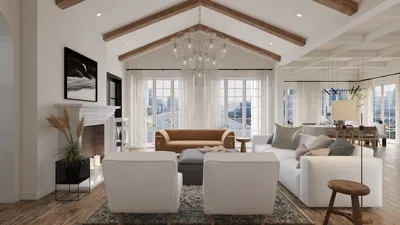


I once worked with a client who wanted a multifunctional living room that served as a yoga studio, guest room, and small office—all within a compact 12 x 40 mobile home. It seemed like an overwhelming challenge until we began utilizing 3D visualization to explore layouts, discovering inventive solutions that enhanced both space and functionality.
Small spaces often ignite significant creativity, and a 12x40 one-bedroom mobile home presents one of my favorite design challenges. In this article, I’ll share five practical design inspirations derived from real projects, including necessary trade-offs, budget strategies, and clever hacks I've learned through experience.
1. Open-concept living with designated storage areas
To create a sense of spaciousness in a 12-foot wide mobile home, keep the central area open. You can achieve this by integrating a slim sofa, a wall-mounted television, and a floating shelf that functions as a console. Low-profile storage along the walls can also maintain a smooth flow while concealing seasonal items, enhancing the area’s overall aesthetics.
The benefit here is a visually spacious atmosphere and adaptable furniture arrangements; however, careful planning of electrical outlets and lighting is crucial to ensure each designated area feels well-defined. Upgrading to a modest built-in bench with hidden drawers can be an affordable way to enhance usable storage.
save pin
2. L-shaped kitchen designed for optimal workflow
Implementing an L-shaped kitchen layout along one short end and extending into the longer side allows for seamless counter space in a 12x40 setup, ensuring traffic flow remains unblocked. I often select a compact refrigerator-pantry combination and a two-burner stove while including a full-sized oven, thereby conserving counter space without compromising cooking capabilities.
This configuration effectively balances preparation areas and social space but can feel constricted if cabinet depths aren't thoughtfully selected. For those on a budget, open shelving above counters can serve as a cost-effective means to keep essentials easily accessible and promote a more open feel.
save pin
3. Transforming the bedroom into a versatile retreat
In a one-bedroom mobile home, the bedroom must serve multiple purposes: incorporating a fold-down desk, shallow closets, and under-bed drawers can enhance its functionality as a peaceful multi-use retreat. In one of my designs, I created a sliding door that also acted as a headboard, optimizing wall space and injecting personality.
While this setup maximizes privacy and storage, one must address sound insulation and air circulation—thin walls and single-pane windows could compromise seclusion. Simple enhancements like layered curtains and a quiet fan can significantly improve comfort levels.
save pin
4. Efficient bathroom design with innovative fixtures
Consider replacing a full bathtub with a corner shower, installing a recessed medicine cabinet, and utilizing a wall-mounted toilet to visually expand the available floor space. I often recommend selecting fixtures that incorporate storage solutions to minimize clutter in a narrow bath layout, especially in a 12x40 home.
While this choice means fewer options for long baths, the space savings are invaluable for day-to-day living. It’s crucial to prioritize durable, water-resistant finishes to avoid premature replacements.
save pin
5. Creating an outdoor extension with a petite deck
In favorable climates, adding a narrow deck along the longer side of the mobile home can significantly expand your living area—consider foldable furniture and built-in planters that offer privacy and greenery. I often incorporate this concept into my overall layout sketches to ensure alignment of doors and sightlines.
Outdoor expansions can be budget-conscious, especially if you begin with a small scale. However, it's wise to review local regulations and site requirements first. Once ready to proceed, finalize your interior arrangement by assessing the kitchen workflow to ensure a natural indoor-outdoor flow, followed by drafting a detailed floor plan before ordering materials.
save pin
FAQ
Q1: What is the ideal basic layout for a 12x40 one-bedroom mobile home?
A1: An open-plan living area paired with an L-shaped kitchen and a separate bedroom at one end is highly effective. This arrangement optimizes natural light and minimizes plumbing runs, offering cost benefits.
Q2: What storage options are realistically achievable in a 12x40 home?
A2: By employing built-ins, under-bed drawers, and vertical shelving, you can achieve impressive storage capabilities; it’s essential to focus on multi-functional furniture and recessed niches to keep clutter at bay.
Q3: Is it necessary to include a full bathtub in a 12x40 floor plan?
A3: If you appreciate taking baths and have the space, a tub can be beneficial, but a corner shower will save floor space and provide opportunities for larger vanity or linen storage.
Q4: How can I make the bedroom feel private in a small mobile home?
A4: Use a solid sliding door, apply acoustic caulk where walls meet floors, and incorporate soft furnishings to dampen sound. Additionally, positioning the bedroom away from high-traffic areas can enhance privacy.
Q5: What are typical budget pitfalls when renovating a 12x40 mobile home?
A5: Common pitfalls include underestimating utility relocations, custom cabinetry costs, and permit fees. I recommend obtaining at least three quotes and setting aside 10-15% for contingencies.
Q6: Is it possible for me to design the floor plan myself?
A6: Absolutely! You can draft layouts on your own, but utilizing a trustworthy planning tool or consulting with a designer can help you avoid costly errors regarding dimensions and code compliance.
Q7: Are there legal restrictions pertaining to altering mobile homes?
A7: Regulations differ by location; thus, it is essential to verify local building codes and mobile home park regulations. For federal guidelines related to manufactured housing, check the U.S. Department of Housing and Urban Development: https://www.hud.gov/program_offices/housing/rmra/mhs.
Q8: How do I decide between custom cabinetry and modular options?
A8: Modular units are cost-effective and quick to install, while custom cabinetry is ideal for fitting uniquely shaped spaces; choose custom for walls that are irregularly shaped and modular for swift, economical updates.
save pin
Homestyler is your go-to online home design platform! With its easy-to-use design tool, stunning 3D renderings, and a wealth of inspiring design projects and video tutorials, you can effortlessly turn your home design dreams into reality. Start creating today!
Progetta ora GRATIS
































