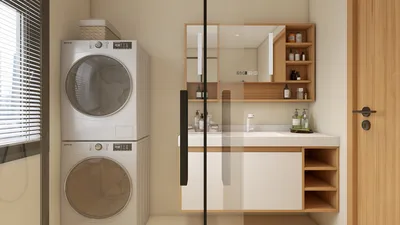


I've implemented numerous sliding doors in various settings such as homes, studios, and compact offices where space is a premium. When done correctly, a sliding door can reclaim about 8 to 10 square feet of swing clearance, enhancing flow while introducing a sleek architectural aspect that feels seamless. Beyond aesthetics, thoughtfully designed doors influence comfort by adjusting light levels, acoustics, and even the daily use of a room. Let’s explore a straightforward DIY approach using the same principles I apply in my client projects, incorporating tools like Homestyler for planning.
The idea of maximizing space isn't just a theory. Research by Steelcase reveals that flexible spatial arrangements significantly enhance productivity and spatial efficiency, with sliding systems effectively minimizing circulation conflicts in constricted areas. Additionally, WELL v2 guidelines suggest techniques for managing distractions and noise transfer; incorporating a well-sealed door with soft-close mechanisms can significantly reduce impact sound and slamming by design. Lighting considerations are crucial too, as defined by IES standards, which recommend glare control and suitable illuminance; translucent panels can effectively diffuse light while mitigating direct glare on work areas.
The influence of color and mood is significant and shouldn't be overlooked. According to Verywell Mind, cooler shades tend to soothe while warmer tones can invigorate; complementing a subdued door color with vivid adjacent walls can add perceptual depth without creating visual chaos. In smaller homes, this balance is vital to prevent the door from appearing as a heavy visual obstruction, while still clearly defining thresholds.
Planning Your Opening and Layout
Begin by considering the threshold's functions: privacy, light sharing, and flow. I identify three routes: primary pathways, secondary detours, and stationary spaces. If your door interrupts a major route, position the sliding panel to align with an unused section of wall. For cramped areas, mimic traffic flow with a room layout tool like Homestyler to visualize how the panel parks and clears switches or decor. Typical interior openings measure between 28 to 36 inches; for light sharing between spaces, consider 36 to 42 inches with translucent panels to manage glare.
Accurately measure the rough opening (RO) and ensure it's plumb and level. When dealing with wall-mounted barn systems, allocate at least twice the width of the door for a full clear opening. Pocket doors necessitate 2x the opening width within the wall plus reinforcement. Ensure the header can support the load: most residential headers can handle standard door weights, but avoid relying on weak drywall anchors—securely mount into studs with appropriate fasteners. If you plan on adding automation later, set aside a 2 to 3-inch chase at the track for cable management and low-voltage wiring.
Select Your Sliding System
There are three primary types: wall-mount (barn), pocket (in-wall), and bypass (overlapping panels). Wall-mount is the most user-friendly DIY option due to visible hardware and straightforward servicing. Pocket doors create a sleek appearance and conserve floor space, but they require meticulous in-wall preparation. Bypass systems are ideal for wardrobes or broad openings where partial access to two panels is necessary.
Choosing the right hardware is essential. Opt for ball-bearing trolleys that exceed your panel's weight rating by at least 25%. Implementing soft-close dampers minimizes slamming, aligning with comfort goals emphasized in WELL's acoustic strategies. For residential privacy enhancements, use edge pulls or recessed handles to prevent pinch points. If ADA-compliant operation is required, ensure handle heights range from 34 to 48 inches and use smooth pull forces; ergonomic guidelines recommend keeping repetitive pull forces below about 5 to 8 lbf to alleviate strain.
Panel Materials and Finishes
Solid wood or MDF with veneer provides warmth and sufficient mass for sound management. Laminated glass allows light sharing and gives a modern edge; frosted or reeded finishes diffuse light and restrict direct lines of sight to diminish visual distractions. Metal-framed doors are sleek and resilient but may transmit more sound if the panel is lightweight—consider using acoustic seals to remedy this.
In terms of sustainability, it's wise to select low-VOC finishes and pre-finished panels when feasible to limit indoor emissions. If color sensitivity is a concern, a toned-down neutral (like greige or soft graphite) keeps the door visually subtle, while a bold accent color (such as midnight blue or forest green) can serve as an anchor in longer hallways. Pay attention to edge details: a 2 to 3 mm eased edge feels more pleasant to the touch and helps prevent chipping.
Tracks, Stops, and Structural Details
Secure the track to studs or a continuous header board. I typically use a 1x6 hardwood ledger fastened into studs at 16-inch intervals, then mount the track to this ledger for precise leveling and shim management. For pocket doors, ensure the pocket installation is plumb and square; any misalignment can lead to panel rubbing and poor closure.
Adjust floor guides to prevent the panel from wobbling; a U-guide or T-guide aligned with the panel’s bottom groove is effective. Limit stops act as safeguards against over-travel. For bypass systems, stagger the stops to avoid collisions and ensure consistent spacing on both panels.
Light Management, Glare, and Visual Rhythm
Sliding doors are often positioned near windows or lighting fixtures. Adhere to IES glare control recommendations: steer clear of direct high-intensity beams striking glass at shallow angles. If your door faces a workspace, opt for satin glass to help diffuse brightness and maintain consistent task illumination. Warm LED strips (2700–3000K) within niches create a soothing atmosphere at thresholds; cooler temperatures (3500–4000K) appear cleaner in kitchen settings. Maintain a steady visual rhythm by aligning door stiles with nearby cabinetry lines for coherence.
Acoustic Comfort and Privacy
While no sliding door can match the acoustic insulation of a gasketed swing door, you can achieve acceptable levels of privacy. Incorporate perimeter brush seals, a drop seal at the bottom, and a soft-close damper. Utilizing heavier panels (8–10 lb/ft²) enhances sound transmission resistance; a simple MDF core with veneer can outperform hollow-core options. For rooms requiring quiet—such as nurseries or studies—consider adding a secondary drapery layer on the door wall to absorb mid-to-high frequencies.
Ergonomics and Daily Use
Place handles at a height that accommodates most users: 36 to 40 inches from the floor is ideal for mixed-height households. Edge pulls work well for pocket doors; for barn doors, select handles with a grip diameter of 30 to 40 mm for comfort. Avoid sharp protrusions that could snag clothing in traffic zones. Ensure that finger access is clear on both sides to prevent pinching against jambs.
Installation Steps (DIY-Friendly)
1) Verify opening dimensions, ensuring it's level and plumb. 2) Locate studs and, if necessary, install a ledger board. 3) Ensure the track is level; pre-drill for precise spacing. 4) Attach hangers to the door according to specifications; double-check centerlines. 5) Hang the door and position the floor guide. 6) Install soft-close mechanisms and limit stops; test the door's travel. 7) Attach handles and edge pulls. 8) Adjust gaps (top/bottom/side) for uniformity. 9) Apply seals where necessary. 10) Perform a final cleanup and safety check.
Styling and Color Psychology
If a serene atmosphere is desired, opt for cooler neutrals or desaturated blues and greens; as noted by Verywell Mind, these tones foster relaxation. In more energetic spaces—like kitchens or creative studios—warmer shades or textured veneers can enhance vitality. Use contrast thoughtfully: a dark door set against light walls frames the opening like a gateway and strengthens visual navigation. In narrow hallways, maintaining a close color match between the door and wall enhances the sense of space.
Common Mistakes to Avoid
- Installing into drywall alone (which may lead to sagging and failure). - Disregarding floor guide alignment (which causes panel sway). - Selecting lightweight hollow-core panels for areas demanding heightened privacy. - Missing soft-close dampers in homes with children. - Blocking electrical switches with the parked door. - Not addressing glare from glass surfaces near workspaces.
Maintenance and Longevity
Regularly vacuum the floor guide channel, ideally every three months. Annual checks on hanger bolts should be conducted, re-tightening as necessary. Replace worn brush seals and keep track surfaces clean to ensure silent operation. Reapply finish touch-ups on edges to mitigate moisture ingress and prevent swelling over time.
Consider hiring a carpenter for structural alterations, pocket retrofits in load-bearing walls, or complex bypass systems exceeding 8 feet in width. For projects involving automation or access control, consult an electrician early and plan for conduit installation.
Frequently Asked Questions
Q1: How much floor space does a sliding door actually save?
A swing door typically requires 8 to 10 square feet of clearance; a sliding door eliminates that arc, thereby reclaiming usable floor area along the swing path.
Q2: Can a sliding door provide genuine acoustic privacy?
With heavier panels, brush seals, and a drop seal, you can achieve reasonable speech privacy for casual conversation, although it will not equal the performance of a fully gasketed swing door.
Q3: What door width is most effective for allowing shared light between rooms?
A width between 36 and 42 inches permits ample light transfer while keeping the panel manageable and minimizing glare, especially when using satin or frosted glass.
Q4: Are soft-close systems worth the investment?
Absolutely. They help diminish slamming sounds and impact, aligning with the comfort objectives underscored in WELL v2 acoustic practices, and extend the lifespan of the hardware.
Q5: Which materials strike a balance between durability and sound suppression?
MDF core with real-wood veneer provides substantial mass and a refined appearance; laminated glass offers light sharing but necessitates seals for improved privacy.
Q6: What is the biggest pitfall for DIY enthusiasts?
Failing to securely mount the track into studs rather than relying solely on drywall. Always ensure solid anchoring and check level across the entire installation.
Q7: How can I avoid glare if I opt for glass panels?
Select frosted or reeded glass and direct lights away from reflection angles. Follow IES glare control guidelines to maintain comfortable task lighting.
Q8: Is installing a pocket door more challenging than a barn door?
Yes, pocket doors require exact framing and plumb pockets; barn doors are generally quicker and more manageable for first-time DIYers.
Q9: Can sliding doors be made ADA-compliant?
Yes, they can. Position handles between 34 and 48 inches and reduce pull forces; select trolleys that operate smoothly and avoid tight finger recesses.
Q10: How should I plan for the parked door's position?
Position the panel along an area of low use, ensuring it stays clear of switches, artwork, and control elements. Use an interior layout planner such as Homestyler to visualize everyday traffic flow effectively.
Q11: What routine maintenance helps keep the door quiet?
Regularly clean the floor guide, check hanger bolts annually, and replace any worn seals. Maintain dust-free track surfaces for smooth operation.
Q12: Can I retrofit a pocket door in a small apartment?
Typically yes, but it’s essential to confirm wall integrity, plumbing, and electrical setups first. Non-load-bearing walls are preferable; consult a professional if uncertain.
Discover Homestyler, the ideal online home design platform for all your creative needs! With its user-friendly design tool, stunning 3D renderings, and a wealth of DIY video tutorials, you can effortlessly transform your space and explore endless design possibilities. Start your design journey today!
Design jetzt kostenlos
































