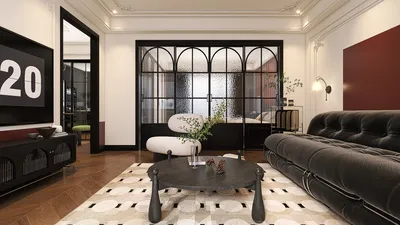


A client once approached me with a challenge: fitting a garage, guest room, and kitchen island into a mere 20-foot-wide two-story lot. I nearly suggested a sideways build! This experience highlighted how small spaces encourage thoughtful design rather than compromises. I frequently utilize interactive 3D models early in the design process, allowing homeowners to visualize the dynamics of a two-story compact home even before demolition begins, often using tools like Homestyler.
1. Compressed Living with an Open Ground Floor
My preference is to position private spaces on the upper floor while keeping the ground level open—merging the kitchen, dining, and living areas seamlessly to enhance the sense of space. This approach fosters light continuity and flexible entertaining options. However, a potential issue is noise transfer between floors, which can be addressed with strategic insulation and a well-planned layout.
save pin
2. Efficient Mirror-Image Duplex on Narrow Lots
For narrow plots, I often create two identical vertical units that share a central stair. This design is efficient and reduces plumbing complexity. This layout is advantageous for generating rental income or accommodating multigenerational families, though it requires careful attention to room widths. Here, I advocate for built-in storage solutions and pocket doors for unobstructed movement.
save pin
3. Utilizing Mezzanines and Loft Spaces
When the ceiling height permits, a mezzanine can incorporate an additional bedroom or workspace without expanding the footprint. I recall transforming a high single-level home into a cozy two-story with a loft office—it felt like adding square footage without the need for a new foundation. When planning kitchens, I recommend exploring a comprehensive kitchen case study to ensure efficient work triangles within tighter spaces.
save pin
4. Creative Stairs and Integrated Storage Solutions
Staircases can consume considerable floor space in small homes, so I design them to double as bookcases or storage compartments. This not only recovers usable area but also contributes to the home’s overall functionality. While this approach can complicate construction and slightly increase carpentry costs, the long-term benefits often outweigh the initial expenditure.
save pin
5. Flexible Spaces and Future-Proofing Designs
I always emphasize adaptability: envisioning a nursery that can transition into an office or a mother-in-law suite opening back to the living space. Integrating flexible designs with technology—like modular walls and AI layout testing—creates resilient homes. Recently, I've leveraged AI-assisted space planners like Homestyler to swiftly test various configurations, helping to identify tight spots before construction starts.
save pin
FAQ
Q: What is the minimum width for a comfortable narrow two-story home?
A: I typically recommend a minimum width of 18–20 feet for a single-family narrow two-story home to accommodate two stacked rooms along with a central stair or corridor. Going narrower necessitates meticulous planning and usually results in compromises on room dimensions.
Q: How can I make small stairs less claustrophobic?
A: Consider using open riser designs, glass railings, or under-stair storage to maintain a light visual weight. Effective lighting and consistent flooring throughout can help integrate stairs into the living area rather than having them dominate the space.
Q: Is it feasible to have a full kitchen on the ground floor and still have room for living spaces?
A: Certainly—an open-plan layout featuring a compact island or peninsula typically serves well. Focus on the work triangle and employ multifunctional surfaces to keep the footprint efficient but effective.
Q: Are lofts both safe and permitted in small two-story residences?
A: Generally yes, provided that local regulations regarding egress, guardrails, and ceiling heights are adhered to; it’s wise to consult your local building codes or a qualified architect at the design phase.
Q: What ceiling height should I target for upper floors?
A: According to the International Residential Code (IRC), a minimum ceiling height of 7 feet is required for habitable rooms (refer to IRC Section R305.1). I design spaces to meet or surpass this to ensure comfort and compliance with regulations.
Q: How much extra budget should I allocate for custom built-in storage or stair cabinetry?
A: Expect custom carpentry to add approximately 5–12% to the budget for finishing a small home. However, since these elements replace standalone furniture and enhance functionality, I usually advocate for investing in these designs early to sidestep retrofitting costs.
Q: Is hiring a designer worth it for a small two-story house?
A: Definitely—small projects can be quite unforgiving, and effective design can save money by avoiding expensive mistakes. A designer’s expertise helps in prioritizing needs, optimizing functionality, and maximally utilizing every square foot.
Q: How should I approach lighting in compact two-story homes?
A: Layering lighting is essential: use ambient lighting for general brightness, task lighting in kitchens and workspaces, and accent lights for delineating different zones. Incorporating skylights or clerestory windows can significantly enhance the natural light within tight spaces.
save pin
Discover the magic of home design with Homestyler! This user-friendly platform offers an intuitive online design tool, stunning 3D renderings, and a wealth of DIY video tutorials. Whether you're a novice or an expert, Homestyler empowers you to create your dream space effortlessly.
立即免费设计
































