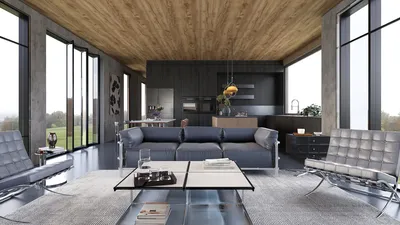


I once had a client who requested that their small guest room serve multiple functions — a yoga studio, a home office, and a makeshift closet — all while accommodating a single bed. My initial instinct was to suggest a transformer robot, but I ultimately discovered ways to maximize functionality in small spaces that even surprised me. Indeed, small areas often inspire immense creativity, making a two-bedroom house an ideal testing ground for innovative design solutions.
1. Open-plan living with distinct areas
Removing a non-structural wall to create an open flow between the living, dining, and kitchen spaces can enhance the perceived size and sociability of a two-bedroom home. I recommend utilizing rugs, lighting, and a low-back sofa to establish these defined zones — this approach is generally more cost-effective than a structural renovation and maintains visual harmony. While the trade-off may be reduced privacy and a need for thoughtful storage planning, many homeowners find that the advantage of openness is well worth it.
save pin
2. Versatile guest room/office combination
Incorporating folding wall beds or stylish daybeds allows a guest room to double as a functional office. For example, in one renovation, I installed a wall bed that came with built-in shelving and a foldable desk; it became a productivity hub on weekdays and transformed into a welcoming guest suite on weekends. Although there is a slightly higher initial investment for custom solutions, the enhanced utility is substantial.
save pin
3. Optimize kitchen layout for efficiency
In compact two-bedroom homes, a well-thought-out kitchen design can outperform a larger but impractical one. I personally prefer L-shaped layouts featuring continuous countertops for food preparation, along with an island or mobile cart to provide extra storage and buffet options as needed. It’s crucial to prioritize appliance sizing and storage solutions — the main challenge lies in fitting everything without creating clutter, but a well-defined workflow can resolve most issues. For effective kitchen layout transformations, consider using a layout planner for practical design options.
save pin
4. Integrated storage and multifunctional furnishings
Tailored built-ins beneath stairs, around windows, and above beds can dramatically change the functionality of two-bedroom arrangements. For instance, I designed a window seat with drawers that eliminated the necessity for a bulky dresser in the second bedroom. Although custom-built storage can involve a higher upfront cost and may be less adaptable if you relocate, it significantly declutters visual space and enhances floor area.
save pin
5. Intelligent lighting and appropriately scaled furniture
Using strategic lighting layers — ambient, task, and accent — can alter the perception of space. Smaller chandeliers or slim-profile sofas help maintain proportionality. I frequently use painter’s tape on the floor to gauge furniture scale; this method provides an inexpensive way to prevent purchasing oversized items. For a quick assessment of furniture scale and to visualize layouts, I highly recommend utilizing a 3D floor planner, such as Homestyler, which has saved me countless hours during client planning sessions.
save pin
FAQ
Q: What is the typical square footage for a comfortable two-bedroom house? A: Generally, a comfortable two-bedroom home falls within the range of 700 to 1,100 square feet, depending on the layout and storage efficiency.
Q: How can I make a two-bedroom space feel larger without extensive renovations? A: Employ light colors, consistent flooring, clever mirror placements, and multifunctional furniture to visually expand the area.
Q: Is investing in custom built-ins for a compact two-bedroom house worthwhile? A: If you plan to remain in your home for more than five years, custom built-ins can be beneficial by optimizing usable space and enhancing organization.
Q: What is the best kitchen layout for a small two-bedroom house? A: L-shaped or galley-style kitchens featuring a movable island often provide the optimal combination of efficiency and storage for compact living spaces.
Q: How can I maintain privacy between the two bedrooms? A: Consider strategically placing rooms to separate noisy and quiet areas, adding solid-core doors, and utilizing sound-dampening materials like drywall or area rugs to minimize sound transfer.
Q: Is it legally permissible to convert part of a living room into a bedroom? A: The legality of such conversions is contingent on local regulations concerning egress, ventilation, and minimum room size; always verify with municipal codes.
Q: Where can I plan and visualize renovations for a two-bedroom property? A: I often turn to online resources for layout mock-ups; a practical tool is the free floor plan creator that allows you to test different arrangements before making a commitment.
Q: Are reputable sources available for remodeling cost estimates? A: Yes — the U.S. Census Bureau and local builders' associations offer remodeling cost information; consult these authoritative resources for reliable pricing guidelines.
save pin
Homestyler is your go-to online home design platform! With its user-friendly design tool, stunning 3D renderings, and a wealth of DIY video tutorials, you can effortlessly create and visualize your dream spaces. Transform your home design ideas into reality today!
Concevez maintenant gratuitement
































