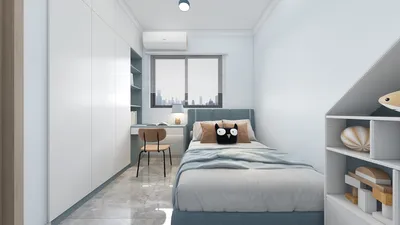


In my experience, I once managed to fit an entire sewing studio into a walk-in closet because a client insisted they would never give up their vintage Singer. Interestingly, the cat became more fascinated by the bobbin drawer than the owner. This amusing disaster taught me that smaller spaces often lead to smarter choices and greater creativity, prompting me to view tiny rooms as design puzzles. If you're seeking inspiration, I've even sketched a sewing corner that demonstrates how much can be accommodated within just two square meters using a tool like Homestyler.
1. Wall-mounted fold-down table with modular storage
For a client who needed quick counter space without the bulk of a permanent desk, I designed a fold-down wall table. This piece easily folds away when it's not in use, concealing a minimalist pegboard and providing additional room. The trade-off? You’ll have limited permanent storage, so it’s wise to plan for vertical shelves or clear bins to maximize space.
save pin
2. Sunlit workstation with slim cabinets
Natural light plays an essential role in sewing; position your sewing machine by a bright window with narrow base cabinets underneath for storing thread, stabilizers, and cutting mats. Clients have occasionally mentioned issues with glare, so it’s a good idea to install a sheer roller blind and a focused task lamp to minimize eye strain while taking advantage of that beautiful daylight.
save pin
3. Transitioning a closet into a cozy nook with smart compartments
One of my favorite transformations is converting a closet into a sewing nook. This creates a warm, dedicated area without sacrificing the footprint of the existing room. Before starting construction, I map out the layout to ensure the sewing machine fits, drawers can open freely, and the ironing board nests neatly. While ventilation and lighting may pose challenges, they can be addressed with vents and LED solutions.
save pin
4. Dual-purpose guest room that also serves as a sewing area
In compact homes, I often merge functions; a Murphy bed or a slim daybed can turn a guest bedroom into a sewing sanctuary. This necessitates organized storage solutions (like roll-away carts and labeled bins) and thoughtful furniture selection, but the benefits include maximizing utility—you effectively gain two functional spaces within a single area.
save pin
5. Custom countertop with pegboard, bins, and a 3D preview
A tailored counter accompanied by a pegboard above offers an organized and efficient space for pattern clips, scissors, and rulers. I occasionally model this layout for clients so they can adjust shelf heights prior to construction. If you’re looking to visualize the scale and sightlines, using a 3D design tool like Homestyler can help avoid unpleasant surprises later on. Although it requires additional work upfront, it ultimately saves time and avoids extra trips to the store.
save pin
FAQ
Q1: What is the minimum space needed for a functional sewing room?
I've encountered sewing spaces as small as 4 to 6 square meters; with foldable furniture and vertical storage, you can achieve remarkable productivity. It’s advisable to maintain a workspace depth of 90 to 100 cm for cutting and machine operation.
Q2: How can I effectively store fabric in a compact sewing room?
Utilize vertical shelving paired with clear bins or roll fabric onto tubes to save space and minimize creasing. Keep the fabrics you use most often within easy reach, and ensure everything is labeled—a small amount of time spent on organization can yield significant long-term benefits.
Q3: What type of lighting is best for detailed tasks?
Task lighting is essential; the Illuminating Engineering Society (IES) recommends about 300 to 500 lux for intricate handwork. A combination of bright overhead fixtures and an adjustable LED task lamp can help reduce eye strain while ensuring your workspace is well-lit.
Q4: How can I manage cutting space in a small sewing room?
Consider using a foldable cutting table or a roll-out mat that can be stored vertically, and think about incorporating a wall-mounted ruler or a counter that also serves as a cutting surface. Remember to clear your table after each project to maintain a smooth workflow.
Q5: How can I control dust and pet hair in my sewing area?
Maintain a small covered bin for fabric scraps and use a HEPA vacuum or air purifier to keep delicate fabrics safe. A washable cover for your sewing machine is also helpful. While pets are delightful, they can complicate projects, so I’ve found it useful to either close the door or use a roll-up screen to keep them at bay during more intense sewing tasks.
Q6: Is it worthwhile to invest in custom cabinetry?
Custom cabinets can maximize every inch of space, which is especially beneficial in tight areas, though the initial cost may be higher. For those on a budget, modular units or IKEA-style systems can provide a similar functionality at a lower price point.
Q7: How can I maintain an ergonomic sewing setup?
Position your machine so that your forearms are approximately parallel to the ground while you sew, and utilize an adjustable chair to alleviate back strain; taking short standing breaks can also be beneficial. Prioritizing ergonomic designs keeps long projects enjoyable rather than uncomfortable.
Q8: Can I digitally plan my sewing room layout before purchasing furniture?
Absolutely— I often sketch layouts and construct simple models to check sightlines and clearances, which helps avoid costly errors. If you prefer a more hands-on approach, there are various online tools available, like Homestyler, for visually mapping out your layout before investing in furniture.
save pin
Homestyler is your go-to online home design platform! With an intuitive design tool, stunning 3D renderings, and a wealth of DIY video tutorials, you can effortlessly create and visualize your dream space. Whether you're a novice or an expert, Homestyler inspires creativity in every project!
Desain sekarang Gratis
































