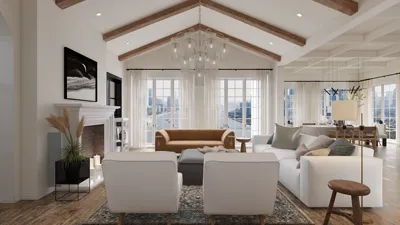


I vividly recall a client who envisioned a boutique salon within a mere 150 sq ft storefront, and they expressed a desire for a reception desk, two styling stations, and a shampoo bowl—all at once. Initially, I considered declining the project, but this unique challenge taught me invaluable lessons about efficiency that no larger project could. One quick solution involved creating a compact floor plan that stacked functions without compromising the open feel of the space, thanks to tools like Homestyler.
1. Establish micro-zones for seamless flow
In compact salons, the ease of movement is paramount over elaborate decor. I divide the area into three distinct micro-zones—arrival, styling, and rinse—using rugs, lighting, or partial screens to create intentional transitions. This approach fosters a serene client experience, though the flexibility of each zone is crucial to accommodate busy periods.
2. Leverage mirrors and layered lighting for enhanced perception
Mirrors serve as my best ally in small salons; strategically placed, they can double the perceived space and reflect light into dark corners. Pairing this with layered lighting—task lighting for styling stations and soft ambient lighting for comfort—creates a luxurious atmosphere without overspending. However, careful installation is necessary to manage wiring and prevent glare.
save pin
3. Opt for modular furniture and tech-driven scheduling
I prefer foldable shampoo stations, mobile carts, and bench seating that doubles as storage. Such furniture enables reconfiguration based on appointment demands. To avoid overbooking in compact spaces, I rely on digital scheduling systems and explore AI-enhanced layout suggestions via platforms like Homestyler for optimal workstation placement—these tools save time but come with a learning curve.
save pin
4. Utilize vertical space for storage and styling stations
With floor space being a premium, I maximize storage by stacking cabinets, implementing tall shelving units, and hanging tools on pegboards. Hooks, magnetic strips, and slim drawers keep surfaces clutter-free and make post-client tidying quicker. Nonetheless, accessibility is key—be cautious not to place frequently used items too high, as clients will surely notice.
save pin
5. Focus on comfort and perceived spaciousness
Small salons thrive when clients feel pampered rather than cramped. I design the waiting area to exude generosity, featuring curated magazines, a drink station, and plush textiles; this approach conveys luxury, even in limited spaces. Furthermore, I employ straightforward 3D visualization tools like Homestyler to help clients envision the final look—this minimizes revisions, although there is a minor cost for rendering.
save pin
FAQ
Q1: What is the minimum space required for a functional hair salon?
I suggest a minimum of 100-150 sq ft for a solo stylist setup that incorporates a compact rinse area. Smaller spaces may suit mobile or appointment-only concepts but necessitate careful equipment choices.
Q2: How can I elevate a single station in a compact salon to feel upscale?
Emphasize high-quality materials, effective lighting, and sensory details such as a premium chair and plush towels. A thoughtfully designed small area can feel deliberate rather than claustrophobic.
Q3: Are foldable shampoo bowls reliable?
Indeed, contemporary fold-down shampoo units are sturdy and space-efficient, though it’s essential to install them with proper plumbing access and maintenance strategies to prevent issues like leaks or uncomfortable ergonomics.
Q4: How critical is ventilation in smaller salons?
It is extremely important—proper ventilation mitigates chemical odors and enhances overall comfort. Adhering to reputable guidelines, such as the CDC’s recommendations on ventilation for businesses, is essential for establishing effective air intake and exhaust systems.
Q5: Which lighting color temperature is best for cutting and coloring hair?
LED lighting balanced for daylight (around 5000K) is optimal for precision in color tasks, complemented by warmer ambient lighting to maintain a welcoming environment. Steer clear of single-source fluorescent lighting that can dull colors.
Q6: Is investing in 3D mockups beneficial before setting up a salon?
Absolutely—3D mockups allow you to foresee spatial issues and align client expectations, thereby reducing costly modifications during the build. They are especially advantageous when repeated site visits aren’t feasible.
Q7: How can I improve scheduling to ease congestion?
Effective scheduling—implementing buffer times between appointments and restricting simultaneous services—helps maintain a smooth flow. Offering online booking with clear service durations sets appropriate expectations.
Q8: Any budget-friendly strategies for achieving a boutique appearance?
Focus on investing in a few impactful pieces—high-quality mirrors, a standout light fixture, and durable seating—while handling the rest with DIY tasks such as painting and organizing shelves. Small investments enhancing client comfort yield significant returns.
save pin
Homestyler is your go-to online home design platform! With its easy-to-use design tool, stunning 3D renderings, and a wealth of inspiring design projects and video tutorials, transforming your space has never been easier. Dive in and unleash your creativity today!
Дизайн сейчас бесплатно
































