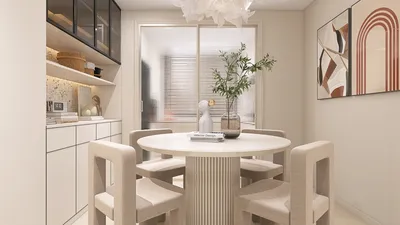


A client once requested a breakfast island spacious enough for their feline friend to dine comfortably—believe it or not! This quirky request emphasized a vital lesson: limited open spaces can ignite creativity. I quickly drafted a layout visualization to determine if the idea was whimsical or merely impractical.
Limited spaces encourage innovative solutions. In this article, I'll present five strategies I've successfully implemented in various projects to make a compact kitchen and living area feel spacious, functional, and clever — all while utilizing tools like Homestyler for better visualization.
1. Merge the two areas into a seamless flow
I focus on achieving a smooth flow between cooking, preparation, and relaxing — envision it as choreographing movement. This approach minimizes clashes and promotes a comfortable atmosphere, though it can be tempting to fill walkways with decorative items.
save pin
2. Incorporate multifunctional islands and console tables
An island that serves as both a dining table and additional prep space allowed one client to eliminate two distinct furniture pieces. Advantages include consolidated storage and versatile seating; however, careful sizing is crucial to prevent obstruction of movement or an oversized feel.
save pin
3. Maintain open sightlines with low storage options and 3D model visualizations
Low-profile cabinets and open shelving promote continuous sightlines, making the area appear larger. Before commencing construction, I employed basic 3D mockups using Homestyler to help clients grasp the scale, which is a small but invaluable step to avert costly surprises.
save pin
4. Use layered lighting to distinguish different zones
Task lighting for the countertops, ambient light for the living space, and a dimmable pendant light above the island can delineate each area without the need for walls. This strategy is generally more affordable than structural changes, although smart wiring may increase costs.
save pin
5. Focus on kitchen efficiency and intelligent storage solutions
Even in compact layouts, I always outline the cooking triangle, then implement pull-out pantries, toe-kick drawers, and vertical dividers for lids. Establishing the kitchen workflow early on saves time and avoids awkward renovations in the future.
save pin
FAQ
Q1: What's the most effective layout for a small open kitchen and living room? I prefer designs that keep the circulation area clear; island or peninsula layouts typically work well. The choice depends on door and window placements, so it’s wise to explore various configurations before finalizing.
Q2: How can I make a small open area appear larger? Utilize low furniture, ensure unobstructed sightlines, maintain a minimalist color scheme, and sparingly add mirrors or reflective surfaces. Reducing visual barriers is more impactful than simply overcrowding with decor.
Q3: Is an island advisable in a compact open space? Islands can be beneficial if there’s a clearance of at least 900–1000mm (36–40 inches) on active sides; otherwise, a narrow peninsula or mobile island may be preferable. Prioritize seating requirements versus circulation before making a decision.
Q4: How can I achieve a balance between storage and openness? Pair closed cabinetry at lower levels with open shelves above to maintain an airy yet functional environment. Opt for vertical storage and a few standout pieces instead of numerous small items.
Q5: What lighting strategy is most effective? A layered lighting approach—task, ambient, and accent—provides flexibility for cooking, dining, and relaxation. Incorporating dimmers is a small expense that can dramatically enhance mood and utility.
Q6: Any budget-friendly advice for a small kitchen-living room remodeling? When feasible, reuse existing layouts to sidestep plumbing or electrical repositioning costs. Investing in cabinetry organizers instead of full custom builds often yields significant returns. Additionally, simple material swaps, such as quality cabinet fronts instead of entire replacements, can also lead to savings.
Q7: How do I ensure ergonomic design in my kitchen? Adhere to established clearances for aisles and appliance zones, and structure work triangles to reduce unnecessary steps between the sink, stove, and refrigerator. For detailed guidelines, consult the National Kitchen & Bath Association (NKBA) standards for kitchen planning (see https://www.nkba.org/).
Q8: Is it possible to blend styles between the kitchen and living room? Absolutely—just ensure cohesion through shared colors or materials while maintaining consistent proportions among items. This mix works best when one area is visually more understated, allowing the other to stand out.
save pin
Discover your design potential with Homestyler! This user-friendly platform offers an intuitive online design tool, stunning 3D renderings, and a wealth of design projects. Plus, you'll find inspiring DIY video tutorials to guide you every step of the way. Transform your home design dreams into reality effortlessly!
立即免费设计
































