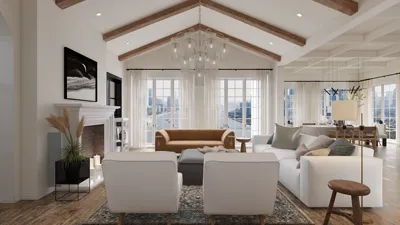


I once managed to fit a sectional sofa into a Cape Cod cottage with such determination that the client could only access one cupboard without doing a little dance. This experience taught us both an important lesson about the importance of planning ahead. That day, I began sketching a quick visual layout to explore sightlines and circulation before moving any furniture, which ultimately saved the project.
Small spaces often inspire great creativity, particularly in a Cape Cod living room where sloped ceilings, beadboard paneling, and cozy windows provide unique character. Here, I will share five practical inspirations that I frequently use—these are real solutions that effectively blend charm with functionality while utilizing tools like Homestyler.
1. Create a Cozy Seating Nook
I enjoy designing a dedicated seating nook beneath a multi-paned window—consider a compact loveseat or a pair of slipper chairs positioned toward one another. This setup defines the space without the need for a bulky sectional, maintains sightlines to the fireplace or the window, and fosters conversation.
The advantage of this approach is that it maximizes natural light and creates an intimate atmosphere. However, in very narrow rooms, you might need to opt for slimmer or armless chairs; I have found that replacing traditional chairs with slipper styles can immediately enhance the room's spaciousness.
save pin
2. Incorporate Built-in Storage with Cape Cod Flair
Built-in bench seating with hidden storage or shallow cabinets beneath a window can optimize floor area while celebrating the cottage aesthetic. I often recommend painted beadboard fronts to maintain an authentic look while minimizing visual weight.
This strategy helps reduce clutter and creates a sense of spaciousness, though it may come at a higher cost compared to standalone storage solutions. My suggestion is to start with one built-in wall and assess its impact before committing to additional installations.
save pin
3. Utilize Mirrors and Lighting to Expand Perception of Space
Mirrors are a valuable design tool—when positioned opposite a window, they reflect light and foster depth, which is invaluable in a Cape Cod layout. I often combine a large round mirror with wall sconces to keep side tables uncluttered, achieving a nautical yet contemporary vibe.
The immediate benefit is enhanced brightness; however, placement is crucial—try to avoid positioning mirrors where they reflect TVs or clutter. To visualize the effects of mirror and light placement in 3D, I have occasionally used quick digital mockups with Homestyler to explore options.
save pin
4. Choose Flexible Furniture with Clear Traffic Flow
Opt for furniture pieces with legs and lighter profiles to allow the eye to flow underneath and around them; this keeps the room airy. A slim console table behind a sofa or a minimalist floating media unit works better than bulky pieces that disrupt flow.
Flexibility is excellent for entertaining; however, ensure that clearances are coordinated: aim for 30 to 36 inches in main traffic areas. I frequently swap a coffee table for nesting tables when guests arrive—a small change that offers significant benefits.
save pin
5. Layer Textures Instead of Colors for a Harmonious Look
In my Cape Cod living room designs, I prefer a restrained color palette comprised of soft whites, coastal blues, and warm wood tones, while layering textures like woven rugs, linen throws, and painted trim. This approach keeps the space serene without appearing flat.
Textures add personality to the room, but be cautious—too many competing patterns can overwhelm a small space. If your kitchen is adjacent, consider conducting a kitchen adjacency study to ensure smooth sightlines and flow between the areas while minimizing visual clutter.
save pin
FAQ
Q1: What is the recommended seating clearance in a small Cape Cod living room?
A: For comfortable movement, aim for 30 to 36 inches on main walkways; secondary paths can range from 24 to 30 inches, depending on your furniture.
Q2: How can I balance historic Cape Cod details with modern functionality?
A: Retain original features like trim or beadboard, but complement them with modern, proportionate furniture and efficient storage solutions to fulfill contemporary requirements—this preserves the charm while enhancing usability.
Q3: What rug size is ideal for a small living room?
A: Select a rug that accommodates at least the front legs of major seating items; a rug that is too small can fragment the area. If in doubt, opt for a larger size and tuck a front leg under to anchor the space.
Q4: Is it appropriate to mount a TV above a fireplace in a Cape Cod home?
A: Yes, it can be done, but be sure to check for proper viewing height and mantel depth—a lower mounting position or a swivel bracket may enhance ergonomics. Alternatively, a floating media wall can maintain the fireplace as a focal feature.
Q5: How much built-in storage is necessary?
A: Begin with one functional section—like a bench or a low cabinet—and evaluate its effectiveness over a few weeks; this will help you decide if more is needed. Built-ins are fantastic for reducing visual clutter but can overwhelm your layout if too large.
Q6: Are there quick lighting tips for small rooms?
A: Incorporate three types of lighting: ambient (overhead or recessed), task (reading lamps), and accent (sconces or uplights). Employing dimmers lets you adjust the ambiance for morning brightness or cozy evenings.
Q7: Should I adhere to accessibility standards?
A: Yes, according to the ADA Standards for Accessible Design, ensure an accessible path maintains a minimum clear width of 36 inches (source: ADA Standards for Accessible Design, U.S. Department of Justice).
Q8: How can I test different layout ideas before purchasing furniture?
A: I often sketch to scale on graph paper or utilize basic digital mockups; even a simple 3D render can highlight sightline challenges prior to making purchases.
save pin
Homestyler is your go-to online home design platform! With its user-friendly design tool, stunning 3D renderings, a vast array of design projects, and helpful DIY video tutorials, you can effortlessly create and visualize your ideal living space. Transform your home design dreams into reality today!
Progetta ora GRATIS
































