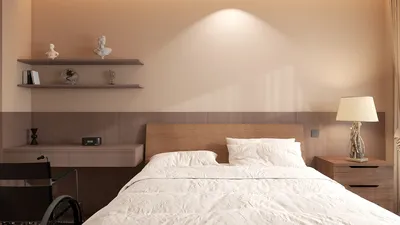


I once arrived at a location with a queen mattress that wouldn't fit through the doorway – a newbie mistake, but it taught me an important lesson: before moving anything, visualize layouts in 3D to prevent physical strain and financial loss. This practice of creating early mock-ups has been beneficial for both my clients and my back on multiple occasions.
1. Position the bed away from the wall
I prefer to pull the queen mattress a few inches away from the wall, allowing for low-profile storage underneath. This approach enhances the walk-around experience and provides space for drawers or baskets; however, you might sacrifice a bit of aisle space, so it's essential to measure the clearance accurately.
save pin
2. Replace large nightstands with wall-mounted shelves
Swap out bulky bedside tables for floating shelves complemented by sconces on each side. This provides surface area without adding visual heaviness. It's an economical choice that creates a more open feel in the room. Just be cautious, as shelves might wobble if overloaded, so secure them with sturdy anchors.
save pin
3. Merge wardrobe space with a workstation
Integrating a small desk into a wardrobe or using sliding doors to keep pathways clear can increase functionality. For many clients, this additional investment is worthwhile as it maximizes usable floor space. If you're unsure about dimensions, I often recommend sketching a quick floor plan to test configurations before finalizing your decisions.
save pin
4. Use a light color palette, layer textures, and include mirrors
Opt for painting the ceiling a lighter hue than the walls, using translucent curtains, and positioning a mirror opposite to a window to enhance light. Mirrors can make a space feel significantly larger, but placement is crucial—avoid reflections of clutter or harsh lighting glare.
save pin
5. Create distinct zones with rugs and a standout headboard
A rug can anchor the sleeping area, while a tall, narrow headboard draws the eye upward, making the ceiling seem higher. If you’re diversifying finishes, consider a quick room mockup using Homestyler to experiment with various textiles and colors before committing to purchases; be cautious of overwhelming patterns—maintaining at least one calm element is key.
save pin
FAQ
Q1: Can a queen bed fit in a small room?
Yes, with careful planning, most small rooms can accommodate a queen bed. It's vital to ensure circulation on at least one side and to measure doorways and walkways prior to purchasing.
Q2: What are the official dimensions of a queen mattress?
According to the National Sleep Foundation, a standard queen mattress measures 60 inches by 80 inches (152 cm x 203 cm). Consider these measurements when planning clearance and storage around the bed.
Q3: How can I add storage without crowding the space?
Think vertical: tall wardrobes, overhead shelves, and under-bed drawers are excellent solutions. Consider multi-functional furniture like a storage bench at the foot of the bed to enhance functionality without increasing clutter.
Q4: Is it optimal to place the bed against a wall?
While placing the headboard against a wall maximizes floor space, floating it can enhance movement. I typically base my decision on door swings and traffic patterns, ensuring at least 24 inches of clear walkway is maintained.
Q5: Which lighting is best for a compact bedroom?
Employing layered lighting—such as overhead, task, and accent pieces—can create a more spacious and flexible atmosphere. Wall-mounted fixtures are ideal to save space on the floor or bedside tables.
Q6: How should I choose colors for a small room with a queen bed?
Light, warm neutrals visually expand the space; introduce contrast through textiles and one darker accent to avoid an uninteresting feel. Always test paint swatches on the wall and observe them at various times throughout the day.
Q7: Is it possible to incorporate a desk in a small bedroom with a queen bed?
Absolutely—integrating desks into wardrobes or using fold-down wall desks can conserve space. Focus on ergonomic design so the desk remains functional and does not become cluttered.
Q8: Where can I experiment with layouts before purchasing furniture?
I suggest utilizing online planners to visualize scale and flow; these tools can save you time and prevent mistakes. For a straightforward start, there are free floor plan creators like Homestyler that allow you to trial multiple setups quickly.
save pin
Discover the ease of home design with Homestyler! This user-friendly online platform offers a powerful design tool, stunning 3D renderings, and a wealth of inspiring design projects and DIY video tutorials. Whether you're a beginner or a seasoned pro, Homestyler helps you bring your vision to life effortlessly!
تصميم الآن مجانا
































