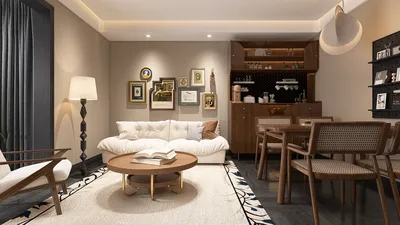


I vividly recall the moment I proudly adorned a wall with a large abstract canvas, only to discover a week later that it was upside down. Interestingly, the client appreciated it nonetheless, teaching me that interpretations of art can vastly differ from the designer's perspective. This little mishap imparted a crucial lesson: when it comes to art, scale and placement can be more significant than flawless execution, and even compact spaces can inspire remarkable creativity. To prevent any upside-down blunders, consider visualizing the scale in 3D using tools like Homestyler before making your first drill.
1. A single oversized panel as a central feature
An oversized abstract artwork can serve as an anchor, influencing the entire room's dynamics: it instantly establishes the color palette and ambiance. The key advantage lies in its clarity — a single bold piece communicates effectively from a distance and helps in reducing visual clutter. However, the challenge is determining the correct size and height; if hung too high, the connection to the surrounding furnishings can disappear.
Tip: Position the center of the artwork at eye level for seated views. If you’re working within a tighter budget, consider commissioning a replica canvas or crafting a large DIY painting using affordable acrylics.
save pin
2. Triptych or multi-panel artistry
Dividing an abstract artwork into two or three panels can introduce motion and rhythm without overwhelming the wall. I utilized this technique in a small loft where a single canvas felt too cumbersome; the separate panels added breathing space and created an illusion of a higher ceiling. The caveat is that careful alignment is crucial — uneven gaps can spoil the aesthetic — but when executed properly, it creates a stunning visual experience.
Practical advice: use consistent frames or floating frames to maintain a cohesive look, and if you anticipate moving often, smaller panels are easier to transport.
save pin
3. Color field washes for minimalist enthusiasts
Focusing on a few color fields in a large abstract can tranquilize a busy environment, functioning as a gentle backdrop for furnishings. I recommended this style to a client with a cozy open-plan living area; the piece effectively unified various zones without the need for heavy furniture. The upside is the flexibility it offers in decor; however, subtle transitions may necessitate high-quality paint or craftsmanship to avoid any unsightly patches.
To explore color palettes digitally, utilize AI technology to visualize color application on a rendered wall before you commit to actual paints, incorporating tools like Homestyler for realistic previews.
save pin
4. Textured mixed-media artworks for sensory appeal
Incorporating texture — through materials like impasto paint, plaster, or fabric — can provide a large abstract artwork with a tactile presence that photos cannot convey. For a client who adored textured surfaces, I once layered joint compound and metallic leaf onto a 2.5m canvas; it felt opulent but required sturdy hanging solutions due to its weight. While texture enhances beauty, it can elevate costs and complicate installation.
Budget tip: consider applying texture only to a focal section of the canvas to maintain tactile interest while controlling costs.
save pin
5. Gallery-style arrangement with ample negative space
Sometimes, the best strategy is to allow a painting to breathe: centering a substantial abstract on an otherwise minimalistic wall can prevent a cluttered look and let the artwork shine. In a recent bedroom design, I embraced this approach, making the piece the focal point. The advantage is clarity and emphasis; however, you run the risk of the room appearing unfinished if the scale or colors do not coordinate with textiles and lighting.
Before making your final decision, be sure to test different wall locations in mock-ups, allowing you to assess sightlines and natural light at various times of the day.
save pin
FAQ
What size should a large abstract wall painting be?
I typically suggest selecting artwork that occupies about 60–75% of the wall area above furniture, such as sofas or consoles. Measure your wall and create mock-ups using kraft paper or digital design tools like Homestyler to visualize the appropriate scale.
What height is ideal for hanging a large painting?
Aim to hang the artwork so that its center is approximately 145–155 cm (57–61 inches) from the floor for general viewing; for seating areas, position it slightly lower so that it visually connects with the furniture.
Can I place a large abstract in a compact room?
Absolutely — a single large piece can give a small space a curated and spacious feel, provided the colors are harmonious. Keep surrounding decor minimal to prevent visual distractions.
Are textured paintings more challenging to maintain?
They can be, due to their raised surfaces attracting dust and being more prone to damage; use a soft brush or a low-suction vacuum for cleaning. Avoid placing highly textured pieces in direct sunlight to prevent material deterioration.
What materials are best for a large abstract painting?
Canvas with acrylic or oil paint is common, with acrylics being quicker to dry and easier for DIY projects. For mixed media or heavy textures, consider a reinforced stretcher and consult a framer regarding weight limits.
How should I illuminate a large abstract painting?
Implement adjustable, glare-free lighting such as track lights or wall washers that distribute light evenly across the surface while being cautious of UV exposure, as sunlight can fade pigments over time.
Where can I discover high-quality prints or commissions?
Check with local art colleges, emerging artists on trusted platforms, or specialized print studios for large-format reproductions. Commissioning from local artists supports the community and allows for customized scale and colors.
How do I maintain and preserve large paintings?
For expert conservation advice, refer to guidelines from the Getty Conservation Institute at getty.edu/conservation, where you’ll find recommendations about light exposure, cleaning, and environmental controls. Frequent checks on humidity and dust, along with proper framing, will enhance the longevity of your artwork.
save pin
Homestyler is your go-to online home design platform, perfect for all skill levels! With its user-friendly design tool, stunning 3D renderings, a plethora of design projects, and helpful video tutorials, you can effortlessly transform your space and unleash your creativity. Start designing today!
تصميم الآن مجانا
































