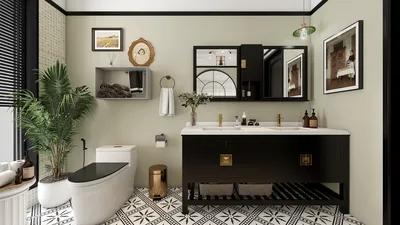


In one of my projects, I persuaded a client to position a chandelier above their bathtub — the dramatic effect was initially delightful, but the steam from showers soon turned into an issue. This experience taught me the importance of balancing aesthetics with functionality in high bathrooms. Small spaces can inspire immense creativity, and the following five strategies have helped me transform more than one potential mishap into a success, especially when using design tools like Homestyler.
1. Utilize vertical lighting to expand the visual space
When working with lofty ceilings, the goal isn't solely to enhance height but also to layer lighting effectively. Incorporate vertical wall sconces, an elongated pendant, or a collection of lights to guide the gaze upward without making the area feel overly vast. This not only adds drama but also provides practical lighting. It's budget-friendly to combine a standout pendant with more economical recessed or mirror lights; the main consideration is hiring an electrician who is comfortable with installations at higher points.
save pin
2. Design elevated storage and concealed spaces
I enjoy maximizing upper wall space for storage — think open shelves above the towel rail, a shallow loft cabinet, or recessed niches above the shower. These solutions keep daily essentials accessible while making effective use of vertical space; the trade-off is that you may need a sturdy step stool and strategic styling to prevent shelves from appearing cluttered.
save pin
3. Implement tall mirrors and reflective surfaces
Full-length mirrors immediately enhance light flow and give the impression that a high ceiling is deliberate. Combine a tall mirror with shiny tiles or a piece of glossy marble to amplify natural light throughout the space; this upgrade is relatively cost-effective while offering a significant impact. If you want to mitigate the potential coldness, consider adding warm backlighting behind the mirror to create a cozy atmosphere.
save pin
4. Explore mezzanine concepts for multifunctional areas
In several projects, we included a narrow mezzanine for linen or a laundry drop — a tasteful loft that feels intentional rather than industrial. This approach optimizes available square footage, but necessitates smart planning for access and ventilation; it's most effective when paired with practical vertical storage solutions, ensuring the new level serves a purpose.
save pin
5. Mitigate height with a mix of materials and scale
To create a warm ambiance and avoid the ‘echo chamber’ effect, I often break up tall walls using horizontal elements: a half-height tile band, painted dado, or a wooden soffit over the vanity. These horizontal features draw the eye downward and foster an intimate feel in the space. For a contemporary twist, pair striking pendant lighting with textured plaster — achieving a loft-like vibe while maintaining warmth, and sampling a few finishes beforehand minimizes unwanted surprises. If you're seeking inspiration for visualizing these tall spaces, consider using Homestyler to explore your layout options.
save pin
FAQ
Q1: What height is classified as a high ceiling in a bathroom?
A1: Generally, a height above 9 feet (approximately 2.7 m) is recognized as a high ceiling in bathrooms. However, local regulations may vary, so verify codes if you intend to make structural changes.
Q2: Are there ventilation issues unique to tall bathroom ceilings?
A2: Certainly — elevated ceilings can trap humidity at the top. It's advisable to install a powerful, appropriately sized fan, and consider options like continuous or humidity-sensing models to avert mold formation in the upper areas.
Q3: How can I create a cozy atmosphere in a tall bathroom?
A3: Employ layered lighting, introduce horizontal visual breaks, and select warmer materials or shades for lower walls. Utilizing rugs, wood details, and softer lighting at eye level will help in balancing the vertical aspect.
Q4: Is radiant heating suitable for high-ceilinged bathrooms?
A4: Radiant floor heating is quite effective as heat rises; it maintains comfort in occupied spaces without countering the tall air volume. While it requires a significant upfront investment, it's definitely worthwhile for comfort.
Q5: Is it possible to add storage without overcrowding the space?
A5: Absolutely — by using recessed niches, high cabinets with concealed doors, and sparsely styled open shelving, you can achieve a clutter-free look. I frequently sketch various options using a bathroom makeover viewer to maintain proper balance before implementation.
Q6: How do building codes influence the addition of a mezzanine to a bathroom?
A6: Mezzanines and loft additions in bathrooms must comply with structural, egress, and moisture-resistance codes; early consultation with a licensed architect and your local building authorities during the design phase is crucial.
Q7: Are there specific lighting types to avoid in tall bathrooms?
A7: Yes, it's best to steer clear of relying solely on one overhead fixture as it can create shadows and uneven lighting. Instead, blend focused task lighting with ambient and accent layers for a more balanced effect.
Q8: What is the minimum standard ceiling height for residential rooms?
A8: According to the International Residential Code (IRC) Section R305, the minimum ceiling height for habitable rooms is 7 feet (2134 mm), though variations may occur depending on specific rooms and local adjustments, so confirm your local codes for precise requirements.
save pin
Discover the magic of home design with Homestyler! This user-friendly platform offers a powerful online design tool, stunning 3D renderings, and a wealth of inspiring design projects. Plus, with DIY video tutorials, transforming your space has never been easier. Create your dream home today!
Design Now for FREE
































