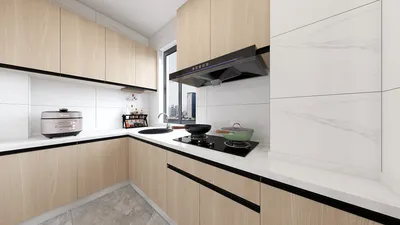


I have worked on numerous small kitchen designs where a compact island featuring a marble top serves as the essential focal point. The key lies in striking a balance between workspace, movement, and storage while acknowledging the realities of daily cooking tasks. In smaller layouts, it's essential to have at least 36 inches of open space around the island on all sides; if you often cook alongside another person, increase that to 42 inches. Research from Steelcase highlights that shared task areas perform better with 42 to 48 inches of shared space to minimize traffic collisions, which can be a useful guideline when considering your kitchen layout with Homestyler. Regarding lighting, the Illuminating Engineering Society suggests aiming for roughly 30 to 40 footcandles for overall kitchen lighting, and 50 to 75 footcandles for areas focused on specific tasks; incorporating dimmable LEDs and pendants can help achieve the right levels and allow your marble surfaces to shine without glare.
While aesthetics are important, material performance must not be overlooked. Marble is prone to staining and etch marks from acidic substances; therefore, I recommend selecting honed finishes to make any etching less apparent and using a penetrating sealer every 6 to 12 months. Guidance from WELL v2 stresses the importance of low-VOC materials and proper ventilation; pairing your marble with cabinetry finishes and adhesives that meet low-emission standards and ensuring that your range hoods can effectively clear the air is crucial when cooking at the island. When considering color psychology, warm neutral tones can counterbalance the cool hues of marble, while Verywell Mind notes that colors like blue and green create a calming atmosphere, which is especially beneficial in small kitchens where visual clutter can elevate stress levels.
Proportion & Footprint
For studio and galley kitchen configurations, I generally opt for islands that measure between 24 to 30 inches in depth and 36 to 48 inches in length, adding a 12-inch overhang for seating on one side. In narrower spaces, a 24-inch deep island with drawers on the working side and shallow shelves for seating can maintain a streamlined profile. It’s vital to keep clearances at a minimum of 36 inches; where higher clearances are necessary due to regulations or workflow, it's better to reduce the island's length than to compromise on passageways. Utilizing an interior layout tool, such as Homestyler, helps visualize how stools fit and how traffic moves from sink to cooktop in any layout.
Marble Finish Strategy
Honed marble is preferable as it effectively conceals micro-scratches and etching while diffusing light to minimize glare from overhead lighting. For lighter marbles like Carrara or Venatino, using ambient lighting between 3000 and 3500K and maintaining a high Color Rendering Index (CRI) of 80+ will keep the white tones crisp. For marbles with dramatic veins, consider adding a dimmable lighting layer to soften the contrast during evening gatherings. The edge profiles of the marble are also significant; a small eased or micro-bevel edge is much more resistant to chipping, especially in tight spaces where items may bump against the corners. When using multiple slabs, ensure the veining lines up to create a visually cohesive look, allowing the island to appear as a single, strong feature.
Storage That Works
In small kitchens, islands need to serve multiple functions effectively. I typically arrange the working side with a 12-inch deep drawer stack for utensils, a full-depth pull-out for waste management, and a vertical slot specifically for cutting boards. On the seating side, shallow cabinets can store placemats, napkins, and smaller appliances used on a regular basis. If your kitchen lacks ample pantry space, consider incorporating a 15-inch wide pull-out with adjustable shelving and integrated rails. Additionally, magnetic knife holders or narrow rail systems can keep the marble surface clear by utilizing vertical space.
Seating & Human Factors
Utilizing a counter height of 36 inches with a 12-inch overhang will accommodate most bar stools effectively. Each seat should be allocated 24 inches of linear space to prevent any elbow clashes, along with 15 inches of knee space. For regular hosts, adding a second row of seating against a wall bench is advantageous instead of expanding the island's footprint. It’s also best to position the primary prep area opposite the seating side to avoid any splashes when cooking.
Workflow & Triangle Logic
In compact kitchens, the sequence of sink-to-prep-to-cooktop must be streamlined and efficient. Ideally, I place the island in between the sink and the cooktop, allowing easy access to chopping boards and ingredients, with the sink being only a step away. Ensure the refrigerator is within two steps without needing to navigate the primary cooking route. By using an interior layout planner, like the one offered by Homestyler, you can simulate these paths to verify ease of movement while preparing meals without unnecessary back and forth.
Lighting the Marble
Lighting plays a significant role in showcasing marble effectively. It is best to configure ambient lighting between 30–40 footcandles and add task fixtures such as pendants or linear LEDs to ensure areas reach 50–75 footcandles during food preparation. Opting for a warm light range of 3000–3500K will help maintain a neutral balance and should avoid overly cool lighting that might render the stone's appearance too sterile. Position pendants in a way that their light spreads past the edge of the overhang, eliminating shadows on cutting boards. Using matte shades or diffusers can reduce glare while adhering to IES standards for task lighting in kitchens.
Acoustics & Behavior
In smaller kitchens, hard surfaces can amplify sound and clatter. Combining a honed marble top with soft-close hardware, felt glides on chairs, and a wool runner nearby helps alleviate noise fatigue. Behavioral patterns in compact homes often lean towards multifunctionality; the island adapts to various roles, from breakfast bar to inbox and prepping area. To maintain a low cognitive load, establish a dedicated drop zone at the island's end cap with a small tray, ensuring the central work area remains focused on cooking tasks only.
Sustainability & Maintenance
When selecting marbles, prioritize those sourced from quarries with responsible extraction practices and pair them with FSC-certified cabinetry and low-VOC finishes to align with WELL v2 material guidelines. Maintain marble surfaces using pH-neutral cleaners and periodically reapply a penetrating sealer. It’s important to cultivate household habits, such as promptly wiping up acidic spills (like lemon juice, tomatoes, or wine) to prevent etching; embracing the stone's natural patina is part of its lifespan. For heavy-duty cutting tasks, consider adding a butcher-block insert to protect your marble surface.
Color Psychology & Visual Balance
To achieve a cohesive look in small kitchens, a consistent color palette is key. Pair cool white marbles with warm wooden tones or muted clay colors to create an inviting atmosphere. Verywell Mind's insights on color psychology suggest that incorporating desaturated blue-gray cabinetry can help reduce visual clutter and promote calmness. Keeping upper walls neutral while shifting contrast to lower cabinets and the island base helps ground the space without making it feel smaller.
2024–2025 Design Notes
The trending design for compact islands now features slim profiles, integrated charging options, and concealed pull-out compost areas. I'm noticing an increase in matte honed finishes along with mixed metal designs—using brushed nickel for task hardware and aged brass for seating frames—to enrich tactile experiences. Additionally, compact appliances are being hidden within the island, and adjustable lighting systems with warm-dim features enhance evening atmospheres.
Layout Quick Checks
- A minimum clearance of 36–42 inches around the island is ideal.
- Allocate 24 inches per stool, with a 12-inch overhang and 15-inch knee clearance.
- In tighter spaces, a 24–30 inches deep island is preferable; only opt for 36 inches deep if clearances allow.
- Task lighting should be set at 50–75 footcandles, with ambient lighting at 30–40 footcandles.
- Integrate waste management solutions within the island and keep knives off the countertops.
- It’s recommended to test door swings and traffic patterns using a layout simulation tool.
FAQ
Q1: Is marble practical for a small kitchen island?
A1: Absolutely, provided you select honed marble, seal it regularly, and adopt prompt cleaning habits for acidic spills. It’s durable against heat and suits pastry tasks well; just avoid cutting directly on the surface.
Q2: What’s the minimum clearance around a compact island?
A2: A minimum of 36 inches is recommended, with 42 inches optimal for accommodating multiple cooks. This ensures safe movement and minimizes collisions during busy preparation times.
Q3: How deep should an island be in a narrow kitchen?
A3: A depth of 24–30 inches works effectively, including a 12-inch overhang for seating and shallow storage on the seating side to enhance ergonomics.
Q4: Which lighting specifications enhance the appearance of marble?
A4: For optimal lighting, use 30–40 footcandles for ambient light and 50–75 footcandles in task areas. Selecting a 3000–3500K range with a high CRI will maintain accuracy in marble veining and minimize glare.
Q5: Should I opt for polished or honed marble on my island?
A5: Honed marble is more forgiving for high-use environments, as it hides etching and fingerprints effectively. In contrast, polished surfaces reflect more but tend to show wear more quickly.
Q6: How many stools can be placed around a small island?
A6: Each stool requires 24 inches of space. A 48-inch long island comfortably accommodates two stools; a 60-inch model can fit three, provided that there’s enough clearance for movement.
Q7: Can I incorporate waste disposal in a compact island?
A7: Yes, you can utilize a full-depth pull-out with dual bins for trash and recycling on the working side. This keeps the top surface free for preparation and minimizes steps for disposal.
Q8: What edge profile is best to prevent chipping in tight spaces?
A8: Eased or micro-bevel edges are durable and minimize risks when cookware brushes against corners.
Q9: How can I reduce noise levels around a stone island?
A9: Combining a honed marble surface, felt chair glides, soft-close hardware, and a nearby runner can significantly mitigate noise. It's advisable to avoid using bare metal stools on tile floors.
Q10: What color combinations work best with cool white marble?
A10: Pairing with warm woods, muted clay neutrals, and desaturated blue-gray cabinetry creates visual balance and reduces the coldness of the stone.
Q11: Is it safe to place an induction cooktop near the island in a small layout?
A11: Yes, induction cooking reduces the risk associated with open flames. Ensure there’s at least 12 inches of space available on the island for placing hot pans and verify that all clearances are safe for transferring items.
Q12: How frequently should I seal my marble?
A12: Generally, a reapplication every 6 to 12 months is recommended. To check if your marble needs sealing, place a water droplet on the surface; if it darkens the stone rapidly, it's time to reseal.

Modern Geometric Pattern Solid Wood Sideboard Console Cabinet 3D Model
Mid Century Modern Solid Wood Rattan Accent Cabinet 3D Model

Discover your inner designer with Homestyler! This online platform offers an intuitive design tool, stunning 3D renderings, and a wealth of DIY video tutorials. Whether you're starting a new project or seeking inspiration, Homestyler makes home design accessible and enjoyable for everyone.
Progetta ora GRATIS
































