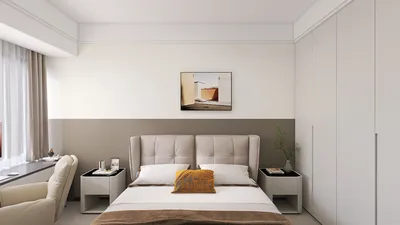


In city bedrooms that measure only 120 square feet, I’ve managed to incorporate full-size luxury with small king size bed frames, which often serve as the focal point. The secret lies not just in minimizing dimensions but in effectively optimizing storage, clearances, and visual elements to create a room that feels spacious, airy, and tranquil.
From a comfort perspective, a king bed measuring 76" x 80" can fit well in compact spaces provided that circulation paths are maintained. Research conducted by Gensler indicates that spatial efficiency is crucial for enhancing perceived wellbeing; in a home environment, ensuring 24–30 inches of walkway around the bed reduces the risk of accidents and streamlines morning routines. Moreover, the WELL v2 standard emphasizes the importance of quality sleep environments—such as minimizing noise, ensuring proper lighting, and maintaining temperature control—as vital components of health. For small king bedroom solutions, I integrate glare-free bedside lighting and tactile, inviting materials to meet these standards.
The comfort of your body relies significantly on the height of the mattress and bed frame. Research from Herman Miller highlights that the optimal bed and seat height should be around 17–19 inches to facilitate easy getting in and out. It’s advisable to design your bed to fit comfortably within this range to avoid strain on your knees. Concerning lighting, I adhere to IES recommendations to minimize glare by creating soft bedside lighting at 2700–3000K, complemented with dim night lights to maintain circadian rhythm.
Consider Your Room Layout Before Choosing a Headboard
To begin, analyze the room's dimensions. For accommodating a small king bed, I recommend allowing 24–28 inches for the pull side of the bed and 20–24 inches on the other side, ensuring there’s also 30–36 inches at the foot if a door or dresser is present. In tighter areas, substituting a bulky footboard for a sleek rail and integrating wall-mounted storage can help keep the foot zone uncluttered. Incorporating a floating nightstand can reclaim valuable floor space and highlight more of the baseboard, creating an illusion of a larger room.
When evaluating different layouts—whether centered or off to one side, and how they interact with entry and window placements—consider using a design tool like Homestyler to visualize traffic patterns and door swings before making final decisions.
Selecting the Appropriate Small-King Bed Frame Design
It’s important to note that not all king beds are identical in size. I typically recommend three frame profile types designed to minimize bulk while maintaining strength.
Creating a Comfortable Lighting Environment: Warm and Control Glare
Compact rooms tend to amplify glare and visual chaos. I recommend using three layers of light: an indirect ceiling wash (2700–3000K), dimmable bedside task lights with brightness levels around 300–400 lumens each, plus softer floor lights for nighttime navigation. Ensure the beam angles are wide and diffused, steering clear of glossy fixtures that can enhance glare. A straightforward dim-to-warm setup encourages a winding-down process that aligns with WELL guidelines while respecting nighttime melatonin production.
Harnessing Color Psychology for Small-King Bedrooms
The use of color can significantly alter how volume is perceived in a room. According to insights from Verywell Mind on color psychology, cool tones tend to induce calmness and create a sense of spaciousness. I favor soft blue-grey walls paired with warm white trim for small bedrooms that feature a large bed. Choosing a dark hue behind a slim headboard can visually recess the bed, while a lighter ceiling heightens the ambiance. Bedding should be kept tonal—two or three shades from the same family—while adding texture through materials like bouclé, linen, or matte cotton to provide depth without auditory disturbances.
Human Factors: Prioritizing Heights, Edges, and Access Zones
The nuances of comfort often lie in minute measurements. I maintain a top-of-mattress height of about 18 inches, ensuring nightstand surfaces sit between 22–26 inches, and keeping drawer handles within 28–40 inches for easy access from the bed. Utilizing rounded corners on beds and softly-edged nightstands helps prevent bumps in narrow pathways. If a bench is included, opt for a low-upholstered version around 16–17 inches high while allowing for 18–24 inches of clearance to other furniture.
Managing Acoustics and Material Selection in Cozy Sleeping Spaces
In small rooms, acoustics can sometimes feel overly bright or boxy. Implementing upholstered headboards, a medium-pile area rug, and fabric panels behind artwork can help mitigate reverberation. It’s wise to avoid positioning large reflective wardrobes directly opposite the headboard; instead, consider breaking them up using fabric fronts or panels that can diffuse sound. For sustainability, I prioritize using FSC-certified wood for frames and OEKO-TEX or Greenguard Gold-certified fabrics to minimize volatile organic compounds (VOCs). Solid hardwood slats or steel support systems will give stability without excessive weight.
Achieving Storage Solutions Without Compromising Space
When a king bed fits within a room yet space is limited, vertical storage becomes essential. I often utilize tall wardrobes with sliding doors to avoid clearance conflicts, integrate headboard compartments with reading lights, and opt for under-bed containers that keep the area around the bed tidy. If drawers protrude into your pathway, ensure there’s a full 24-inch pull space available; otherwise, elevated storage solutions create a cleaner aesthetic. Multifunctional furniture—such as nightstands with charging areas or narrow dressers that function as consoles—are excellent for maintaining a neat sleeping area.
Balancing Spatial Ratios and Visual Appeal
A bed should enhance, not overwhelm, the overall space. I recommend keeping the headboard at about 70–80% of the wall’s width; in narrower rooms, opt for a slim headboard complemented by symmetrical art or sconces. Positioning a 5x8 or 6x9 area rug beneath two-thirds of the bed can ground the king while preserving open pathways. Creating a visual rhythm with repeated materials (like oak combined with matte black and linen) while limiting metallic finishes to one style promotes coherence.
Trends to Consider for Small Bedrooms (2024–2025)
Two current trends work marvelously for compact king arrangements: low, platform designs with rounded edges paired with soft, earth-tone color schemes and textured neutrals. Integrated, dimmable LED headboard options are gaining popularity, replacing cumbersome lamps; curved nightstands and tray-topped designs help maintain tidy surfaces while minimizing the occupied space. Additionally, modular wall systems for closet and bedside storage offer customized millwork solutions without the price tag of full built-ins.
Case Study: Fitting a King Bed in a 10' x 11' Room
For a project measuring 10' x 11', I utilized a 2-inch rail platform, a 40-inch tall slatted headboard, sliding wardrobe doors, and a 6x9 area rug. Circulation was established at 26 inches on the pull side and 22 inches near the window. Nightstands measured 14 inches wide and came with integrated sconce lighting; I omitted a bench to maintain a clear foot zone. The overall effect was a restful and generous space devoid of clutter or injury risks.
Installation Checklist
FAQ
An ideal bedroom size is approximately 11' x 12' or larger. For more compact spaces, down to about 10' x 11', a streamlined platform frame, sliding doors, and careful circulation (maintaining 24–30 inches in main pathways) can still be feasible.
Indeed. A low-profile platform with thinner rails reduces visual bulk and can retrieve an extra 1–2 inches of pathway space in comparison to bulkier upholstered bases.
A combined height of mattress and frame around 17–19 inches supports an easier ingress/egress, in line with established human-factor guidelines.
Utilize diffused shades, position lights slightly behind the headboard surface, and select warm LEDs around 2700–3000K with dimming capabilities. Avoid the use of exposed filament bulbs in compact spaces.
Yes, but ensure that drawer access maintains at least 24 inches of clearance. If this space can’t be preserved, consider opting for lift-up storage or under-bed bins that are easily accessible from the sides.
A 6x9 rug placed two-thirds under the bed provides grounding without obstructing pathways. In elongated rooms, a 7x10 size may be effective if aisles remain unobstructed.
Incorporate an upholstered headboard, medium-pile rugs, and fabric or wooden panels to help absorb sound. Avoid placing large reflective fronts directly opposing the bed to minimize echo effects.
Soft, cool neutrals (like blue-grey and sage) paired with warm whites create a sense of calm and openness. It’s best to keep high-contrast accents limited to prevent excessive visual noise.
Deep footboards often intrude significantly. A minimal rail or even no footboard can keep the foot zone clear and safer for nighttime navigation.
Prioritize wall placements that maximize circulation paths while reducing drafts and noise. If a window wall is necessary, implement layered blackout and sheer curtains to regulate light and privacy.
Look for nightstands that measure 12–16 inches in width, with rounded edges and features like integrated lighting and cable management to prevent clutter and potential bumps.
Utilize an interior layout tool such as Homestyler to visualize door swings, furniture placement, and lighting arrangements to validate dimensions prior to ordering any items.

Modern Walnut Solid Wood Low Profile Platform Bed 3D Model

Minimalist Solid Oak Wood Wardrobe with Black Accent Stripe 3D Model

ALPHA HOME Wooden Bed Frame Queen Size - Solid
Homestyler is your go-to online home design platform that empowers you to create stunning interiors effortlessly. With its user-friendly design tool, realistic 3D renderings, and a wealth of inspiring design projects and video tutorials, transforming your home into a dream space has never been easier!
Design Now for FREE
































