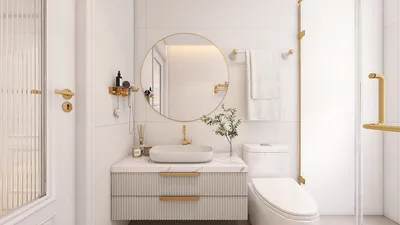


A bathroom measuring 8x10 provides ample space to feel roomy while ensuring no square footage goes to waste. My approach to this size emphasizes circulation flow, ergonomic reach, optimal lighting, and discreet storage that only reveals itself when needed. By strategically placing fixtures and creating a direct route from the entrance to the vanity and shower, I can eliminate the daily challenges that often arise in smaller spaces.
Real-world data lends credence to these decisions. The National Kitchen & Bath Association (NKBA) suggests maintaining at least 30 inches of clear floor space in front of fixtures, as well as a minimum of 24 inches in front of the toilet, which aligns perfectly with the dimensions of an 8x10 bathroom. Regarding lighting, the IES recommends ambient brightness levels around 20–50 footcandles for bathrooms, while task lighting at the mirror should reach 75–100 footcandles to prevent shadows. I also adhere to WELL v2 principles for glare reduction and color rendering index (CRI), striving for a CRI of 90 or higher at the vanity for true skin tone representation. For more comprehensive information on lighting standards and wellness parameters, refer to the IES standards (ies.org/standards) and WELL v2 guidelines (wellcertified.com).
The impact of color and psychology is equally important. Cooler neutral tones with warm undertones can help ease morning routines; research from Verywell Mind supports the calming effects of soft blues and muted greens in relieving stress. Moreover, acoustic comfort should not be overlooked; hard surfaces can amplify the sounds of showers and fans, so incorporating tiles with softer finishes can reduce noise reverberation to more comfortable levels.
Layout Option 1: Classic Three-Wall Design (Tub/Shower + Toilet + Vanity)
This proven linear layout features fixtures on three sides: placing a 60-inch tub or shower along the long wall, with the toilet on the opposite side and the vanity positioned near the entrance. I ensure a minimum walkway of 36 inches from the door to the vanity edge to facilitate unhindered movement. If exploring possibilities, utilizing a room layout tool can be helpful to visualize door swings, tub apron clearance, and the depth of a wall-mounted vanity for knee clearance. A 48-inch vanity with a centered basin is recommended, providing at least 18 inches to the adjacent wall for elbow space.
Layout Option 2: Wet Zone Separating Dry Zone
Grouping all water-related fixtures (such as the shower, tub, and toilet) together simplifies plumbing and protects stored items. I like to position the shower and toilet behind a glass partition, while the vanity and a tall linen cabinet remain on the dry side. This setup enhances thermal comfort and maintains humidity control, especially with a fan rated at 110–150 CFM and a timer. Ensure 30 inches of clear space at the vanity and 24 inches in front of the toilet for accessibility.
Layout Option 3: Walk-In Shower + Freestanding Vanity
In homes where a tub is not a priority, a 60x36 walk-in shower can create an open ambiance for a vanity area. The shower can be located on the far wall with the door centered, while the vanity is placed opposite and the toilet is tucked into a small alcove. Using a frameless glass panel minimizes visual bulk, and a low-profile linear drain maintains an uncluttered floor plane. It's important to retain 36 inches of clearance at the entry for easy access.
Layout Option 4: Double Vanity in an 8x10 Space
A 60-inch double vanity fits nicely if the shower is kept compact (60x32) while allowing the toilet nook to maintain a width of 30 inches. I recommend keeping 6–8 inches of landing space between sinks for shared items and providing sufficient task lighting at both mirrors. Dim-to-warm LEDs (3000–3500K for evening use and 3500–4000K for morning) support natural circadian rhythms while avoiding harsh light.
Layout Option 5: Efficiency of a Pocket Door
Converting a hinged door to a pocket style can free up 9–10 square feet of usable space. This allows the vanity to be positioned closer to the entrance and opens up a direct path to the shower. A wall-hung toilet and vanity will also contribute to a lighter feel while enhancing cleaning efficiency. If you require adaptable planning, an interior layout planner can quickly assess these placements and clearances.
Layout Option 6: Shower-Tub Combo with Integrated Storage Niche
For families, a 60-inch alcove tub with an attached shower provides versatile functionality. I recommend recessed storage niches: one positioned at 42–48 inches for toiletries and another around 60 inches for razors and soaps. To avoid cold spots, ensure niche depth is between 3.5–4 inches and aligns with tile. Opposite the tub, a 48-inch vanity paired with an 18-inch pull-out pantry offers vertical storage without intruding on knee space.
Lighting Approach: Layered, Low-Glare, Face-True
Installing ambient ceiling lighting provides a foundation of 20–40 footcandles; flanking vertical sconces at the mirror boost this to 75–100 footcandles at the face level. Warm-dim fixtures enhance mood, while a high CRI (90+) allows for accurate representation of makeup and skin tones. If feasible, keep light fixtures with a unified glare rating (UGR) below 19 and choose glossy tiles treated with matte finishes to mitigate reflective glare. I typically opt for 3000–3500K for evening relaxation and 3500–4000K for brisk morning routines.
Ergonomics: Heights, Reach, and Comfort Considerations
The ideal vanity height ranges from 34 to 36 inches; for vessel sinks, reducing the counter height by one inch is advisable. The bottom of the mirror should be aligned 5–8 inches above faucet height to avoid splash glare. The optimal reach for toilet paper is 26 inches above the finished floor and 8–12 inches in front of the bowl. Towel bars, placed around 48 inches above the floor, keep towels accessible without contributing to visual clutter. It's essential to maintain a minimum seat height of 17 inches for toilets to aid mobility.
Material Choice: Hygiene and Warmth
I rely on a combination of large-format porcelain tiles for minimal grout upkeep, durable quartz for countertops, and FSC-certified wood accents to soften acoustics and add visual warmth. If stone is used, regular sealing and specifying slip resistance (aim for a suitable dynamic coefficient of friction for wet areas) is key. Matte finishes create a soft lighting effect, and brushed metals help avoid visible fingerprints.
Acoustic Comfort: Reducing Echoes
Bathrooms can often become overly noisy. I mitigate this by blending hard tile surfaces with softer materials, such as wooden front panels, acoustic-backed mirrors, and textiles within the adjoining hallway. A well-installed fan with insulated ductwork can significantly reduce mechanical noise. Shorter reverberation times contribute to a more serene morning routine and minimize disturbances during late-night visits.
Storage Solutions: Discreet Yet Ample
I incorporate recessed medicine cabinets with shallow shelves for everyday essentials, complemented by a tall pull-out pantry for towels and bulk supplies. Organizers within drawers keep skincare items tidy, preventing the vanity from appearing cluttered. Additionally, a small bench with a hinged lid near the shower offers quick storage for items while maintaining a clean aesthetic.
Color Psychology: Clean, Relaxed, and Inviting
Soft, cool colors (such as powder blue and misty green) suggest cleanliness and relaxation, enhanced by warm wood tones and off-white tile accents. I recommend keeping the ceiling a lighter shade than the walls to create a sense of height. Using textured neutrals instead of vibrant colors helps to foster a calming morning atmosphere.
Planning and Visualization Tools
To ensure proper clearances and door swings before finalizing design choices, using a room layout tool is essential for simulating movement, fixture distances, and storage accessibility. Combining this with your lighting calculations can validate footcandle levels at both the vanity and shower areas.
Frequently Asked Questions
Allow for at least 30 inches of clear space in front of vanities and showers, and ensure a minimum of 24 inches in front of the toilet. It's preferable to maintain pathways around 36 inches whenever possible to facilitate smooth circulation.
Certainly! A 60-inch double vanity can fit if the shower’s dimensions are compact and the toilet alcove includes a minimum width of 30 inches. Ensure both mirrors are adequately lit for task purposes.
Strive for 75–100 footcandles at face level, achieved through vertical sconces or backlit mirrors, while maintaining ambient light levels around 20–50 footcandles throughout the space.
Families often opt for a tub-shower combination for versatility; however, if bathing isn't necessary, a walk-in shower enhances floor space and movement.
Utilize matte finishes on larger surfaces, strategically position lights to avoid direct reflections, and choose fixtures with effective shielding for optimal performance.
Typically, vanity tops hover between 34–36 inches high, while toilet seats should be around 17 inches to ensure comfort and ease of use.
Absolutely! Transitioning to a pocket door minimizes spatial interference, allowing for additional usable area adjacent to the vanity and toilet.
Select a fan that operates at approximately 110–150 CFM for an 8x10 bathroom, ideally equipped with a timer or humidity sensor. Insulation in the ductwork reduces mechanical noise levels.
Soft, cool shades—like powder blue and misty green—combined with warm wood tones and neutral tiles create a clean, peaceful environment.
Recessed medicine cabinets, tall pull-out storage, and drawer organizers keep necessary items orderly without obstructing movement through the space.
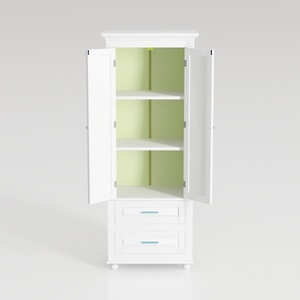
Kitchen Pantry Cabinet, 75" Tall Pantry Cabinet

Kitchen Pantry Cabinet, 75" Tall Pantry Cabinet
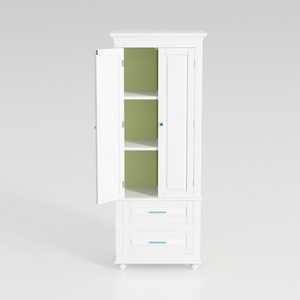
White Pantry Cabinet with Drawer, 75 Inch Tall
Discover your inner designer with Homestyler! This user-friendly online platform offers an intuitive design tool, stunning 3D renderings, and a wealth of design projects and video tutorials. Whether you're revamping a room or dreaming up new spaces, Homestyler transforms your ideas into reality effortlessly!
Zaprojektuj teraz za darmo
































