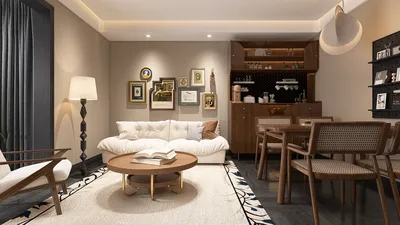


I have relied on wall-mounted cabinets in numerous living rooms to maximize floor space, enhance visual lines, and provide organization without overwhelming the eye. When executed properly, these cabinets not only create additional storage but also contribute a sculptural element while ensuring that movement remains unobstructed. Achieving a successful installation involves carefully balancing height, scale, illumination, and materials to ensure the cabinets feel seamlessly integrated into the room's design, not as an afterthought.
The arrangement of space plays a significant role in influencing behavior. Research from Gensler indicates that spatial design greatly impacts work performance and overall well-being, which can also be applied to home environments: optimal storage solutions minimize visual distractions and foster a more serene atmosphere. Furthermore, lighting standards are crucial—IES advises on controlling luminance variations to reduce glare; combining matte cabinet fronts with layered ambient and task lighting helps maintain a visually accessible and comfortable wall composition. The WELL v2 standard similarly emphasizes visual comfort and attainable storage heights for enhancing daily living, guiding decisions about how to organize and illuminate wall-mounted units. When it comes to color selection, findings from Verywell Mind suggest that shades of blue and green foster a sense of calm—ideal for living spaces.
Height and reach considerations must take human factors into account. Research from Herman Miller points to the importance of ergonomic reach zones; placing lower cabinet shelves within 24 to 54 inches off the ground accommodates most interactions, whether seated or standing, while keeping frequently used items within easy reach. When cabinets are used as a structural design element—such as anchoring a media wall or defining a reading nook—I visualize traffic patterns and viewing angles first, then experiment with variations using a layout tool like Homestyler to ensure optimal sightlines, door swing clearances, and light distribution before finalizing the design.
Design Intent: Lighten, Elevate, and Clarify
Wall-mounted cabinets should provide a lightweight appearance while anchoring the space visually. Floating storage units create an open feeling underneath, revealing baseboards and flooring which contribute to a more expansive perception of the room. It is vital to align the cabinet with architectural features—like window headers, door frames, or picture rails—so that the installation is perceived as an integral part of the design rather than an unrelated addition.
Balancing Proportions and Spatial Rhythm
My ideal cabinet depth ranges from 10 to 16 inches for living areas—adequate for storing books, media equipment, or serving items without overwhelming the wall space. Horizontally, I prefer segmenting long runs into a varied rhythm of solid doors and open compartments—alternating closed and open sections to prevent a flat, monotonous appearance. A 60/40 closed-to-open ratio tends to keep clutter hidden while providing visual rest areas. It's essential to maintain alignment on both the upper and lower edges; a continuous line enhances visual calmness and perceived quality.
Mounting Heights and Ergonomics
For a media wall, I typically elevate a lower cabinet 8 to 10 inches off the ground to keep the space feeling light, and position the upper cabinets so that their lower edges are approximately 50 to 55 inches high—close to the average eye level. This ensures that display niches are easy to view and cabinet doors accessible. It's also crucial to keep handles and push latches within primary reach zones, avoiding high placements above 60 inches. When utilizing lift-up doors, always check for adequate ceiling clearance and the arc of light fixtures—such as pendants and ceiling fans—prior to final placement.
Lighting Strategy: Ambient, Task, and Accents
Proper lighting distinguishes between mere functionality and true beauty. I deploy a three-tier lighting approach: ambient lighting (like ceiling lights or cove lights) softens visual contrasts, task lighting (such as under-cabinet LED strips) illuminates workspaces or media components, and accent lighting (like backlit niches or wall washers) enhances the cabinet's aesthetic. Following IES's suggestions regarding glare, I select diffused lighting strips with a high CRI (90+) for accurate color representation. Warm-white lighting in the range of 2700 to 3000K creates a cozy living environment; however, if the space also serves as a work area, integrating 3000 to 3500K LEDs under cabinets can enhance clarity without a cold feel.
Color Psychology: Promoting Calm, Focus, and Flow
Color sets the expected mood. In spaces designed for entertaining and relaxation, muted tones—like sage green, slate blue, and soft browns—can mitigate visual overstimulation. According to Verywell Mind's insights on color psychology, muted blues and greens foster serenity, making them excellent choices for substantial cabinet surfaces. If a deep hue is preferred, choosing darker cabinet fronts paired with lighter wall paint can maintain contrast while using wooden pulls or shelves can warm the overall scheme. Ensuring a consistent undertone across paints, veneers, and textiles helps to prevent discordant temperatures that could contribute to perceived visual chaos.
Materials and Sustainability Considerations
Material choice carries implications for aesthetics and acoustics. Selecting MDF with high-quality finishes or laminate provides clean lines, while rift-sawn oak or ash veneers contribute warmth and textural interest. Opt for matte or satin finishes to control glare. Prioritize sustainable options, such as low-VOC paints and responsibly sourced woods; where possible, verify emissions data and sourcing information. Recycled-content laminates can withstand family use well, and using felt linings or soft-close hardware enhances acoustic comfort by minimizing noise from cabinet doors.
Acoustic Comfort in Media Wall Design
Frequently, wall-mounted cabinets are designed to be positioned around televisions or audio systems. Avoid high-gloss finishes that reflect sound in echo-prone spaces. Instead, consider integrating perforated panels or fabric-front doors to conceal speakers while lining crucial cavities with acoustic felt to diminish noise and vibrations. Ensure ventilation paths are available for the equipment; heat accumulation can affect performance and decrease lifetime.
Structured Storage and Workflow Optimization
Adopt a zoning approach. Position everyday items—such as remote controls, chargers, and children's books—within easy reach, ideally at waist to eye level, while reserving higher shelves for seasonal decorations or archives. Internal dividers can help manage space: narrow cubbies organize accessories, and wide bays conceal media components behind IR-friendly doors or mesh. If your living room also serves as a workspace, a secure drawer for laptops and documents should be easily accessible, while smart cable management channels hidden behind panels enhance aesthetic appeal.
Achieving Visual Balance and Emphasizing Focal Points
Every room requires a clear focal point. If the fireplace is the centerpiece, ensure cabinets frame it without overwhelming it—short, symmetrical runs can reinforce this balance. For a centrally positioned TV, consider allocating it within a void surrounded by effective cabinet volumes, ensuring screen height is comfortable for viewing (ideally, the center of the screen should be around 42 to 48 inches for seated observers). Introduce vertical breaks, such as pilasters, open niches, or color variations to avoid an overwhelming horizontal band across the wall.
Hardware, Access, and Safety Considerations
Slim edge pulls or integrated finger grips maintain clean lines; push-to-open latches can reduce visual clutter but may pose safety risks for children. Including soft-close hinges safeguards finishes and cuts down on noise. Ensure correct anchors are used based on wall type (whether studs, masonry, or appropriate toggles for dense materials) and confirm load ratings. For households with young children, consider installing anti-tip brackets and securing any accessible open shelving.
Emerging Trends for 2024-2025
The rise of compact hybrid living spaces has increased the demand for multifunctional cabinetry—features like hidden desks, sliding tambour doors, and adaptable shelving systems are now sought after. Textural neutral finishes—cerused wood, linen laminates, and matte mineral textures—work beautifully with warm metals such as bronze. Integrated linear lighting and concealed cable management avenues ensure a clean, streamlined wall, while modular designs allow for customization as life circumstances evolve.
Planning Layout: From Initial Concept to Final Confirmation
I typically begin with paper sketches to determine proportions and visual rhythms, followed by testing clearances and heights with a room design visualization tool like Homestyler. Validating door swings, reach distances, and seating sightlines occurs prior to any physical assembly. I often photograph the wall for reference, overlaying measurements and marking stud locations. Mocking up cabinet dimensions with painter's tape helps to visualize their presence in natural light.
Effective Installation Sequencing
Carefully level the initial datum line; even a slight misalignment can be noticeable across the entire wall. Create a continuous ledger for lower cabinets, assuring stud engagement, and position cabinets starting from the center to maintain symmetry. Always check the reveal gaps between doors and walls, align mitered corners, and test the soft-close mechanism before the final finish is applied.
Ensuring Maintenance and Longevity
Opt for resilient finishes in high-contact areas, and don’t forget to keep a matching touch-up kit handy. Regularly check and tighten hardware, refresh silicone or felt bumpers, and maintain clean diffusers on under-cabinet LEDs to ensure consistent lighting. Rotating display items seasonally can breathe life into the arrangement without resulting in clutter accumulation.
Frequently Asked Questions
For optimal reach, frequently used shelves should be positioned around 24-54 inches off the ground. If integrating a television, elevate the base cabinet 8-10 inches and position upper cabinets so their lower edges are near 50-55 inches for comfortable access and viewing.
A depth of 10-16 inches generally balances storage capacity with a light visual presence. Opt for the higher range (14-16 inches) for media devices and board games; 10-12 inches works well for books and decorative items.
Select matte or satin finishes, aim ambient lighting to softly wash the wall without directly hitting the doors, and utilize diffused LED strips with a high CRI (90+) in accordance with IES glare control guidelines.
Muted blues and greens often convey calmness according to color psychology studies; pairing them with warm wooden accents avoids creating a cool environment.
These options help maintain a clean façade, yet may be easier for toddlers to manipulate. If child safety is a concern, opt for discreet pulls and include soft-close hinges to minimize slamming hazards.
Incorporate fabric-front or perforated doors for speaker enclosures, maintain ventilation slots for equipment, and add acoustic felt lining to reduce resonance while concealing audio components.
Warm-white (2700–3000K) diffused LED strips, positioned above or behind the niche, provide soft modeling. Avoid using point sources that cast harsh shadows on displayed objects.
Absolutely, provided proper anchoring is utilized. Engage with studs or masonry anchors to ensure safety; also, verify load ratings and uniformly distribute weight across shelves. A continuous ledger is essential for lower runs.
Initiate by sketching proportions, use tape to mock dimensions on the wall, and simulate clearances with a layout tool to verify door swings, sightlines, and cable routing.
Choose high-quality MDF paired with low-VOC finishes, responsibly sourced wood veneers, and recycled-content laminates, balancing durability with sustainable practices. Validate certifications and emissions data where feasible.


Homestyler is your go-to online home design platform! With its user-friendly design tool, stunning 3D renderings, and a wealth of DIY video tutorials, you can easily create and visualize your perfect home. Transform your space effortlessly, whether you're a beginner or a seasoned designer!
立即免费设计
































