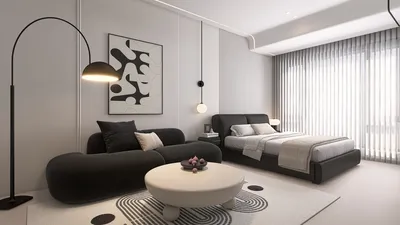


I fondly recall a couple who wanted me to incorporate an in-law suite, a home office, and a pet playroom into a compact 2000 sq ft space. Their surprise at my cheerful demeanor was palpable! Smaller homes can truly ignite your creativity; this particular project nearly turned upside down on the second day, yet it imparted lessons in space-saving techniques that I've since applied to all my designs, especially using tools like Homestyler.
1. Open-plan living with distinct functions
An open layout can significantly enhance the perception of space in a 2000 sq ft home without the need for additional square footage. I often merge the living, dining, and kitchen areas into a seamless environment, then define separate zones using strategies like a partial wall, layered rugs, or a kitchen island. This approach not only improves natural light flow but also fosters social interaction. However, it may result in increased noise and fewer private spaces — a quiet den or a sliding door near the entryway can help mitigate these issues.
save pin
2. Arrange wet areas in close proximity
Locating bathrooms and the kitchen adjacent to one another minimizes plumbing installations and allows you to allocate more money to premium finishes. For instance, in one of my renovation projects, aligning the guest bathroom and kitchen along a single wall slashed costs and created space for a larger master closet. The trade-off is the need for careful planning regarding ventilation and accessibility, but the gains in efficiency make it worthwhile.
save pin
3. Versatile bedroom configurations for future adaptability
Consider designing one bedroom to function as a multi-purpose area. Incorporating a Murphy bed, a built-in desk, or sliding barn doors allows that room to transform into a nursery, guest room, or home office as family needs evolve. I recommended this approach to a young couple, and five years later, they still appreciate the room's versatility without requiring a remodel. One note: while built-ins are practical, they can restrict aesthetic changes, so it is best to keep them neutral in style.
save pin
4. Maximize storage opportunities without bulky furniture
In compact homes, concealed storage becomes invaluable. I enjoy features like window benches with lift lids, toe-kick drawers beneath kitchen cabinets, and built-ins along hallways. For example, one client with two children cleverly utilized space under the stairs to store an entire seasonal wardrobe — an instant solution for clutter. While investing in customized solutions may be pricier than purchasing cheap free-standing furniture, the transformative effect on daily life is significant, promoting a visually calm atmosphere.
save pin
5. Emphasize connections to outdoor areas
A modest backyard or patio can greatly extend your living area. Installing sliding doors, a covered porch, or a mid-sized deck can create the illusion of a larger home and provide additional space for entertaining guests. I advocated for a 12-foot sliding door in a design for a 2000 sq ft house, and the living room instantly felt twice as spacious. While weather and privacy can present challenges, investing in shade solutions or screens is a small price to pay for the benefits they bring.
If visualizing different layouts quickly is your goal, utilizing a 3D floor planner can assist in mocking up open-plan configurations and evaluating furniture placement. It proved invaluable in demonstrating to clients how a four-bedroom design within 2000 sq ft could feel spacious rather than constricted.
save pin
Tips 1:
Budget tip: dedicating approximately 10-15% of your budget to smart storage solutions and optimal kitchen positioning can significantly enhance daily comfort. Minor aesthetic improvements — consistent trim, larger tile patterns, and cohesive flooring — can also create the illusion of a bigger home at a minimal cost.
save pin
FAQ
Q1: Is 2000 sq ft sufficient for a comfortable four-bedroom home?
A1: Absolutely! With careful planning, a 2000 sq ft layout can comfortably accommodate four bedrooms, focusing on open living spaces and efficient flow.
Q2: What strategies can help to keep expenses down when designing a 4-bedroom house of this size?
A2: By stacking plumbing, simplifying roof lines, and investing in durable core finishes like kitchen surfaces and flooring, you can significantly reduce long-term costs.
Q3: What are the optimal bedroom sizes for a 2000 sq ft design?
A3: The ideal master suite should be around 220-300 sq ft, while three additional rooms should range between 100-130 sq ft each, factoring in closets and ensuite requirements.
Q4: Should I opt for an open plan or more separate rooms in a home of this size?
A4: Open layouts enhance the perception of space and light; however, it’s wise to reserve one or two private rooms for peace and confidentiality.
Q5: How much storage should I plan for in a house of this size?
A5: It's advisable to have ample built-in storage alongside at least one dedicated linen and coat closet; homeowners typically aim for 8-12% of the floor area to be utilized for storage.
Q6: Do small outdoor areas effectively expand the living space?
A6: Certainly! A covered deck or patio with seating can serve as a functional extension of your living area during favorable weather conditions.
Q7: Where can I explore different layout designs on my own?
A7: You can utilize a free floor plan creator to play around with room sizes and traffic patterns before making commitments with contractors.
Q8: Are there authoritative guidelines available for determining room size?
A8: Yes, the American Institute of Architects (AIA) offers valuable resources and standards for residential design planning (https://www.aia.org).
save pin
Discover the creative freedom of Homestyler, the ultimate online home design platform. With its user-friendly design tool, stunning 3D renderings, inspiring design projects, and helpful video tutorials, transforming your space has never been easier. Perfect for both beginners and seasoned designers alike!
Design Now for FREE
































