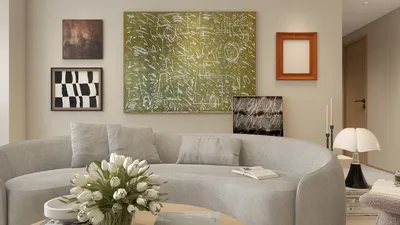


In my experience, painting an entire living room with satin finish for a client's desire for "a soft glow" led to the realization that the uneven plaster of the walls amplified imperfections in an unflattering way. This experience sparked my appreciation for matte paint, which elegantly conceals flaws, conveys sophistication, and transforms compact areas into intimate retreats. To achieve a quick color preview, I often employ interactive room mockups with Homestyler to assess how matte finishes interact with light before undertaking a full painting project.
1. Embracing deep matte jewel tones for inviting corners
Deep, matte emeralds or navy shades can convert a small reading nook into a scene reminiscent of a theatrical setting. This palette delivers dramatic flair while avoiding reflective glare; however, these tones can cause smaller spaces to appear darker. It’s essential to balance such hues with lighter fabrics and shiny accents. In a studio I worked on, I created an intentional separation between the kitchenette and sleeping area using matte navy in an alcove, enhancing the sense of space.
save pin
2. Soft matte neutrals to disguise imperfections
For walls that are less than perfectly smooth, soft matte creams and warm greiges are my personal favorites. They effectively mask surface irregularities, providing a serene backdrop for more elaborate decor. With careful attention to primer and roller nap, you can achieve a professional finish using mid-range paint.
save pin
3. Chalky matte textures for added interest
Chalky or plaster-like matte finishes bring depth without intense patterns, making them ideal for accent walls. While application may require more effort — such as two coats and meticulous brushing — the outcome offers an artisanal, lived-in feel. When previewing how a textured wall can influence spatial balance, I often use detailed 3D views with Homestyler to ensure the finish enhances rather than overwhelms the room.
save pin
4. Matte ceilings and trims for a cohesive modern look
Utilizing a soft matte finish on ceilings that matches the walls can visually elevate the space and create a harmonious flow. This approach fosters a seamless, boutique-hotel atmosphere. However, fewer contrasts can pose challenges; selecting textured furniture or metallic decor can maintain visual interest. One client was initially apprehensive about colored ceilings but later appreciated how the subtle matte elevated the overall ambiance of their apartment.
save pin
5. Thoughtful matte applications in kitchens and busy areas
There's a common misconception that matte paint is prone to staining; however, many contemporary matte acrylics are surprisingly washable. I recommend using matte in areas that are not directly exposed to splashes, while reserving semi-gloss for cabinetry or trim where durability is essential. In kitchen planning, it's vital to coordinate wall finishes with existing layouts so that the finish complements cabinets and workflow. Testing samples while creating smart kitchen layouts with Homestyler can help avoid potential surprises.
save pin
FAQ
Q1: Is matte paint suitable for smaller rooms?
A1: Definitely. Matte paint absorbs light, reducing reflections, which helps create a cozy and less visually cluttered atmosphere in small spaces. Strategic lighting can further enhance the effect without making the room feel cave-like.
Q2: Can matte finishes be cleaned?
A2: Many modern matte acrylics offer washable options, though they are generally not as scrubbable as satin or semi-gloss. For high-traffic areas, consider a scrubbable matte formula.
Q3: Does matte paint effectively conceal wall imperfections?
A3: Absolutely—matte finishes scatter light and diminish the visibility of minor bumps or patches, making them ideal for older homes.
Q4: How many coats of matte paint might be necessary?
A4: Generally, you’ll need two coats after applying a good primer; deeper or saturated colors often require additional layers. Allow sufficient drying time between coats for optimal results.
Q5: Can matte paint be used in kitchens?
A5: Yes, but avoid areas that directly encounter spills; opt for washable matte formulations while keeping semi-gloss for sections requiring frequent cleaning.
Q6: What lighting works best with matte walls?
A6: The best lighting is soft and diffused—consider combining ambient and task lighting. Matte surfaces appear more vibrant under warm, directional fixtures.
Q7: Where can I find reliable information on paint finishes?
A7: For detailed advice on finishes and appropriate applications, refer to Benjamin Moore’s paint finish guide: https://www.benjaminmoore.com/en-us/paint-colors/painter-s-guide/paint-finishes (Benjamin Moore).
Q8: How can I test matte paint before making a decision?
A8: Purchase sample pots and apply 1–2 large swatches on various walls; observe them at different times of the day. If you prefer to visualize digitally first, use physical samples alongside room designs in Homestyler to finalize your choice.
save pin
Discover the ease of home design with Homestyler! This online platform offers a user-friendly design tool, stunning 3D renderings, and an abundance of DIY video tutorials. Whether you're a novice or an experienced designer, Homestyler empowers you to create your dream space effortlessly!
立即免费设计
































