


Living Room Design
The 'Living Room Design' scenario represents a foundational residential interior space where functionality, comfort, and aesthetic expression converge. As the primary social hub of most homes, the living room must accommodate diverse activities — from relaxed lounging and family gatherings to remote work or entertainment — while reflecting personal style and cultural context. In the Homestyler Complementary Color: Red and Green challenge, top-performing entries reinterpret this familiar space through bold chromatic dialogue: red introduces warmth, energy, and visual anchoring, while green offers balance, calm, and organic resonance. This scene transcends decorative clichés by emphasizing spatial hierarchy, material contrast (e.g., velvet red sofas against matte green walls), and layered lighting — all critical for effective indoor space planning in both compact apartments and open-concept layouts.
Design Challenges & Common Pitfalls
Achieving harmony with red and green in living rooms is deceptively complex. Common pitfalls include overwhelming saturation (e.g., full-wall red + full-wall green), poor value contrast leading to visual vibration or fatigue, and neglecting contextual neutrality — where undertones clash with flooring, ceiling, or adjacent rooms. Many designers also underestimate scale: small red accents can feel aggressive without sufficient green breathing room, while large green surfaces risk monotony without strategic red punctuation. Furthermore, lighting conditions dramatically affect perception — cool daylight may mute red’s warmth, while warm artificial light can intensify green’s vibrancy — making real-time simulation via Homestyler design tools essential for accurate preview and iteration.
✅ Prioritize Visual Hierarchy with Dominant-Accent Balance
Never treat red and green as equal partners. Establish one as the dominant tone (60–70% of visual weight) and the other as a dynamic accent (10–30%), reserving neutrals (white, beige, charcoal, timber) for the remaining 20–30% to ground the composition. Dominance is achieved not just by area, but by placement (e.g., a deep-red feature wall behind a sofa), material richness (e.g., emerald green velvet armchair), and lighting focus (e.g., spotlight on a crimson sculpture). This principle prevents chromatic competition and guides the eye naturally through the space — a cornerstone of professional indoor space planning.

Teresa Martin’s 'The Verdant Ember Parlor' masterfully applies this hierarchy: soft sage-green walls and linen upholstery form a serene 65% base, while rich brick-red cabinetry, a terracotta rug, and coral-toned cushions serve as intentional, textural accents (25%). She leverages Homestyler AI design tools to simulate natural light diffusion across the window wall, ensuring the green remains fresh — not washed out — and the red retains depth without glare. This calibrated dominance enables immediate spatial reading and emotional coherence.
Start Free Design🎨 Leverage Materiality & Texture to Soften Chromatic Tension
Red and green’s high contrast can feel jarring if applied flatly. Introduce tactile diversity — matte vs. glossy, rough vs. smooth, organic vs. engineered — to diffuse optical intensity and add sophistication. For example, pair a glossy red lacquer coffee table with nubby green wool throws, or use veined green marble countertops against brushed-copper red bar stools. Texture modulates color perception: a woven green jute rug absorbs red’s sharpness, while hammered-metal red pendant lights add dimensional sparkle. This approach transforms a potentially graphic palette into a deeply inhabitable, sensorially rich environment — central to advanced Homestyler design techniques.

Z 10’s 'Rustic Floral' demonstrates this principle with exceptional nuance: raw-edge green oak dining table and linen-upholstered red chairs are grounded by a hand-knotted red-and-cream rug featuring subtle green botanical motifs. Using Homestyler’s material library, she tested over 12 wood grain and fabric swatches to find combinations where red’s warmth and green’s earthiness mutually enhance — not cancel — each other. The result is a dining-living hybrid that feels artisanal, lived-in, and chromatically resolved.
Design Your Space Now💡 Anchor with Neutral Transitions & Strategic Lighting
Neutrals are not passive backdrops — they’re active mediators. Use warm whites, greiges, or natural wood tones at key transition zones (floor-to-wall junctions, ceiling edges, door frames) to prevent red/green boundaries from appearing harsh or disconnected. Simultaneously, deploy layered lighting: ambient (recessed or cove), task (reading lamps), and accent (wall washers on art or greenery). Warm-white LEDs (2700K–3000K) harmonize red’s energy and green’s tranquility; avoid cool white (4000K+), which can make red appear synthetic and green sickly. This integrated lighting strategy is vital for indoor space planning, ensuring the room functions beautifully at all hours and supports circadian well-being.

kawtar Ida’s 'A Harmonious Retreat' exemplifies this anchoring technique: pale oak flooring and warm-white plaster walls create seamless transitions between vibrant green bookshelves and a single, sculptural red desk lamp. She used Homestyler’s lighting simulation to place three distinct light layers — recessed ceiling spots for general brightness, an adjustable brass task lamp for the desk, and upward-facing LED strips behind the shelves to glow softly on the green panels. This multi-source lighting eliminates shadows, ensures color fidelity, and makes the compact study feel expansive and balanced.
FAQ
Q: How do I prevent red and green from looking 'Christmassy' in a modern living room?
Use desaturated, earthy tones (e.g., burnt sienna instead of candy red; forest or olive green instead of kelly green) and introduce ample neutral materials like natural stone, unbleached linen, or warm-toned wood. Avoid symmetrical placement and high-gloss finishes — opt for asymmetry and matte textures to signal contemporary intent.
Q: Can I use red and green effectively in a small apartment living room?
Absolutely — in fact, it’s ideal for creating focal points. Apply green to vertical surfaces (walls, tall shelving) to enhance perceived height, and use red exclusively in compact, high-impact elements (a single armchair, a bold rug, or framed art). Homestyler design tools let you instantly test scale and proportion before committing.
Q: Which Homestyler features are most helpful for refining red-green balance?
Leverage the 'Color Palette Sync' tool to lock your primary red and green HEX values across all objects, the 'Real-Time Lighting Toggle' to preview how different times of day affect hue perception, and the 'Material Overlay' function to compare how the same color reads on velvet vs. ceramic vs. wood — critical for informed indoor space planning.

Modern Velvet Upholstered Curved 3 Seater Sofa 3D Model
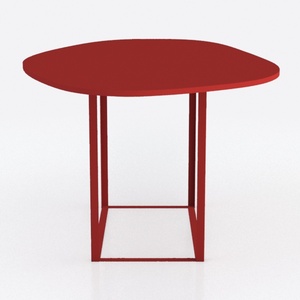

Modern Minimalist Red Metal Irregular Top Coffee Table 3D Model

Modern Red Velvet L Shaped Sectional Sofa 3D Model
Homestyler is a user-friendly online platform that lets you design your home with ease. Featuring advanced 3D rendering, a vast collection of design projects, and helpful video tutorials, it’s perfect for bringing your interior decoration ideas to life.
Design jetzt kostenlos





