


Spiral Staircase Outdoor Living Space Design
The 'Spiral Staircase Outdoor Living Space' is a hybrid architectural interior-exterior scenario that integrates vertical circulation (a sculptural spiral staircase) with horizontal living zones — namely, an elevated terrace and a ground-level yard. Unlike conventional indoor rooms or standalone gardens, this space demands intentional blurring of boundaries: the staircase becomes both functional connector and aesthetic focal point, while materials, lighting, furniture layout, and greenery must harmonize across levels and exposure conditions (sunlight, airflow, rain exposure). It represents a modern response to compact urban lots or multi-level residential properties where spatial efficiency, visual continuity, and experiential flow are paramount — making it a prime case study for advanced indoor space planning and biophilic design integration.
Design Challenges & Common Pitfalls
Designing this hybrid space presents unique challenges: First, structural coherence — ensuring the spiral staircase reads as an organic extension of both terrace and yard, not an afterthought. Second, scale dissonance — mismatched proportions between staircase diameter, terrace depth, and yard footprint can make the space feel cramped or disjointed. Third, material transition fatigue — using incompatible finishes (e.g., glossy indoor tiles meeting porous outdoor pavers) without thoughtful gradation causes visual fragmentation. Fourth, microclimate neglect — failing to account for sun path, wind corridors, or drainage around the staircase base leads to usability issues (e.g., overheating, pooling water, glare). Lastly, furniture misplacement — positioning seating or dining zones without regard to staircase sightlines or pedestrian flow creates safety hazards and awkward social dynamics. These pitfalls underscore why precise indoor space planning and Homestyler design tips — such as real-time shadow simulation, material continuity tools, and AI-powered spatial flow analysis — are indispensable.
✅ Prioritize Vertical-Horizontal Visual Continuity
Maintain consistent material palettes, color tones, and design motifs across all three zones: terrace, spiral staircase, and yard. Avoid abrupt transitions — instead, use gradient applications (e.g., warm-toned wood decking on terrace fading into matching timber-clad staircase treads, then continuing into yard’s timber-framed planters). This reinforces spatial unity and guides the eye fluidly upward and outward. Homestyler’s Material Sync feature allows one-click matching of surface textures across multiple objects — critical for achieving seamless continuity without manual trial-and-error.

Lizzy Evans’ 'Simple beauty' masterfully applies this principle: her light-toned timber staircase treads echo the same warm oak finish used on the terrace decking and yard’s built-in planter edging. She further unifies the composition using identical white-painted metal railings across all levels and repeating circular motifs in paver patterns, pendant lights, and tabletops — a textbook application of Homestyler design tips for visual rhythm and indoor space planning cohesion.
Design Your Oasis Now🌿 Integrate Biophilic Layers Strategically
Layer greenery vertically and functionally — not just decoratively. Place shade-providing trees or pergola vines above the terrace; install climbing plants (e.g., jasmine or ivy) along staircase supports; and anchor the yard with low-maintenance native shrubs and groundcover. Incorporate water features near the staircase base for ambient sound and cooling, and use planter boxes integrated into stair landings to soften hard edges. This layered approach enhances thermal comfort, air quality, and psychological calm — turning circulation into contemplation.

Monica A.V. Design’s 'T.P. I' exemplifies strategic biophilia: she wraps the lower half of the spiral staircase in cascading pothos, places large potted olive trees on the terrace to cast dappled shade over lounge seating, and lines the yard perimeter with lavender and ornamental grasses. Crucially, she uses Homestyler’s Plant Library with seasonal preview mode to test foliage density and color shifts across months — ensuring year-round vibrancy and avoiding bare-winter gaps in the design narrative.
Create Your Outdoor Haven🚶♀️ Optimize Multi-Level Circulation Flow & Zoning
Treat the staircase not as isolated architecture but as the central nervous system of movement and activity zoning. Define distinct yet connected functional areas: a ‘pause zone’ (e.g., small bench or swing) on the mid-landing; a ‘social terrace’ with modular seating facing outward; and a ‘ground-level retreat’ (e.g., fire pit circle or shaded dining nook) aligned axially with the staircase descent. Maintain minimum 1.2m clear width on all walkways and ensure sightlines from key vantage points (e.g., kitchen window → terrace → staircase → yard) remain unobstructed — vital for safety, supervision, and spatial legibility.

Fernanda Azevedo’s 'Paradiso' demonstrates intelligent circulation zoning: her spiral staircase features a curved timber bench embedded at the first landing — transforming transit into rest. The terrace hosts a low-profile sectional sofa oriented toward garden views, while the yard below is zoned with a sunken fire pit surrounded by built-in stone seating — all aligned along the staircase’s central axis. Using Homestyler’s Pathway Heatmap tool, she validated foot traffic density and adjusted furniture placement to eliminate bottlenecks — a hallmark of professional indoor space planning.
FAQ
Q: Can I use the Spiral Staircase Terrace and Yard template for interior-only designs?
Only designs that authentically incorporate both the terrace and yard levels — connected via the spiral staircase — qualify for contest judging. Pure indoor reinterpretations (e.g., converting the yard into a living room) violate the core brief and will be disqualified.
Q: Which Homestyler design tips help simulate realistic sunlight and shadow for staircase placement?
Use Homestyler’s 'Sun Study' mode (under View Settings), set to your project’s geographic location and time of day. It renders dynamic shadows cast by the staircase onto terrace and yard surfaces — essential for avoiding glare hotspots or unintended dark zones.
Q: How do top winners achieve such cohesive material transitions across indoor/outdoor zones?
They leverage Homestyler’s 'Material Match' AI tool: upload a photo of your preferred terrace tile, and the tool recommends visually and texturally compatible pavers, stair treads, and planter finishes — accelerating indoor space planning decisions while maintaining authenticity.
Q: Are there restrictions on furniture models or brands I can use in the contest?
No — Homestyler’s full catalog (including licensed brands like Herman Miller, Kartell, and local regional suppliers) is available. However, all placed items must be scaled and positioned realistically per real-world ergonomics and spatial constraints.
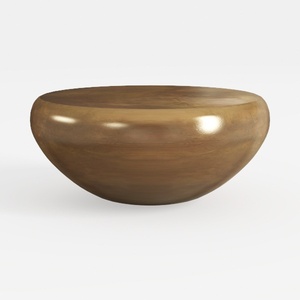
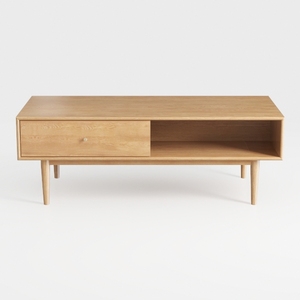
Mid-Century Solid Oak Coffee Table With Storage Drawer Open Shelf 3D Model
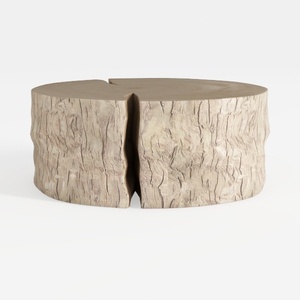
Rustic Solid Wood Split Log Coffee Table 3D Model
Homestyler is an easy-to-use online platform that lets you design your home with stunning 3D renderings. Explore countless interior design projects and learn with helpful DIY video tutorials to turn your ideas into reality effortlessly.
Progetta ora GRATIS





