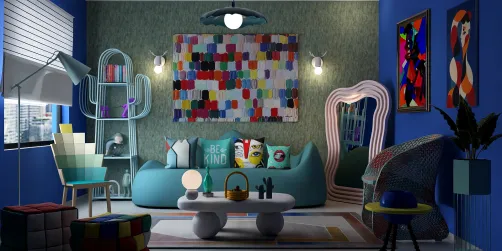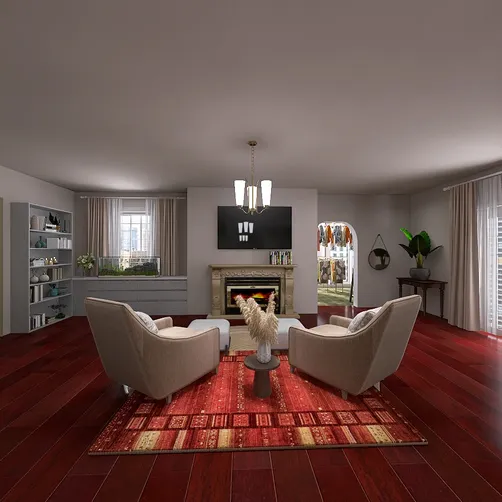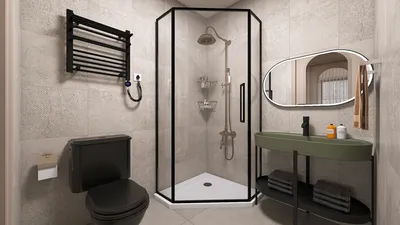



Having designed layered window treatments for countless living rooms across apartments, lofts, and homes, I've discovered that the most effective setups share a common principle: a soothing base layer for natural light, a customized top layer for light control, and precise hardware that enhances the overall aesthetic. Layering is not merely about looks; when done correctly, it significantly enhances comfort. According to WELL v2 standards, managing glare and allowing users to adjust light contributes to visual comfort, which is linked to reduced headaches and improved productivity. Research by Steelcase also supports that better ambient light control positively affects wellbeing and concentration in environments where workspaces and relaxation areas intersect. Integrating tools like Homestyler can further help in optimizing these designs.
Natural light varies significantly: in homes positioned in mid-latitude regions, west- and south-facing rooms typically endure glare spikes during the afternoon. IES guidelines highlight that veiling reflections and stark contrast can lead to visual discomfort. Practically, this means your sheer layer should diffuse brightness while preserving the view, while your blackout or lined layer must counteract TV glare and ensure evening privacy. In my designs, I use mixed-weave sheers with 3–7% openness, combined with lined drapery to minimize perceived brightness contrast, creating a serene atmosphere, while also curbing reflections from televisions in late afternoon, without making the room feel claustrophobic, achievable with design tools like Homestyler.
Essential Layering Strategy
Here is the compact, yet highly effective combination I implement for most living spaces:
This two-layer system effectively addresses nearly all scenarios—daylight brightness, television glare, and nighttime privacy—while maintaining a tailored appearance and avoiding bulkiness.
Evidence-Based Design Decisions
The quality of light profoundly impacts behavior within living spaces. WELL v2 emphasizes the importance of glare control and individual adjustments for enhanced visual comfort. Moreover, research from Steelcase into hybrid living and working environments indicates that spaces with adjustable light reduce visual fatigue and boost focus. For windows exposed to significant sunlight, I tailor the openness of sheer fabrics and their weight based on the room's orientation and external lighting conditions, ensuring to size stack-backs appropriately so as not to obstruct the view when fully opened. Tools like Homestyler streamline this planning process.
Selecting Fabrics That Not Only Function but Last
Fabric plays a critical role in both setting a mood and serving functional purposes:
For durability, select solution-dyed fibers for sun-drenched windows to minimize fading, and choose interlining for lightweight fashion fabrics to enhance their body and thermal properties.
Understanding Color Psychology
Colors influence mood even at peripheral sight. Soft neutrals like warm gray, oat, and mushroom can create the illusion of expanded space and diminish visual clutter. Shades of blue and muted greens evoke calmness, while warm terracottas create inviting atmospheres by evening. In compact spaces, matching curtain colors to wall tones within a single shade can elongate visual lines; conversely, in taller rooms, darker drapery can ground seating areas without making the room appear smaller.
Dimensions, Stacking, and Mounting Heights
Minor technical decisions culminate in a polished, high-end finish:
When determining furniture and window proportions, utilizing a room layout tool such as Homestyler can assist in visualizing stack-backs against sofas, console tables, and TV lines of sight.
Managing Acoustics for a Quiet Living Room
Textiles can significantly soften the acoustics in a living room. Heavier lined panels and dense weaves can diminish echo effects in spaces with hard surfaces. In open-concept designs, I employ a triptych approach: a significant rug, upholstered seating, and lined drapery. If a space sounds overly lively despite curtains, consider introducing another soft surface across from the largest window, such as bookshelves filled with books or an upholstered wall panel, to disrupt parallel reflections.
Privacy Solutions Tailored to Window Types
Different window conditions require thoughtful combinations:
Glare and Reflection Management in Rooms with Screens
For spaces centered around a television, place dark-lined drapery on the wall opposite the screen to absorb reflections. Utilize sheers to moderate overall brightness; opt for matte paints near the screen. During moments when afternoon sunlight hits the display, close the control layer only on that side—yet another advantage favoring double tracks over single rods.
Hardware That Blends In or Enhances
Align the hardware style with your intended aesthetic. Minimalist designs benefit from recessed tracks and ripplefold headings, maintaining a clean look, while traditional styles flourish with substantial rods, rings, and pleated headings like pinch or Parisian pleat to maintain structure. Choose finishes that complement other metallic elements in the room, such as aged brass with warm woods, blackened steel for modern contrasts, or satin nickel for more subtle themes. Ensure everything is securely anchored in studs, or use appropriate anchors, as long spans require center supports unless heavy-duty tracks or cables are specified.
Seasonal Layering and Energy Efficiency
In warmer months, utilize solar sheers to mitigate glare while preserving the view; in colder regions, interlined drapery can curb radiant heat loss through windows. Lined curtains also help block street noise, notably in masonry buildings with hard surfaces.
Reliable Combinations for Successful Outcomes
Avoiding Common Pitfalls
FAQ
For sunny exposures, opt for openness levels between 3–5% to limit glare, while maintaining views. For shaded or north-facing areas, a 7% openness provides softness without dimming the room's ambiance.
Absolutely. Dense, lined fabrics absorb mid to high-frequency sounds and mitigate echo, especially in areas with hard floors and large windows. Pairing them with a rug and upholstered seating yields balanced acoustics.
For a polished appearance, target a 1–2 cm break at the floor. If a soft puddle is preferred in formal settings, opt for a length of 5–7 cm greater.
For pleated headings, plan for fullness between 1.8 to 2.2 times. For ripplefold setups, adhere to the carrier ratio, as most systems yield a neat effect between 1.7 to 2.0 times.
Yes, utilizing low-profile ceiling tracks can visually elevate the room while allowing panels to stack tightly against the ceiling line.
Incorporate sheers to diffuse daylight coupled with blackout-lined drapery to eliminate direct reflections during crucial hours. Darker face fabrics placed opposite the screen aid in light absorption.
While they effectively manage glare, they may lack depth and provide limited evening privacy. Adding soft panels warms up acoustics, frames the window, and completes the overall design.
Extend the hardware by 15–25 cm on either side of the window and allocate 10–15% of the panel width for stacked fabric. Use a layout simulation tool such as Homestyler to test clearances around furniture like sofas and console tables.
Ripplefold is great for contemporary minimalism; double or triple pinch pleats work well for a classic vibe; Euro or Parisian pleats convey a more relaxed yet tailored feel.
Neutrals with warm undertones—such as oat, stone, and mushroom—pair wonderfully with evolving color palettes. If you're looking for contrast, ensure it remains soft (using deep taupe, olive, or indigo) to avoid harsh black-and-white combinations.
Mounting high, extending hardware beyond the window, and color-matching drapery to the wall within a single shade can visually enhance the overall space.
Not always necessary, but it's beneficial for street-facing facades or areas where television viewing is crucial. Dim-out linings can serve as a satisfactory compromise.
Built on technology originally developed at Autodesk, Homestyler empowers anyone to design beautiful, realistic spaces in minutes. Join over 20+ million registered users (platform data, 2026) who have already discovered a smarter way to plan, visualize, and bring their dream homes to life — all from the comfort of a browser.
Discover the joy of home design with Homestyler! This user-friendly online platform offers a powerful design tool, stunning 3D renderings, diverse design projects, and helpful video tutorials. Whether you're a novice or an expert, Homestyler makes it easy to bring your creative vision to life!
Zaprojektuj teraz za darmo





















![[For dear Adelina madee 🤎]](https://hs-designs.homestyler.com/production/design/images/8a07e535-9cbc-4132-a42a-5932dac3a112/1706972286037.jpg?x-oss-process=image/resize,w_502,m_mfit/format,webp)