


Forest Yard and Terrace Stair Design
The 'Forest Yard and Terrace Stair' is a hybrid outdoor–indoor spatial typology that merges a grounded natural yard with a sculptural, multi-level terrace staircase. Unlike conventional interior rooms or standalone patios, this scene represents a transitional architectural interface — where landscape, structure, and human movement converge. It emphasizes biophilic integration (stone, wood, greenery), spatial layering through elevation changes, and atmospheric continuity between interior warmth and exterior openness. This design scenario is ideal for weekend retreats, suburban homes, or wellness-oriented dwellings seeking harmony with nature — making it a compelling case study in modern indoor space planning.
Design Challenges
Designing the Forest Yard and Terrace Stair presents unique challenges: balancing structural clarity with organic flow; avoiding visual fragmentation across multiple levels; integrating weather-resilient yet aesthetically refined materials; and maintaining functional cohesion between indoor living zones and outdoor social or contemplative areas. Lighting transitions — from dappled forest sun to intimate evening ambiance — must be carefully choreographed. Additionally, designers often struggle to avoid over-cluttering the layered composition, especially when blending furniture, greenery, textures, and circulation paths — all while ensuring accessibility and intuitive wayfinding. These complexities make thoughtful indoor space planning essential.
🌿 Prioritize Natural Material Harmony
Use authentic, tactile materials — such as rough-hewn stone, reclaimed timber, textured concrete, and warm-toned ceramics — to reinforce the forest-inspired narrative. Avoid synthetic finishes; instead, embrace variation in grain, patina, and surface irregularity to evoke timelessness and groundedness. Layer materials vertically (e.g., stone base → timber risers → woven textile seating) to echo geological and botanical strata — reinforcing spatial rhythm and narrative depth.

Amanda Bond’s 'Espaços de Conforto e Luxo' masterfully applies natural material harmony by pairing raw stone walls with rich walnut-toned stair treads and linen-upholstered sofas. Using Homestyler AI design tools, she precisely adjusted HDR lighting ('moonlit_golf') to enhance material texture at dusk — demonstrating how AI rendering settings can deepen biophilic storytelling. Her indoor space planning ensures each material transition supports both visual flow and functional zoning — a benchmark for Homestyler design techniques.
Design Your Layered Space🌳 Curate Vertical Spatial Rhythm
The terrace stair isn’t merely circulation — it’s the central compositional spine. Design its rise/run, landings, and adjacent voids to create intentional pauses and framed views. Vary ceiling heights, floor levels, and planter placements to generate rhythmic compression and release. Integrate built-in seating, embedded lighting, or climbing plants along the stair to activate its vertical dimension — transforming it from pathway to experiential journey.

Graca Doutel’s 'Forest Retreat' exemplifies vertical spatial rhythm: her terraced stair ascends fluidly from a sunken lounge to an elevated reading nook, punctuated by recessed planters and recessed LED strips. Leveraging Homestyler AI design tools, she used precise floorplan layering and sun-angle simulation ('bergen' HDR) to calibrate shadow patterns across steps — proving how AI-powered indoor space planning enables dynamic, time-aware compositions.
Start Your Forest Retreat🌱 Seamlessly Bridge Indoor & Outdoor Atmosphere
Eliminate perceptual thresholds between inside and out. Use consistent flooring materials across thresholds (e.g., wide-plank oak flowing from interior to terrace); align window mullions with stair railings; extend interior color palettes into outdoor textiles and plant selections. Employ operable glazing, retractable screens, or pergola-integrated lighting to modulate enclosure and openness — allowing the space to breathe with the seasons and time of day.

Goarik Sargsyan’s 'Совершенное уединение' achieves atmospheric seamlessness by extending interior stone cladding onto exterior retaining walls, using identical oak decking indoors and on the terrace, and positioning large-format sliding glass doors that vanish into wall pockets. With Homestyler AI design tools, he simulated daylight progression ('lilienstein' HDR) to verify glare control and seasonal light penetration — showcasing advanced Homestyler design techniques for climate-responsive indoor space planning.
FAQ
Q: Do I need to use the official 'Forest Yard and Terrace Stair' template to enter the contest?
A: Yes — only designs created using the official Homestyler room template (ID: forest-yard-and-terrace-stair-web-7776) are eligible for judging. This ensures fair evaluation based on consistent spatial parameters and promotes focused innovation in indoor space planning.
Q: Can I modify the template’s structural layout (e.g., move walls or stairs)?
A: No — the template’s core geometry (yard footprint, terrace stair configuration, and opening locations) must remain unaltered. You may fully customize materials, furnishings, lighting, greenery, and decor using Homestyler design techniques, but structural edits invalidate eligibility.
Q: How important is lighting simulation in this contest?
A: Critical. As highlighted in top-winning entries, HDR environment selection (e.g., 'lilienstein', 'bergen', 'moonlit_golf') directly impacts material authenticity and mood continuity. Judges evaluate how thoughtfully you leverage Homestyler AI rendering tools to express time-of-day narratives and spatial atmosphere — a key dimension of professional indoor space planning.
Q: Are there restrictions on furniture or plant models?
A: None — all Homestyler catalog items (including premium and free assets) are permitted. However, top designs strategically limit quantity to emphasize spatial rhythm and negative space. Prioritizing quality over density reflects mature Homestyler design techniques and strengthens narrative clarity.
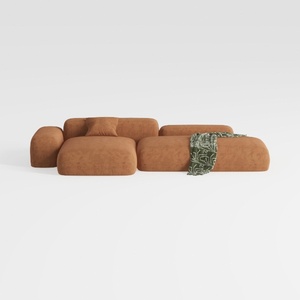
Minimalist Brown Fabric Modular Sectional Sofa 3D Model
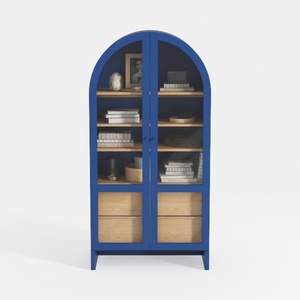
Arched Kitchen Pantry Cabinet with Glass Doors
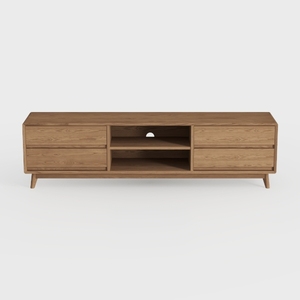
OKD TV Stand for 75+ Inch TV, Mid Century Modern
Homestyler is an easy-to-use online home design platform that offers powerful 3D rendering, a vast collection of interior design projects, and helpful DIY video tutorials—perfect for turning your decorating ideas into stunning reality.
立即免费设计





